
A car accident in Georgia: what to do if you're in one
An accident in Georgia: who to call first, how to reach the police on 112, what to film on your phone, why you must not leave the scene, and how to get the report your insurer needs.
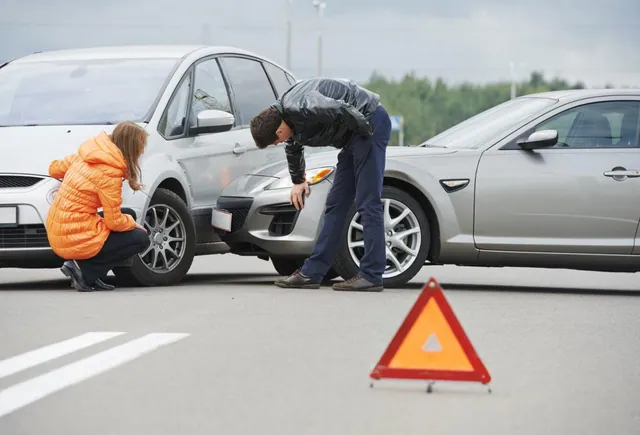
Nobody plans an accident, so the first few seconds are easy to lose: a different country, unfamiliar rules, a car that isn't yours. The order of events, though, is simple. First a call to the rental company, then 112, and don't leave the scene under any circumstances.
I've never been in an accident in Georgia myself. I put the sequence together from conversations with rental companies and with drivers who have been through one, and I keep it in the notes on my phone. Knowing the order doesn't insure you against trouble, but there's less panic, and in the first few minutes that's half the job.
The first 60 seconds
Stop, put your hazard lights on, take the warning triangle out of the boot and set it up. Only get out of the car if it's safe to do so: on a mountain road, or out on a highway in the dark, standing between cars is more dangerous than staying inside with the hazards on. Check that everyone is unhurt, in your car and in the other one.
Where the triangle and the first aid kit live is something I look for when I collect the car, along with the spare. Half a minute in the car park, and then you don't have to unpack the boot on the hard shoulder.
Then, step by step:
-
Call the rental company. If you're driving a rental car, this is the first call. The dispatcher will tell you how to proceed, confirm your insurance cover, and send help or a replacement car if you need one. The company's number is in the rental agreement, so it's worth keeping a copy of the contract on your phone offline.
-
Call the police on 112. The number works without a SIM card, and there are Russian-speaking operators. In Tbilisi a patrol usually arrives within 10–30 minutes. Outside the city it takes longer, sometimes a few hours.
-
Don't move the car until the police arrive and the officer gives permission: repositioning it without authorisation counts as a separate offence. There's one exception, when the car is blocking traffic and creating a hazard. In that case film the positions of everyone involved first, then move it.
What to film on your phone
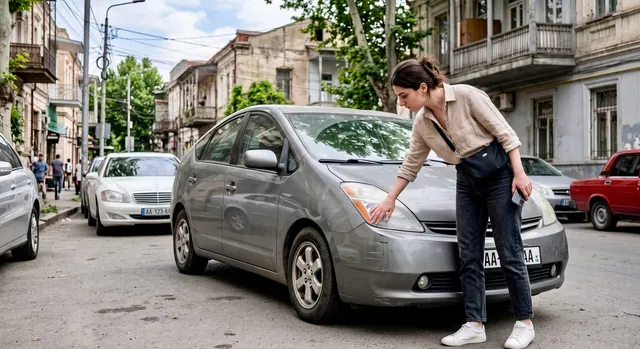
You'll be waiting for the police anyway, and that time is better spent filming. Photographs work better afterwards than any explanation you give at the scene.
- The wide shot: how both cars sit relative to the lane markings, the signs, the junction.
- The damage close up, every scratch and dent, on both cars rather than only your own.
- The number plates of both vehicles.
- Signs and traffic lights nearby, if they have anything to do with the accident.
- The other driver's documents, but only with their consent. If they don't want to be photographed, write it down by hand: name, licence number, insurance company and policy number.
Shoot from several angles and check the focus. A panning video around both cars is worth recording too: it shows what gets lost between individual frames.
Why you cannot leave the scene
This is the most expensive mistake available to you.
If you leave the scene of an accident, the insurance doesn't cover the damage and you pay out of your own pocket. The rental company is then entitled to bill you for the full repair. On top of that comes a separate offence and a fine of 250 lari over and above everything else.
Stay where you are even if you're obviously not at fault. Stay even if the damage looks like nothing. The "I'll drive off and sort it out later" option doesn't work in Georgia: there are plenty of cameras on the roads, and unpaid fines don't go anywhere, they surface the next time you enter the country.
Talking to the police, and the report
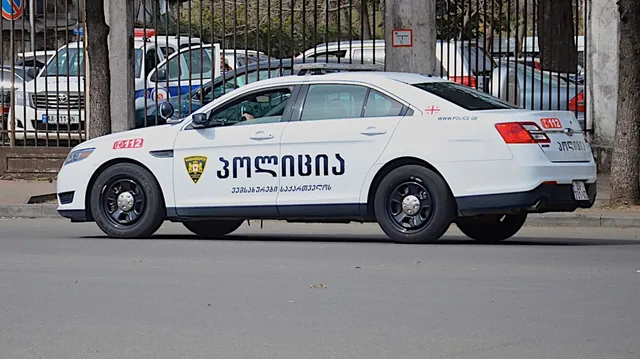
Georgian patrol officers are usually polite and work calmly. Don't offer a bribe in any form or any amount: that's a criminal matter.
The officer will establish what happened, draw up a report and issue a fine of 250 lari to the driver at fault. If fault can't be established, or both drivers are found at fault, both get fined. That happens fairly often, even when the picture looks obvious.
Make sure you leave with the accident report in your hands. Without it there's no insurance payout: not on the other driver's third-party policy, and not on the rental car's comprehensive cover. It's the one document worth following up on personally while the police are still at the scene.
If you don't agree with the officer's conclusions, say so calmly and ask for your disagreement to be recorded in the report. Raising your voice achieves nothing, an argument on the hard shoulder settles nothing, and a report with your note on it gets read later by different people.
The fine: the deadline matters more than the amount
Fines aren't paid at the scene. Payment goes through any Georgian bank within 30 days. On day 31 the amount doubles; on day 61 it rises to 1,000 lari. Unpaid fines don't expire.
If the car is a rental, the notice goes to the owner, which means the rental company, and often with a delay. So before you leave the country it's worth checking for fines against the car's plate. The other amounts and deadlines are covered separately, in traffic fines for drivers in Georgia.
Three situations that come up most often
Someone clipped your parked car and drove off
You come back to the car and find a dent, with no other party around. Call the rental company, then the police. Without a report there's nothing to prove the damage wasn't your doing. The police will record an accident with an unidentified party at fault, and that report closes the question when you hand the car back. Returning the car quietly and hoping nobody notices won't work: they look closely at drop-off.
An accident that's your fault
Unpleasant, but the order is the same: stop, call the rental company, dial 112, wait for the police. A 250 lari fine, a report, and after that the rental company's insurance covers the damage. The main thing is not to try to settle it at the scene without paperwork. Verbal agreements protect neither side.
The other driver is at fault and has no insurance
It happens: third-party insurance has been compulsory since 2018, but not everyone takes it out. You still have to go through the police, because the report is the basis for any claim you make. If you're in a rental car with decent cover, the rental company's insurer will pay for the damage, and again on the strength of the police report.
A small scratch: do you call the police?
Formally yes, for any accident that involves damage. In a rental car, settling it without a report is doubly risky: the insurance only works with official paperwork, and without the report any damage ends up being yours, even when none of it was your fault. Call the rental company, describe the situation, then follow their instructions.
The short version
The rental company, 112, stay where you are, film everything, take the report. Leaving is not an option under any circumstances: that's exactly what turns a solvable story into serious money and legal problems. The rest genuinely does get sorted out.
If questions come up before the trip or already on the road, MY.DRIVE support is there: mydrive.club/en/support.