
Georgia Traffic Fines: Speed, Parking, Bus Lanes
A practical breakdown of Georgia's traffic fines in 2026: speeding, parking, bus lanes, and how to check and pay a ticket before it doubles.
Traffic Fines in Georgia: What Actually Gets You Ticketed
Most tickets in Georgia come from three things: speeding, parking, and driving in a bus lane. Fines range from 50 to 300 GEL ($19 to $111), and the payment window is short: miss the 30-day deadline and the fine doubles.
Speeding: what the numbers actually are
Speed limits in Georgia follow a standard pattern: 60 km/h in towns and cities, 90 km/h on rural roads outside built-up areas, and 110 km/h on highways. Some stretches post lower limits near schools, on mountain roads, or in construction zones, and the sign always tells you.
As of mid-2026, speeding fines are tiered by how far over the limit you're driving:
- 10–30 km/h over the limit: 50 GEL (about $19)
- 30–50 km/h over: 100 GEL (about $37)
- More than 50 km/h over: 300 GEL (about $111)
If speeding by 30+ km/h causes a dangerous situation, the fine jumps to 400 GEL (about $148). If it damages road infrastructure, it climbs to 600 GEL (about $222).
One number worth remembering: going up to 10 km/h over the limit isn't fined at all. That's a measurement tolerance built into the radar system, not a green light to push the limit on purpose.
Repeat speeding also costs points on your license. Georgia runs a 100-point system for all drivers, and losing enough points suspends driving privileges.
How radars actually measure your speed
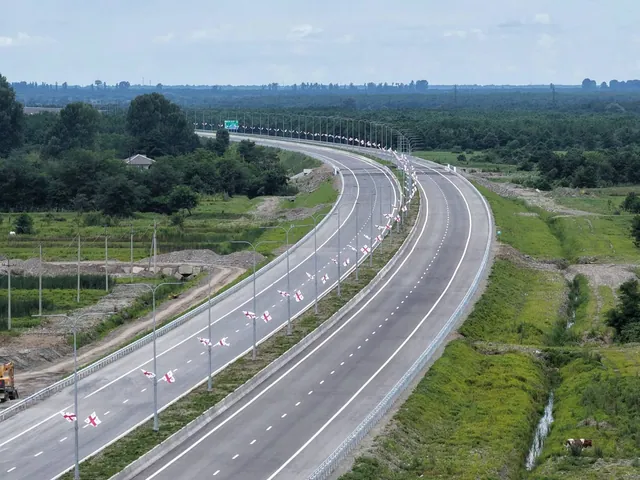
Georgian highways and city roads use two kinds of speed enforcement: fixed-point radars and section cameras. Section cameras clock your car at the start of a stretch of road, clock it again at the end, and calculate your average speed across the whole distance.
This matters because slowing down right before a camera and speeding back up afterward doesn't help. The system is measuring the full segment, not a single moment. You'll see this setup most often on the highways connecting Tbilisi, Gori, and Kutaisi, where the distances between towns are long enough to tempt drivers into speeding up.
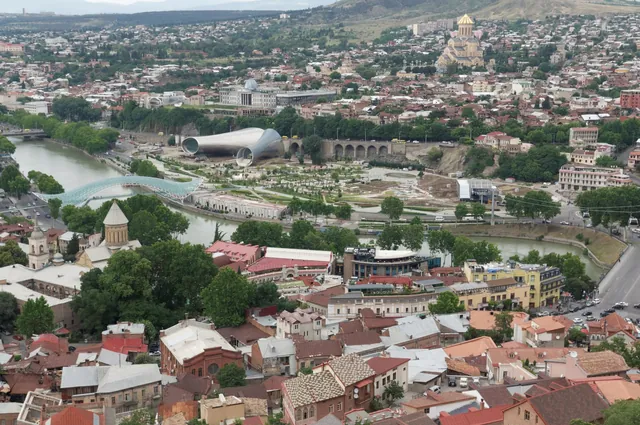
Parking in Tbilisi: where it's free, where it isn't
Parking illegally or without payment costs 50 GEL (about $19). If your car gets towed, add impound and towing fees on top, and the total package usually lands between 50 and 150 GEL ($19 to $55).
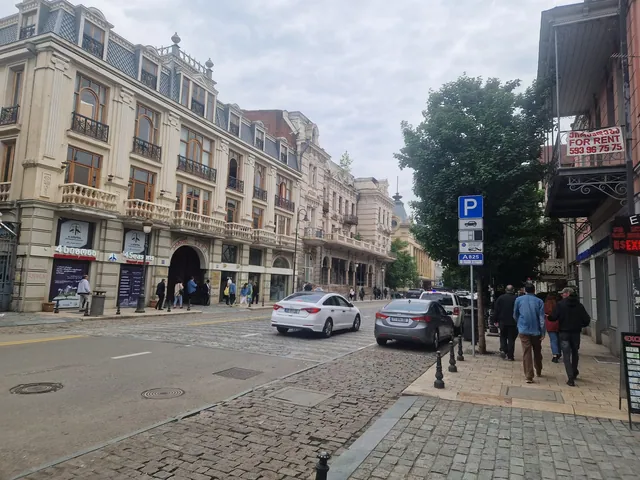
Central Tbilisi runs a zonal parking system: the first 15 minutes are free, then it's 1 GEL per hour. You pay through the Tbilisi Parking app or at street terminals. Outside the marked paid zones, and anywhere without signage, parking is free.
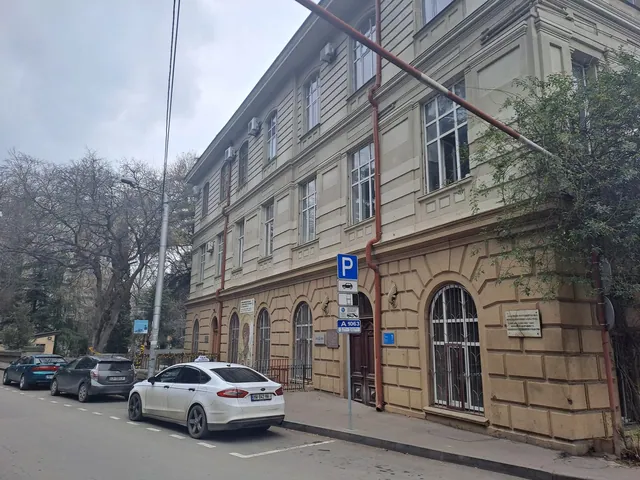
Parking on sidewalks, bike lanes, taxi stands, or disability spots carries higher fines than standard parking violations, and cars left on sidewalks can get towed without warning, even if other cars are parked the same way nearby.
Bus lanes: the fine most visitors don't see coming
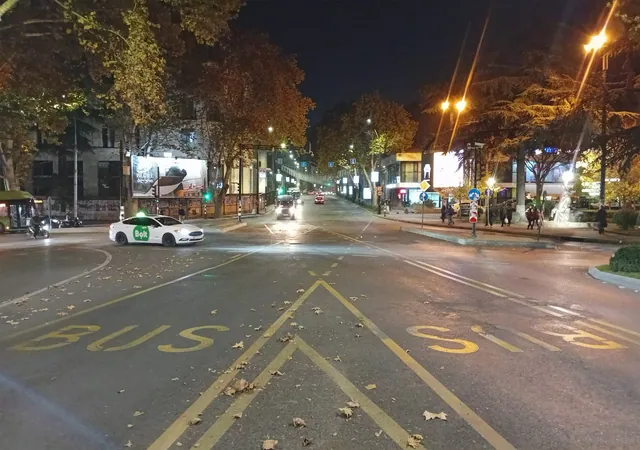
A dedicated bus lane is marked with a bus icon and a large letter "A" painted on the asphalt. Driving in one costs 100 GEL (about $37). Driving against traffic in a bus lane, where that's a separately marked lane, costs 200 GEL (about $74).
Cameras along bus lanes are often spaced at regular intervals, which means one drive down the lane can trigger multiple separate fines, one per camera. Cutting into a bus lane to skip 200 meters of traffic usually costs more than just waiting it out.
There's one exception, active from 1:00 to 6:00 AM, when delivery vehicles are allowed to use bus lanes for loading and unloading. That exception doesn't apply to a standard rental car, at any hour.
Seatbelts, phones, and paperwork
A few smaller fines catch visitors regularly:
- No seatbelt (driver and front passenger): 50 GEL (about $19)
- Handheld phone use while driving: 50 GEL (about $19); hands-free is fine
- No license or vehicle documents on you: 100 GEL (about $37)
- Running a red light or crossing the stop line: 100 GEL (about $37), caught automatically by camera
- Failing to yield to a pedestrian at an unmarked crossing: 100 GEL (about $37)
Driving under the influence is in a different category. The legal limit is 0.03% BAC, close to zero, and the fine ranges from 700 to 2,500 GEL ($260 to $925), with a possible license suspension of up to six months. A foreign license doesn't change how this applies.
Checking and paying a fine
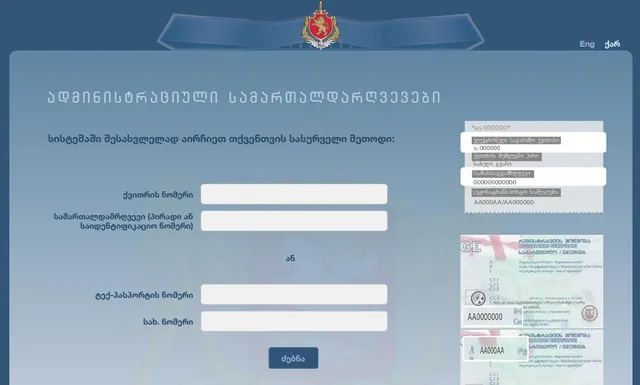
Fines can be checked at videos.police.ge — step-by-step guide in our fine-checking article using the ticket number and license plate. Payment goes through TBC Pay or BOG Pay terminals, online through the same portal, or in person at any Georgian bank branch.
Payment is due within 30 days. On day 31, the fine doubles. By day 61, unpaid fines settle into a fixed debt of 1,000 GEL (about $370), regardless of the original amount. Unpaid fines can also hold up your car at the border when you leave the country.
If you're driving a rental, the ticket goes to the rental company first, not to you directly, and the amount typically gets deducted from your security deposit at drop-off. At MY.DRIVE, the deposit terms are fixed upfront in the booking, so any deduction shows up clearly in your contract instead of as a surprise call after the fact.
Worth knowing
Speeding, parking, and bus lanes account for most tickets — see our traffic rules guide for the full picture issued to visitors driving in Georgia, and all three are avoidable once you know the actual numbers. The 10 km/h speed buffer exists as a camera tolerance, not permission to drive faster. Checking a ticket the same week it's issued is a lot cheaper than finding it doubled a month later.