
Traffic Rules in Georgia: Everything That Actually Matters
Speed limits, fines, drink-driving, child seats, parking — a practical guide to Georgia's traffic rules for tourists with a rental car in 2025–2026.
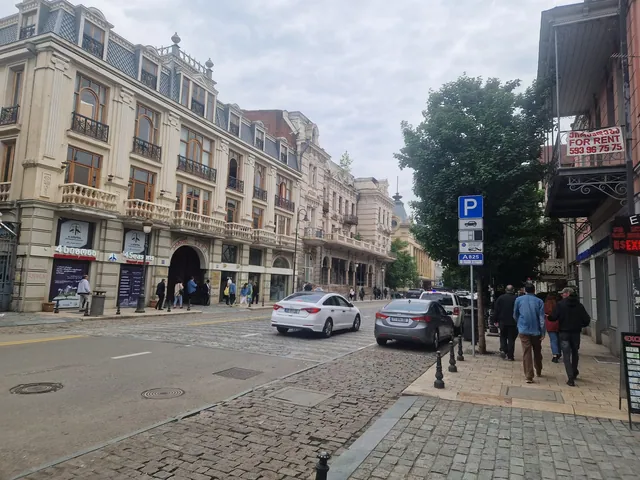
Driving around Georgia is one of the best decisions you can make on this trip. But so that a fine or an awkward conversation with a police officer doesn't spoil the impression, it's worth getting to know the local rules beforehand. After several years of road trips here I'm convinced of one thing: almost all the trouble visitors run into comes not from reckless driving, but from small details nobody warned them about. This is everything you actually need to know — speed, alcohol, phones, children, parking, and how to behave when you're pulled over — especially if you're picking up a car in Tbilisi and planning your routes around the country from there.
Speed Limits
Georgia drives on the right-hand side, as in Russia and most European countries. The basic speed limits:
- In built-up areas — 60 km/h
- Outside towns — 90 km/h
- On expressways — 110 km/h
One important nuance: Georgian rules allow you to exceed the limit by +10 km/h without a fine. So in town you can go up to 70, outside town up to 100. That doesn't mean you should drive like that all the time — it's simply the threshold below which the automatic systems don't register a violation.
Fines for speeding:
- +20–50 km/h over the limit — 50 GEL (~$18)
- +50 km/h and over — 200 GEL (~$72) and up
Georgia has both fixed cameras and average-speed cameras — the kind that measure your average between two points. On top of that, the police are entitled to run radar checks from unmarked civilian cars. So don't judge the situation by the patrol cars on the shoulder alone.
The cameras are what surprises visitors most often. In practice the scenario is always the same: an empty, level highway, barely any traffic, your foot gets heavier on its own — and a week later the rental company gets in touch about a fine. Average-speed stretches are especially treacherous: accelerating and then "making up for it" just before the camera is pointless here, because the system calculates the average. We usually just keep the needle near the number on the sign and don't try to work out where the lens is hiding — it's a calmer way to drive.
Alcohol Behind the Wheel
Georgia is a wine country. But behind the wheel, the attitude is strict.
The permitted blood alcohol level is 0.3 promille (0.03% BAC). In practice that's roughly one glass — and already borderline. It's better to treat it as zero.
Fines for drink-driving:
- from 700 to 2,500 GEL (~$250–900) depending on the level of intoxication and whether it's a repeat offence
- licence suspension of up to 6 months
- in the event of a crash — possible criminal prosecution
Since 2025 the police have also been testing for drugs where intoxication is suspected. Some substances give a positive result even weeks after use — worth keeping in mind.
This is probably the country's main trap, because turning down a glass here is next to impossible: at someone's home the wine comes out of a carafe, in a marani you're served straight from the qvevri, and "just a little taste" turns into three rounds. I've settled on a simple rule: if the day ends with a dinner that involves wine, the car stays where it is and we take a taxi back — in Tbilisi and in the small Kakhetian towns it costs pennies compared with any of the fines above. If your route is precisely about the wineries of Kakheti, agree in advance on who's driving.
The conclusion is simple: wine with dinner means a taxi, wine with lunch also means a taxi. The rental car will wait until morning.
Seat Belts and Phones
Two fines tourists pick up more often than any others — precisely because they feel like trifles.
A seat belt is mandatory for the driver and the front passenger. As of 1 May 2026 the fine for not wearing one has gone up: it is now 50 GEL (it used to be 40). The back row isn't legally required to buckle up, but that doesn't make riding unbelted a smart idea.
A phone in your hand — a 50 GEL fine. This covers not just calls but holding the phone at all, even at a red light. What's allowed: Bluetooth, CarPlay, Android Auto, speakerphone without holding the device.
The phone deserves a separate word: the habit of adjusting your route in the navigation app while waiting at a red light costs exactly as much here as a noticeable speeding offence. A holder on the windscreen or CarPlay plugged in settles the question in five seconds before you set off — and after that you simply never pick the phone up. In the narrow centre of Tbilisi that's especially useful: your hands stay free, and if it's been a while since you last drove a manual, it makes more sense to take an automatic from the start.
Children in the Car
The rules for carrying children in Georgia:
- Under 3 — only in a child seat, or in the arms of an adult passenger aged 16 or over who is wearing a seat belt
- Under 12 — only in the back seat
- Leaving a child under 6 alone in the car is prohibited
If you're travelling with children and renting a car, it's best to sort out child seats in advance when you book. A seat for the right age group isn't always sitting in the car by default, and hunting for one on pick-up day is the worst possible scenario.
Headlights, Documents, Rules of the Road
A few rules that are easy to forget:
- Headlights — mandatory at night, in tunnels and in bad weather. The fine for forgetting them in a tunnel is 15 GEL
- Documents — always with you: your driving licence and the vehicle registration certificate
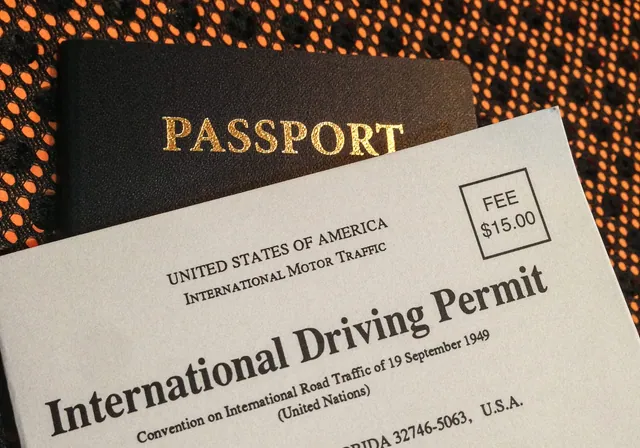
- An international driving permit — Georgia accepts your national driving licence as long as it includes Latin script
- At unregulated junctions the priority-to-the-right rule applies — whoever is coming from the right goes first
- A U-turn on red is prohibited
- At a pedestrian crossing the driver must give way. Cameras record this
Throwing litter out of the car window carries its own fine: around 300 GEL. No joke.
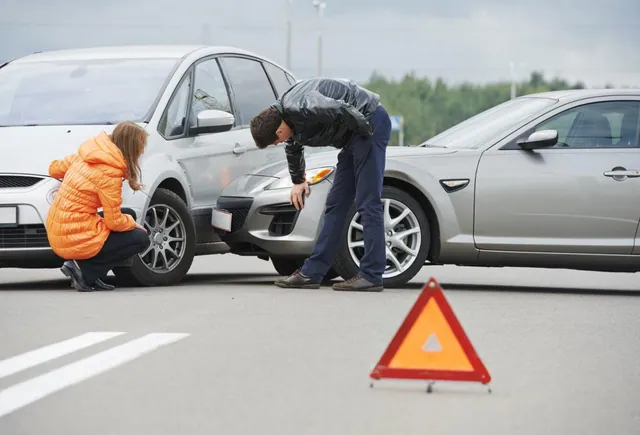
Keep one more thing in mind — what to do if something does happen: in a road accident in Georgia the cars must not be moved before the patrol arrives, and it's better to know that in advance than to work it out on the hard shoulder.
Parking in Tbilisi
Tbilisi is a city where parking in the centre is paid, but the logic behind it is clear once you've worked it out.
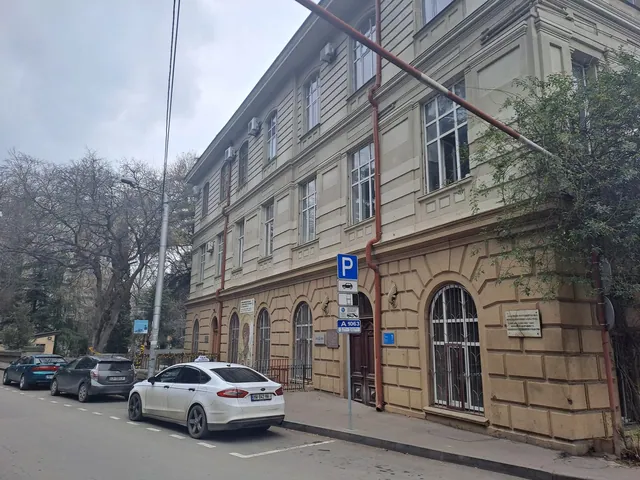
The central districts run on a zonal hourly system. On the pole next to the parking space there's a rectangular sign with a zone code (in the style of A722, B103 and so on) and a price. The system was originally designed with zones A, B and C at rates of 1, 2 and 3 GEL an hour — but in practice only zone A operates: almost the entire centre is 1 GEL/hour. There's no need to worry about zones B and C.
The first 15 minutes are free. That's enough to drop passengers off quickly or pop into a shop without paying. Longer than that, and you need to pay.
How to pay: the "Tbilisi Parking" app (iOS and Android, the official city hall app), through payment terminals on the street, or on the parking.tbilisi.gov.ge website. To register in the app you'll need the car's plate number and a document number — some foreign passports aren't accepted by the system on the first attempt. If it won't work, the terminals operate without registration.
This is usually where visitors get stuck: the app asks for a document, the form won't accept the details, and the car is already parked. Don't spend half an hour on it in the sun — walk to the nearest terminal, pay in cash, and come back to the registration question in the evening. More detail on zones and impound lots is in the separate guide to parking in Tbilisi.
Beyond the central streets there's ordinary municipal parking: an annual pass costs 50 GEL, six months 25 GEL. For short visits it isn't relevant.
Towing in Tbilisi is very much active. The fine for unpaid parking is around 50 GEL, and getting your car out of the impound lot costs another 50–100 GEL on top. Parking on the pavement is grounds for immediate towing, even if other cars are standing right there.
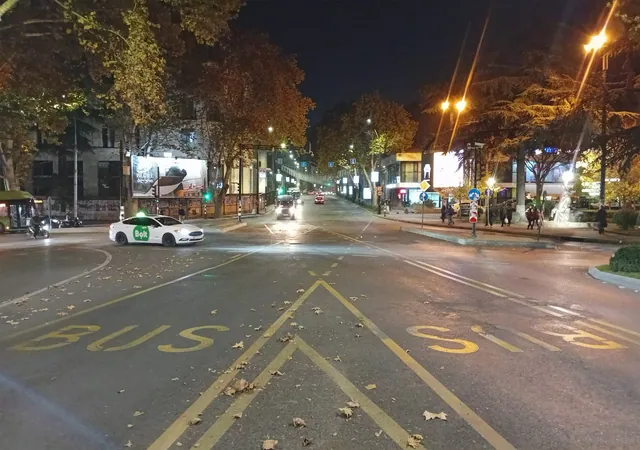
You must not drive into a dedicated bus lane — the fine is 100 GEL. It's caught by both cameras and patrols.
Car Rental and Liability
When you rent a car, fines incurred during the rental period ultimately land on you — the rental company receives them and passes them on to the renter. So cameras and violations work exactly as they would with your own car.
A useful habit: before returning the car, check for fines by licence plate — it takes a couple of minutes online. That way you find out about a violation yourself, rather than from an email a month after you get home. Before pick-up itself, a car handover checklist won't go amiss either — scratches and equipment are best documented before you drive off.
If you're only just planning to rent a car in Georgia and want to get the details straight in advance, have a look at our FAQ or the routes and places page.
The Police: What to Do When You're Pulled Over
Georgia's traffic police are polite and, in most cases, speak English. A few rules:
- Stop immediately and switch on your hazard lights
- Keep your hands visible and don't make sudden movements
- Hand over documents as requested — there's no need to produce everything at once
- Don't offer a bribe — it's a criminal offence and everything is recorded
- If you get a fine, pay it within 30 days or penalties start accruing. Pay within the first 10 days and you get a 20% discount
In my experience the conversation with a patrol here is short and surprisingly relaxed: they check your documents, ask where you're heading, wish you a good trip. Panicking and trying to explain yourself for everything at once only drags the procedure out — an even tone and the documents they asked for are enough.
If you're stopped for a minor violation and you stay calm, they may let you go with a warning. But it isn't something to count on.
Bottom Line
Traffic rules in Georgia are logical and broadly close to European ones. The main things to remember: speed cameras work discreetly, drink-driving is punished harshly, and the fine for holding a phone is now on a par with the fine for speeding. Learning these basics takes ten minutes — and they'll save you from unpleasant surprises for the whole trip. After that, what's left is the reason you took a car in the first place: the switchbacks, the mountain passes, and the freedom to stop wherever you feel like it.