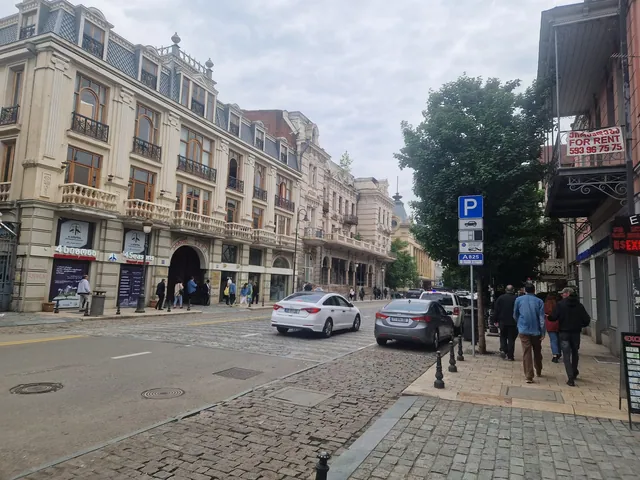

Tskaltubo, Georgia: Abandoned Sanatoriums, Radon Baths and Soviet History
Tskaltubo is a balneological resort in western Georgia: radon springs, abandoned Soviet sanatoriums, Prometheus Cave 20 km away. How to get there, what to see, how to behave inside the sanatoriums and why you want a car.
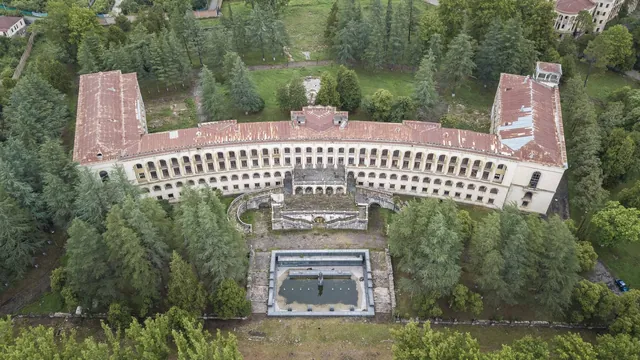
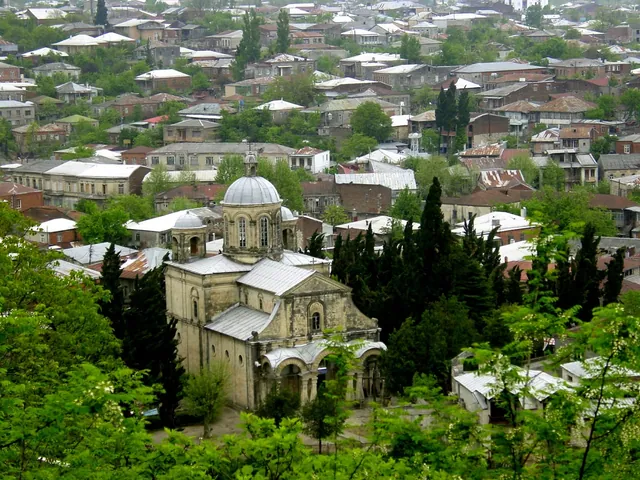
Tskaltubo is a balneological resort in western Georgia, 9 km from Kutaisi. People come here for two things: radon baths and the abandoned Stalin-era sanatoriums standing around the resort park.
The third reason is right next door. Prometheus Cave, the canyons of Imereti, the monasteries of Kutaisi, all of it within an hour's drive.
A short history: from antiquity to a Soviet health resort
The healing springs of Tskaltubo have been known since deep antiquity, and the first mentions of them date to the 7th century. By the 12th and 13th centuries the town already had a reputation as a place of healing among Georgian chroniclers. Serious study of the local mineral waters began only in the 19th century.
The turn in Tskaltubo's fortunes came in the 1920s and 30s, when the Soviet authorities took the resort in hand. The decisive part was played by Joseph Stalin personally: Kremlin doctors prescribed him radon baths for his back and legs, he came, and the result impressed him. After that the town began turning into the main health resort of the Soviet Union.
In 1951 a sweeping master plan was drawn up, and Tskaltubo was clearly divided into balneological, sanitary and residential zones. Through the 1950s to 70s there were 22 sanatoriums and 9 bathhouses fed by mineral springs. At the peak of its popularity four trains from Moscow arrived in town every day, direct services laid on for holidaymakers. A private bathhouse was built for Stalin, the famous Bath No. 6.
After the collapse of the USSR in 1991 the resort emptied almost overnight. The sanatoriums closed, and refugees from Abkhazia took shelter in some of them. The huge Soviet palaces slowly decayed and grew over with forest. It is for these ruins that thousands of tourists from all over the world come to Tskaltubo today.
Water and treatment
The real asset of Tskaltubo is its water. The local springs belong to a rare type: weakly radon, chloride-sulphate, sodium-magnesium-calcium thermal waters. The temperature where they come out of the ground is around 33–35 °C, almost body temperature, so the baths are easy to take.
Tskaltubo's radon baths are prescribed above all for conditions of the joints, the spine and the musculoskeletal system. That is what Stalin came here for, and it is what hundreds of thousands of people still come for. The waters are also good for the cardiovascular, nervous and respiratory systems. A course of treatment usually runs to 10–15 procedures of 10–15 minutes each.
The main working treatment centre is still the Balneological Complex at Spring No. 6, the same historic building where Stalin took his baths. It has individual cabins, communal pools with radon water, physiotherapy and massage rooms. Spring No. 2 also operates.
If you are here for a day and just want to try the procedure, come in the morning and go straight to the administrator: the schedule at the complex is built around people on a full course, and one-off visits get slotted into the free windows. Ask whether you need to see a doctor before your first bath, since the order depends on whether you are going into an individual cabin or the communal pool. It is worth bringing a swimsuit, flip-flops, a towel and a sheet, and it is better not to plan anything for the hour after the bath: radon leaves many people noticeably relaxed, and you don't want to get behind the wheel in that state.
I never stayed for a full course myself, I came for a single procedure between trips around Imereti. Don't expect a real therapeutic effect from one session, it is more of an introduction to the place.
Important: radon baths have contraindications. They must not be taken with oncological conditions, during the acute stages of inflammation and in a number of other cases. Consult a doctor before the procedures.
The sanatoriums
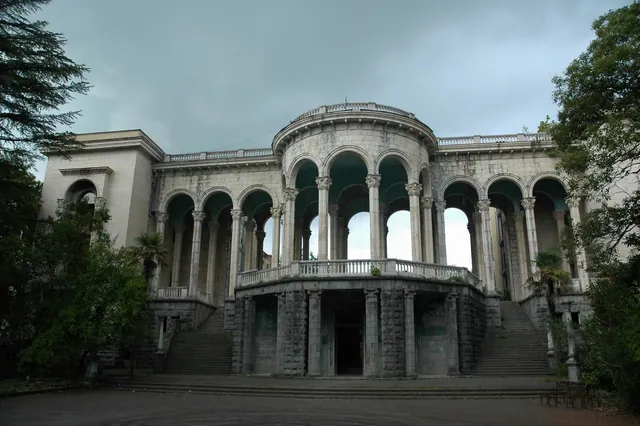
Dozens of sanatoriums in Stalinist Empire style stand around the central resort park. Many are abandoned: columns, stucco mouldings, marble staircases, vast halls with trees growing up through them. Among the most recognisable buildings is Sanatorium Meshakhte, with its semicircular façade and a fountain in front of the main staircase.
The best-known places to visit on your own:
Sanatorium Medea (also known as the Tsentrosoyuz sanatorium, built in 1962 for staff of the USSR Ministry of the Food Industry). One of the most accessible: no fences, no security, you can walk in and wander the floors at your own pace.
Sanatorium Metallurg. There was once a well-kept park around it, and now it is thick forest. Handsome gates, the building partly inhabited, with refugees from Abkhazia living here.
Sanatorium Shakhter and Imereti. Monumental buildings, each of which will take at least an hour.
Bath No. 6 ("Stalin's Bath"). A free-standing building with a history of its own.
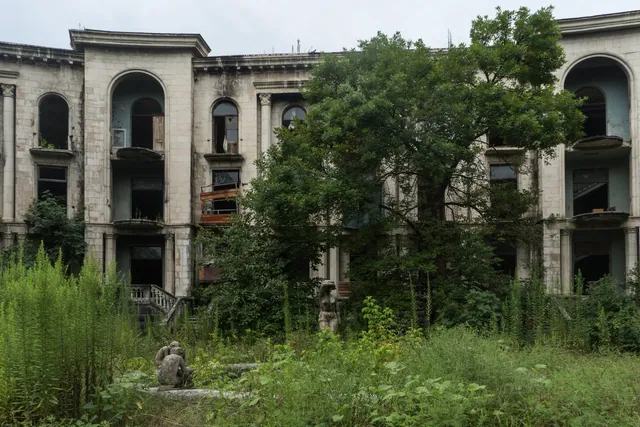
The first time I went into Medea I stood in the lobby for a couple of minutes doing nothing: what gets you is not the ruin but the scale and the silence, in which you can hear water dripping somewhere on the upper floors, and the trees growing straight through the floor.
How to walk through the ruins
You need closed shoes with a firm sole. Underfoot there is broken tile, glass, lengths of rebar, and in places holes instead of floor, covered over with rubbish. Staircases often have no railings at all, and the bottom steps of the marble flights can be crumbled away. Better not to go down into basements and dark stairwells on your own, and a phone torch is no luxury here. Don't step out onto balconies, parapets or roofs: the concrete has gone thirty-odd years without repair, and you cannot judge its condition by looking at it.
The second point matters more than the safety precautions. Some of the buildings are lived in. Families of refugees from Abkhazia are there, and for them this is not a "location" but home, in some cases for thirty years now. The signs of an inhabited wing are obvious at once: curtains, laundry on the balcony, a vegetable patch, children's toys in the yard, a door with a lock. You don't walk into those corridors. You don't photograph people or their doors without permission, you say hello in the yard, and it is better to avoid noisy groups and drone filming over people's windows. Sometimes a caretaker sits by the entrance and asks a symbolic fee to let you through, which is normal practice and not worth arguing about.
There is a common misconception that Tskaltubo is completely abandoned. It isn't. Alongside the ruins there is the restored Tskaltubo Spa Resort, new hotels, restaurants and cafés. The town lives next door to its own past.
The resort park
The park is the centre of the whole layout. Avenues radiate out from it and the sanatoriums stand in a ring, so it is easiest to see them on foot, coming back to the park between buildings. Inside there are magnolias, old plane trees, pavilions over the springs, benches and shade, which in July is in short supply everywhere else. Locals walk here too, and in the evening the park looks exactly the way it was meant to: ordinary resort life, only with the ruins of palaces all around.
I usually leave the car at the edge of the park and go on foot from there. It is simpler that way: driving between individual sanatoriums makes no sense, and satnav gets confused in Tskaltubo. Some buildings are labelled with Georgian names, and some pins sit nowhere near the entrance. It is more reliable to route yourself to the park and find your bearings on the spot. Parking is unrestricted, and on the wide streets around the park a space almost always turns up.
What to see nearby
Tskaltubo works well as a base for trips around western Georgia. Nine kilometres away is Kutaisi, the ancient capital of Colchis, with the Gelati and Motsameta monasteries. Within a radius of 30–40 km there are several natural sites of world class.
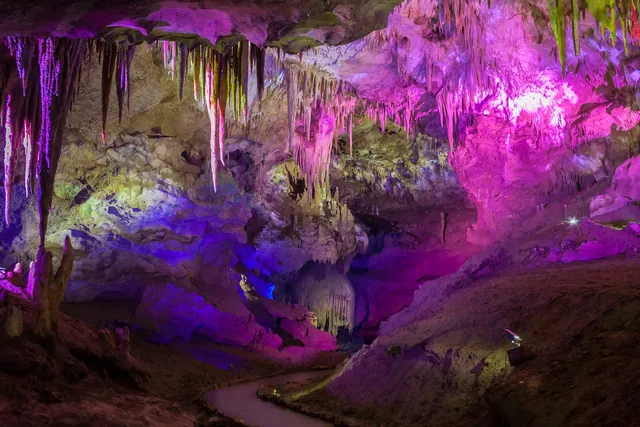
Prometheus Cave, roughly 20–25 km from Tskaltubo. One of the largest caves in Georgia, with an underground lake and boat routes. Legend has it that this is where the titan Prometheus was chained to the rock.
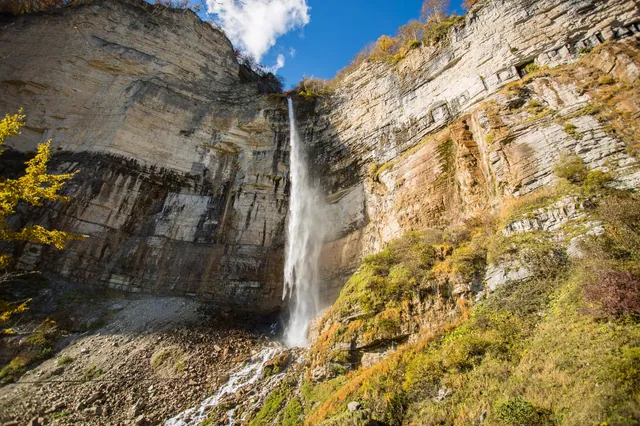
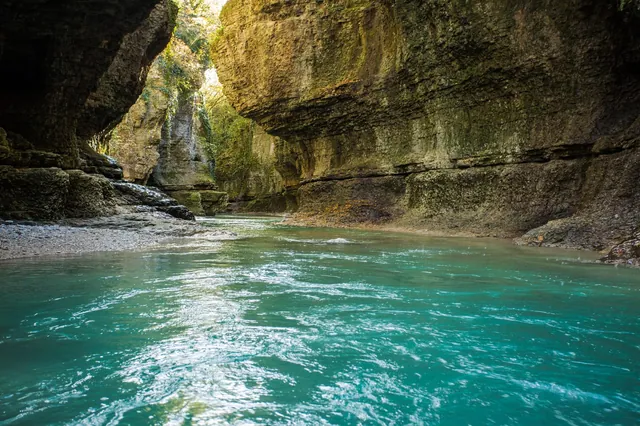
Martvili Canyon, a picturesque canyon with a turquoise river. Boats take you along it right between the cliffs.
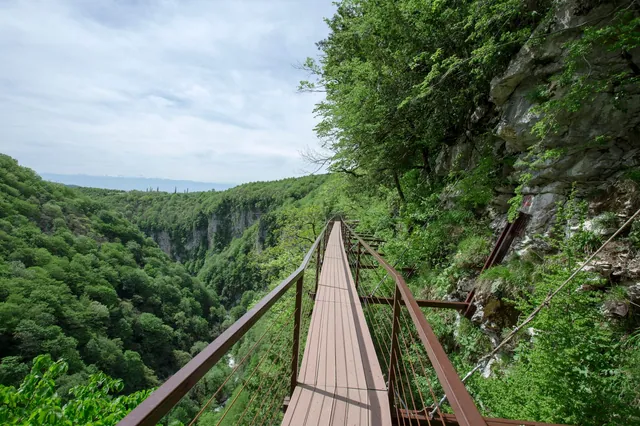
Okatse Canyon, suspended walkways above the gorge.
Sataplia Nature Reserve, dinosaur footprints and one more cave.
White Cave, only 2 km east of the centre of Tskaltubo.
All these places share one feature: reaching them without your own transport is awkward. Public transport does not run to most of the region's natural attractions, and a taxi from Kutaisi or Tskaltubo to each site and back quickly adds up to a noticeable sum, especially if you plan to cover several places in one day.
How to get there
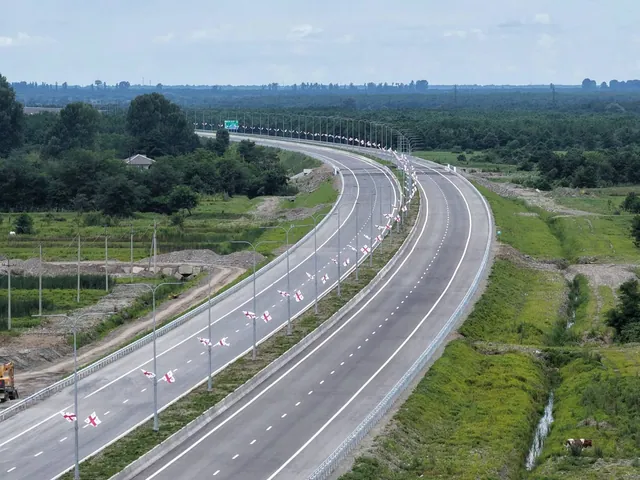
Tskaltubo is 230–245 km from Tbilisi and about 9–10 km from Kutaisi. By car from Tbilisi the drive takes 2.5–3 hours. The surface is good and there are few mountain switchbacks, so even a beginner will manage.
By public transport from Tbilisi the route goes like this: a marshrutka from Didube bus station to Kutaisi, then bus No. 34 or marshrutka No. 30 to Tskaltubo, running every 20–30 minutes. You can also take a taxi from Kutaisi to Tskaltubo, since the distance is about 10 km.
That is where the main difficulty starts. Public transport does not go to Prometheus Cave, the canyons or the monasteries, so without a car the only option left is a taxi for every outing. Your own car settles the question: Prometheus Cave in the morning, Martvili Canyon in the afternoon, a walk through Kutaisi in the evening, with no arrangements with drivers and no waiting by the roadside.
You can pick up a car in Tbilisi, in Kutaisi or at Kutaisi airport on mydrive.club.
The roads in Imereti are good on the whole, an off-roader is not needed, and an ordinary sedan or a crossover will do. Parking in Tskaltubo is unrestricted and free.
Practical information
Where to stay. Tskaltubo has working sanatoriums with treatment programmes (Tskaltubo Spa Resort, the S. M. Kirov Sanatorium), and ordinary hotels and guesthouses as well. There is a wide choice of accommodation in Kutaisi, a 10-minute drive away.
When to go. The best time is April to October. The climate is subtropical and humid, the summer warm. In winter the resort is much quieter, but it works.
Tskaltubo Museum of Local Lore is open daily from 9:00 to 18:00, entry 3 lari. Next to it is the house-museum of the writer Otia Ioseliani with wine tastings, entry free.
Stalin's Dacha is also in Tskaltubo and open to visitors.
Café Magnolia, a historic 1950s building designed by the Italian architect Carlo Moretti and restored in 2019.
The market in the town centre, the best place for cheap groceries if you are staying several days.
How much time to plan
One day is enough for Tskaltubo itself: the park, two or three sanatoriums, Bath No. 6 and, if you need them, procedures at the complex on Spring No. 6. Going round each large sanatorium takes about an hour, so more than four in a day is hard to manage.
Half a day and a full day feel different here. In half a day you get through one or two buildings and a circuit of the park, and you leave with the sense of having seen a picture. A full day gives you something else: you get tired of columns, and you start noticing details like the mosaics in the vestibules, the tiled bathrooms, the numbers on the doors. In summer it is better to break the day up: sanatoriums in the morning, lunch and a pause during the heat, another building towards evening. The light is softer then and there are noticeably fewer people.
I almost never give Tskaltubo a whole day myself. Usually it is half a day with the sanatoriums and the park plus Prometheus Cave, or Tskaltubo in the morning and the evening in Kutaisi, where there is somewhere to have dinner.
If you want to add the surroundings, count on two or three days with a night in Tskaltubo or Kutaisi. Prometheus Cave and Sataplia fit well into one day, Martvili and Okatse into another. A course of radon baths is a separate story, and it needs 10–15 days.