
Tbilisi to Svaneti by car: the route, the roads and how long it takes
How to drive from Tbilisi to Svaneti: 465 km and 8–9 hours, the state of the road section by section, where to break the journey, which car you need and where rentals aren't allowed.
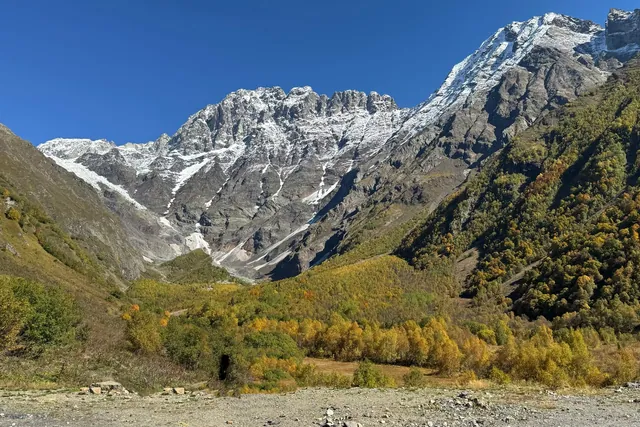
From Tbilisi to Mestia it's 465 kilometres and 8–9 hours at the wheel if you drive without long breaks. There's tarmac the whole way and the road works year-round, but the last 135 kilometres out of Zugdidi are mountain switchbacks and tunnels where your average speed drops to 40–50 km/h. It's far easier to split the drive to Svaneti over two days with a night in Kutaisi or Zugdidi than to heroically do the whole thing in one sitting.
How long the drive from Tbilisi to Svaneti takes
The main route runs via Zugdidi. It looks longer on the map, but it's more predictable and it stays open in winter.
- Tbilisi — Kutaisi: about 220 km, 2.5–3 hours
- Kutaisi — Zugdidi: about 105 km, 1.5 hours
- Zugdidi — Mestia: 135 km, 3.5–4.5 hours
- Total: 465 km, 8–9 hours of pure driving
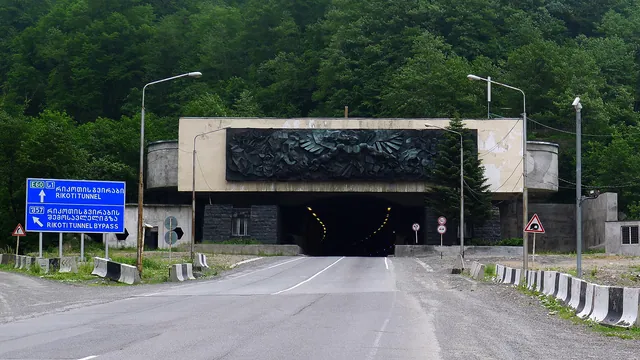
The first leg almost coincides with the Tbilisi — Batumi route along the E60: motorway, the Rikoti tunnels, no surprises. Svaneti proper begins after Zugdidi.
The second option, via Lentekhi and the Zagar Pass, works out shorter in kilometres if you're starting from Kutaisi: about 200 km and roughly 4 hours to Ushguli via Tskaltubo, Tsageri and Lentekhi. The road was paved in 2024, but several stretches were left unsurfaced, nobody clears it in winter at all, and rental companies as a rule forbid this route outright. From Tbilisi it only makes sense as a theoretical detour.
A separate branch runs from Mestia to Ushguli, 45–50 km long. Tarmac appeared there in 2024 and the drive takes an hour to an hour and a half. More on the restrictions on that stretch below — they matter more than the state of the surface.
What the road from Tbilisi to Mestia is like, section by section
The route breaks down into four very different legs, and it's easier to plan your time around them than around the total distance.
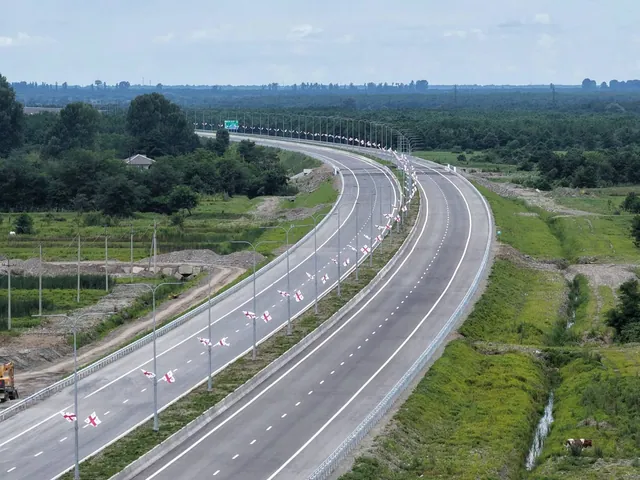
Tbilisi — Kutaisi. The E60 over the Rikoti Pass. It has been rebuilt in recent years into a four-lane expressway with long tunnels and a central barrier, and the driving time has come down noticeably. The one catch is the concrete surface in the rain: it turns slippery and your braking distance stretches out more than you'd expect. In heavy rain hold 70–80 km/h, even if the next lane is doing a hundred.
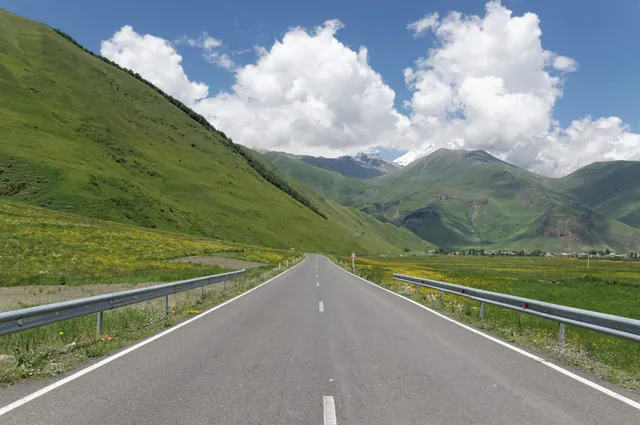
Kutaisi — Zugdidi. An ordinary two-lane road, one lane each way. The tarmac is even and there are almost no potholes, but the road runs through villages: cows on the verge, unmarked pedestrian crossings, locals overtaking across a solid line. Average speed here drops to 60–70 km/h.
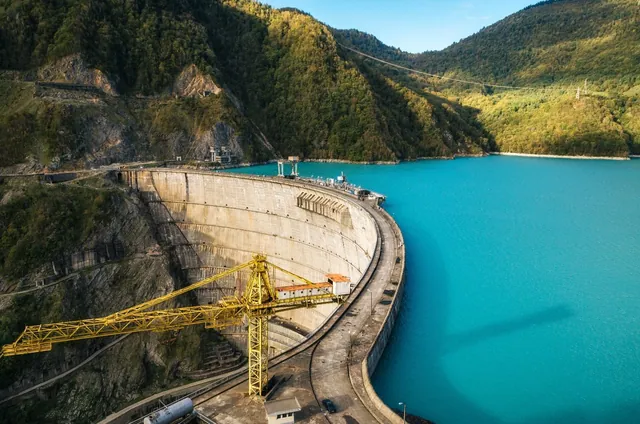
Zugdidi — Jvari. Twenty-odd kilometres, the reconstruction is finished, there's lighting and crash barriers. It's the last stretch where you can relax. A logical short stop before the climb is the Enguri Dam.
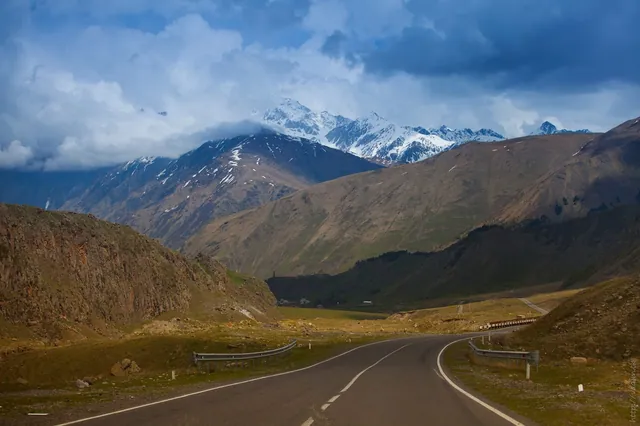
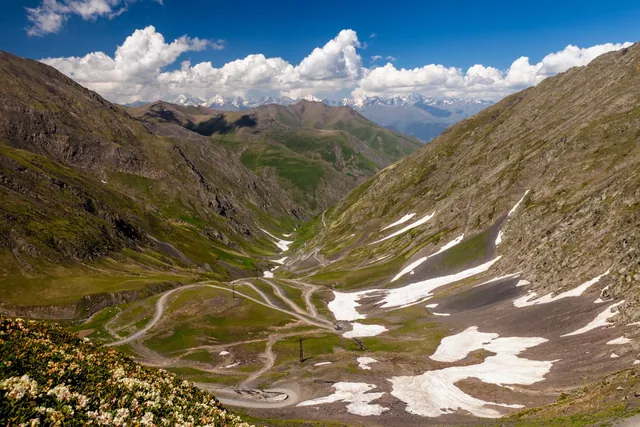
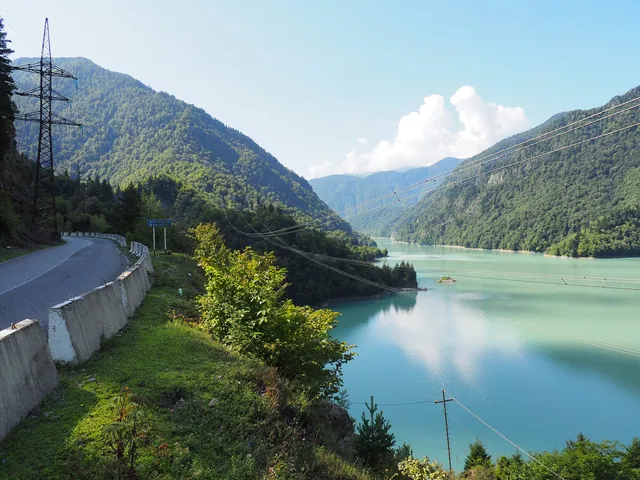
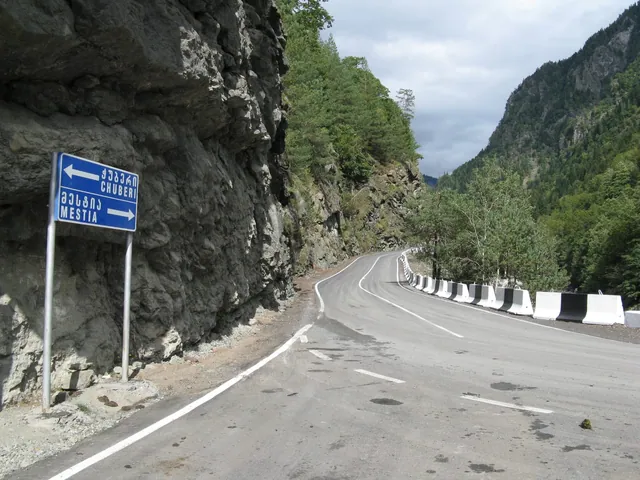
Jvari — Khaishi — Mestia. This is where the mountain road proper starts: switchbacks above the Enguri reservoir, narrow tunnels cut straight into the rock, long climbs. Water drips from the tunnel ceilings in places, the lighting is dim, and on a sunny day your eyes take a moment to adjust at the exit. Rocks from small landslides regularly sit on the carriageway, and a tyre cut on one of those goes instantly. There's almost nowhere to overtake, and you can spend half an hour behind a single slow lorry.
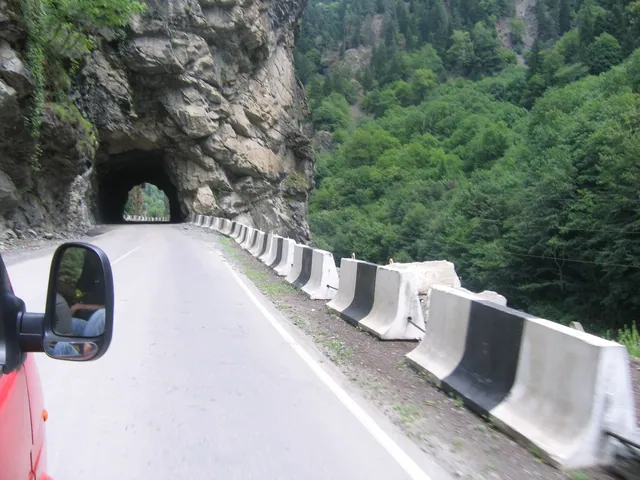
The first time, I left Tbilisi at ten in the morning and covered the last forty kilometres to Mestia in the dark, behind a lorry, on unlit switchbacks. Nothing terrible happened, but there was zero pleasure in it. Now I set off before seven so I can do the mountain section in daylight.
One day or with an overnight stop
Doing it in a single day is perfectly possible, and plenty of people do. But that's eight or nine hours at the wheel plus stops, and you'll arrive in Mestia wrung out and still want to sleep in the next morning. Your first day in Svaneti turns into a recovery day.
A sensible plan looks like this:
- Day one: Tbilisi, breakfast on the road, Kutaisi or Martvili Canyon, a night in Zugdidi. That's about 330 km and half a day in the car.
- Day two: an early start, the Enguri Dam, the climb into the mountains, and you're in Mestia by lunchtime. The rest of the day goes on a walk around the town and acclimatising.
- Back the same way, or via Kutaisi if you're heading on to Batumi.
A night in Zugdidi is cheaper than one in Kutaisi and leaves the hardest leg for the morning. A night in Kutaisi is better if you want a proper dinner in the evening and a look at Gelati and Motsameta — there's a separate guide on what to see in Kutaisi.
What to see on the way to Svaneti
The road crosses half the country, so a couple of stops rather suggest themselves.
- Martvili Canyon — turquoise water, a short float in an inflatable boat, an hour to an hour and a half for the lot. The detour off the highway is small.
- Prometheus Cave — an enormous illuminated karst cave. The queues in summer are respectable, so allow two hours.
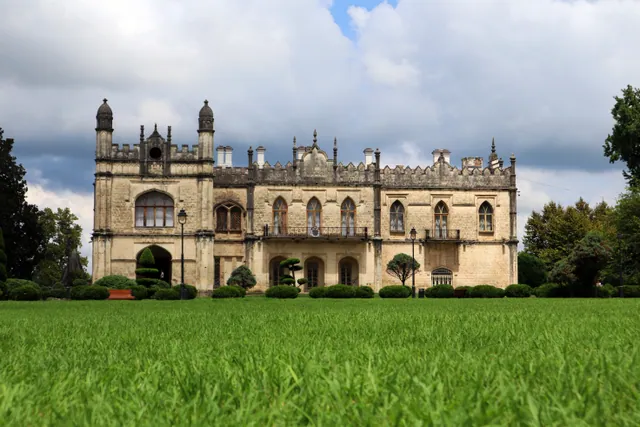
- Dadiani Palace in Zugdidi — if you're staying the night in town, this is the obvious evening programme.
- Enguri Dam — a 270-metre-high dam standing right on the route; you'll pass it whatever you do. The viewpoint over the reservoir is a couple of kilometres further on.
- The waterfalls past Khaishi — there are several right by the road, and in winter they freeze solid and look more interesting than in summer.
Don't line up more than two or three stops a day. The mountain section eats time unpredictably, and it's better to arrive in daylight than to tick everything off.
Which car you need for a trip to Svaneti
In summer an ordinary saloon will get you to Mestia. Local taxi drivers ferry tourists around in a Prius, there's tarmac everywhere, and technically there's no problem. It's a question of comfort: on switchbacks with constant bumps and patched surfaces a low car shakes you around more, and passengers get carsick noticeably faster. A crossover with slightly more ground clearance and softer suspension takes those four hours far better, and on the dirt track to Chalaadi that same clearance will save your bumper.
Winter is a different story. The Zugdidi — Mestia road is cleared, because Svaneti has two working ski resorts, Hatsvali and Tetnuldi. But it's cleared by mountain standards: packed snow, ice on shaded corners, ruts in places. From December to March it's only worth taking all-wheel drive, and winter tyres are non-negotiable. Summer tyres on this road in winter are a direct route into the ditch, and no insurance will cover it. Chains in the boot don't hurt either; when there's avalanche risk the section can be closed for a few hours or for a whole day. It's worth going through the mountain trip checklist before you set off.
When you book a car in Tbilisi, the tyre type and drivetrain are visible up front — this is exactly the case where it's better to check before you leave than in the car park. To get your head around the classes, see which car to choose and jeep or sedan.
Where you're not allowed to drive a rental car
This is the separate point that breaks half of all independent Svaneti plans. There's more on the off-limits areas in the guide to regions rentals can't go.
Most rental companies in Georgia forbid driving the Mestia — Ushguli section and on to Lentekhi over the Zagar Pass. The ban has nothing to do with the class of car: it applies equally to a saloon and to a body-on-frame off-roader. It's a clause in the contract, not a recommendation. Cars are tracked by GPS and the fine for a breach is issued on the fact, plus any breakdown on a prohibited stretch automatically stops being an insurance case.
How to get to Ushguli without breaking the rules:
- A local driver from Mestia. A full day with a car comes to roughly 150–250 GEL; a seat in a shared group is cheaper. The downside: the driver decides how long you get to wander, so agree the timings up front.
- An organised tour with a guide. Comparable in price to a taxi, but at least someone explains what you're looking at.
- The marshrutka. In summer minibuses run between Mestia and Ushguli; the trip takes about two hours and costs somewhere around 30–50 GEL. The timetable floats, so check locally.
- Trekking. The classic Mestia — Ushguli route takes four days with nights in guesthouses along the way.
Other directions around Mestia are usually allowed, but the list differs from company to company. Ask the manager about specifics: Hatsvali, Tetnuldi, the approach to Chalaadi, the road to Mazeri. One exchange of messages before you leave settles the question completely.
Mestia: what's there and what isn't
Mestia isn't a village, as many people expect, but a town with hotels, a dozen cafés, ATMs and a petrol station. There's Queen Tamar Airport right on the edge of town, a tourist information centre, a museum of history and ethnography with a wonderful collection of icons, and the house-museum of the mountaineer Mikheil Khergiani. Mobile coverage in town works fine and there's internet in almost every guesthouse. A detailed look at the town and its surroundings is in the guide to Mestia.
What Mestia doesn't have is round-the-clock life. Guesthouse kitchens close early, around nine. On my first visit I came back from a walk to the glacier just after nine and had biscuits from a shop for dinner, because the two nearest cafés were already mopping the floors. If you're planning a long day in the mountains, warn your hosts in the morning that you'll be back late.
Cash comes in handy: hotels and larger cafés take cards, but the cable car, car parks, horses and small shops more often work in lari. There's an ATM in town, but none in Ushguli, and the signal there comes and goes. It's best to fill the tank right up in Zugdidi: there are practically no petrol stations on the mountain section, and the choice in Mestia is limited.
What to eat in Svaneti
The local food is different from what you get used to in Tbilisi, and it's worth stepping away from the usual khachapuri for it.
- Kubdari — a pie filled with chopped meat, onion and Svan salt. The region's signature dish; it takes about forty minutes to make, so order ahead.
- Chvishtari — corn flatbreads with cheese, fried in a pan. The best breakfast option before a long trek.
- Tashmijabi — mashed potato worked together with melted cheese until it's stringy. Heavy and very warming.
- Svan salt — a mix of salt with garlic, coriander, fenugreek and blue fenugreek. Sold at the market and carried home by the bagful.
Svans traditionally don't drink coffee in the morning, so at breakfast in a guesthouse you'll most likely be poured tea. For my first couple of trips I suffered in silence; now I just bring a jar of instant and spare my hosts the trouble.
Ushguli: why go
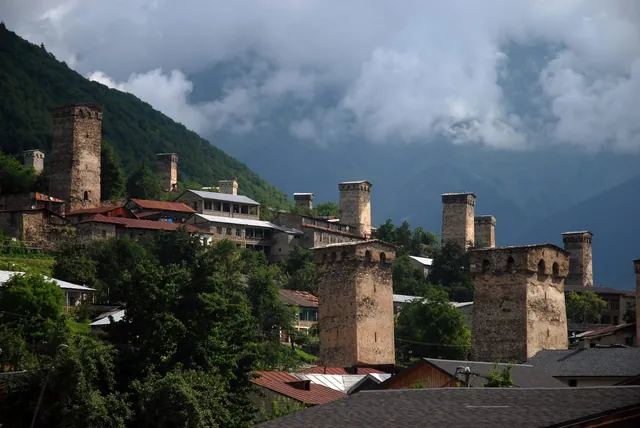
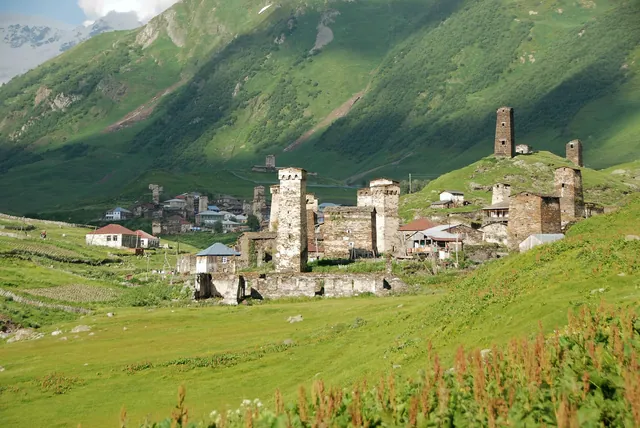
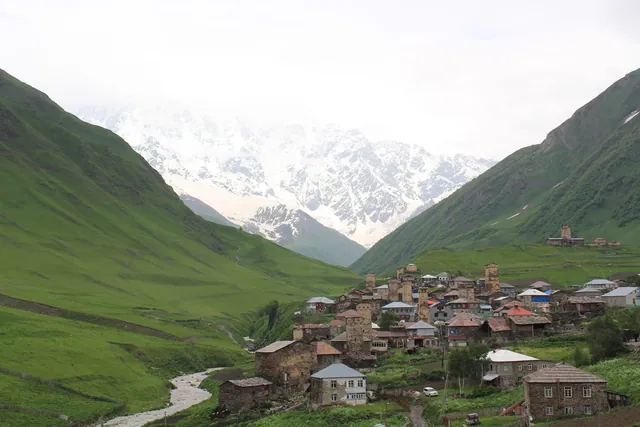
Ushguli isn't a single village but a community of four settlements: Zhibiani, Chvibiani, Chazhashi and Murkmeli. About 250 people live there, the altitude is around 2,100 metres, and it's one of the highest permanently inhabited places in Europe. The architectural ensemble with its towers is on the UNESCO World Heritage list.
What people come to see:
- Lamaria Church on the hill above Zhibiani. Twelfth century, frescoes, and the best spot for a view of Shkhara.
- Chazhashi fortress and the museum in one of the towers. Small, but the icons and objects in it are the real thing.
- The Shkhara Glacier. It's about 8 km up the valley from Ushguli — 5–7 hours there and back on foot with the climb. Part of the way can be driven in a local driver's off-roader; after that it's legs only.
- Shkhara itself, the highest point in Georgia at 5,193 metres. In clear weather it stands right at the head of the valley, and it's the main reason people come here.
The road to Ushguli is open roughly from May to November, with the exact dates depending on the snow. In winter the villages are regularly cut off by avalanches for weeks at a time, and only locals get through.
I set off for the glacier in trainers, because "there's a road, isn't there". The road lasts about five kilometres, and then the moraine starts: wet rocks, streams across the path, and your shoes are soaked within ten minutes. You need hiking boots in Svaneti almost always, even when the day's plan looks like a stroll.
The Mestia — Ushguli trek: four days on foot
Georgia's most popular multi-day route. Nights in guesthouses, no tent needed, the trail is waymarked. The classic breakdown:
- Mestia — Zhabeshi. About 15 km, an easy day along the valley with little climbing.
- Zhabeshi — Adishi. About 11 km, 4–6 hours, roughly 900 metres of ascent. The upper part of the trail follows a ridge, so an offline map is essential.
- Adishi — Iprari. The hardest day: about 18 km, 6–8 hours, and the Chkhunderi Pass at 2,700 metres. The day starts with a ford across the glacial Adishchala — the water is cold and silty, which is why locals ferry hikers across on horseback for a fee. You need to go early in the morning, before the river rises with the day's meltwater.
- Iprari — Ushguli. About 12 km, 3–5 hours, the easiest leg, finishing right at the towers of Chazhashi.
The trekking season runs from mid-June to September. In early June there's still snow above 2,500 metres and the fords are fuller. From Ushguli people get back to Mestia by marshrutka or with a passing driver.
Food is simpler to take as half board at the guesthouses: there are practically no restaurants on the route and the village shops are tiny. There's sometimes nowhere to charge your devices, so bring a power bank with room to spare.
Skiing: Hatsvali and Tetnuldi
Winter Svaneti means two resorts of quite different character, half an hour apart. The season runs roughly from late November to mid-April. For the wider picture on the country's resorts, see the guide to Georgia's ski resorts.
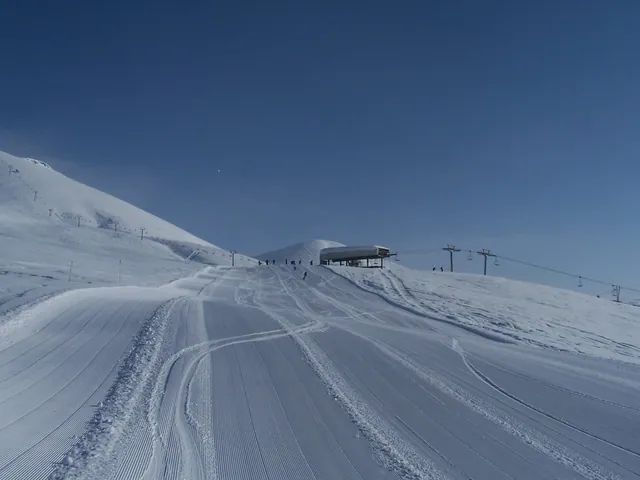
Hatsvali is 8 km from Mestia. The base station sits at around 1,865 metres and the top point, Mount Zuruldi, at about 2,350 metres. There aren't many runs and the vertical is under 500 metres, but there's a chairlift and a gondola, evening floodlighting, rental gear and instructors. A good option for beginners and for anyone travelling with children. In summer the lift works as a viewpoint: an easy trail runs from the top to the weather station.
Tetnuldi is 14 km from Mestia. The lifts go up to 3,165 metres, the runs are longer and more varied, and there's plenty of space for freeriding. The road to the base station is harder than the one to Hatsvali and calls for all-wheel drive in winter. The weather up top changes quickly, and in strong wind the upper lifts are closed.
A day ski pass costs around 30 GEL and a full equipment rental about the same; a combined multi-pass covering several Georgian resorts is sold for 7 and 10 days. Payment is in lari only, and cards aren't accepted everywhere.
Bring sunglasses even if you're not skiing. The snow in Svaneti reflects so fiercely that your eyes start stinging by mid-afternoon — I established this empirically, having left my sunglasses in the car.
What to fit into two or three days in Svaneti
- The Chalaadi Glacier. Georgia's most accessible glacier. You can drive to the end of the dirt track, then it's about forty minutes on foot over rocks. Done entirely on foot from Mestia it works out at 6–8 hours there and back.
- The Hatsvali cable car. The ride up takes a few minutes and opens up a view of Ushba and Tetnuldi. The lift runs during the day, roughly 10:00 to 16:00; the timetable shifts with the season, and missing the last ride down is no fun.
- The Koruldi Lakes. At 2,850 metres, about 10 km from town. On foot that's a full day with serious ascent, so most people take a jeep up from the centre of Mestia for around 150–170 GEL per car. Your own rental won't make it — it's dirt track and fords.
- The "Cross" viewpoint. An out-and-back climb from the museum, a couple of hours up the trail, with a superb angle on Ushba's south face.
- Ushguli. A full day with a driver, because the drive takes an hour and a half each way.
- Mazeri and the Shdugra Waterfall. The valley west of Mestia, a 5–6 hour trek, and a view of Ushba from a different angle. Noticeably fewer tourists.
Two full days in Svaneti means Chalaadi and Hatsvali on the first day and Ushguli on the second. Three days let you add Koruldi or Mazeri. Coming for less than two full days makes no sense: the road will eat more time than you spend in the mountains.
When to go
June and September are the optimal window. The passes are open, the trails are dry, the greenery hasn't burnt off yet, and September brings fewer people and softer light.
July and August are the busiest season with the highest accommodation prices. It's hot down in the valley and cool up top, and afternoon thunderstorms in the mountains are a regular event.
December to March is the ski season. The road works, but it demands all-wheel drive and a time buffer. The road to Ushguli is closed by snow and avalanches at this time of year.
April, May and November are the shoulder season. You can get to Mestia, but the high-altitude trails are still — or already — under snow. Ushguli opens up closer to May; nobody will give you a firmer date, because it depends on the winter.
How to get to Svaneti without a car
| Option | Travel time | Price | Notes |
|---|---|---|---|
| Marshrutka from Tbilisi | 8–10 hours | 50–60 GEL | Leaves when full from Didube or Samgori, first departure around 7:00 |
| Train plus marshrutka | 6 hours to Zugdidi, plus 3–4 hours | from 16 GEL plus 20–25 GEL | Often means a night in Zugdidi |
| Plane | 4–5 hours door to door | about 90 GEL | Departs from Natakhtari; flights get cancelled for weather |
| Transfer with a driver | 7.5–8 hours | from $200 | You can stop along the way |
| Your own or a rental car | 8–9 hours | from $40–60 per day for the car | Freedom of movement once you're there, apart from the prohibited stretches |
The plane deserves a separate note: Vanilla Sky flies to Mestia in nineteen-seat L-410s, but the departure isn't from Tbilisi airport — it's from Natakhtari airfield, 40–50 minutes out of the city. That "one-hour flight" turns into four or five hours door to door in practice. Seats are few and tickets go early, and it's best not to schedule the return flight tight against an international connection: in bad weather the flight is cancelled and you drive nine hours to Tbilisi.
The overall arithmetic works out like this: without your own car you're still tied to taxis once you're in Svaneti, and a day with a driver costs roughly the same as a day of rental. So renting a car in Tbilisi and driving up makes sense even allowing for the long road, if you're planning more than two days in the mountains.
What to bring
- Cash in lari, at least 300–400 per person for three days
- Hiking boots, not trainers
- A windbreaker and a fleece even in July: at 2,500 metres it can be +8 in the daytime
- Sun cream and sunglasses — the UV at altitude is harsh
- Offline maps downloaded in advance, along with the route tracks
- A power bank
- A first aid kit: the nearest serious hospital is several hours from Mestia
The short version
Svaneti from Tbilisi is 465 km and a full day of travel, so allow at least three nights or the trip turns into a transfer for the sake of a transfer. A crossover is enough in summer; in winter you need all-wheel drive on winter tyres. Plan Ushguli with a local driver or by marshrutka: almost no company allows a rental car up there, and that's a contract clause, not a question of ground clearance. Cash, a full tank in Zugdidi, decent footwear and an early start solve most of the route's practical problems.