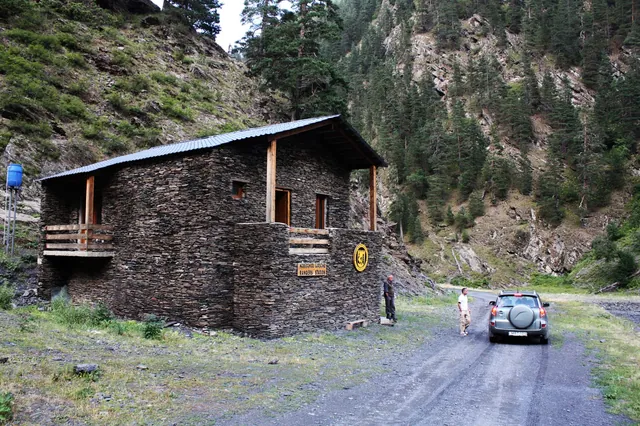

The best wineries in Kakheti: where to go by car
Kakheti wineries: large estates, family maranis and monastery cellars. Routes from Tbilisi, tasting prices and what to keep in mind if you're the one driving.
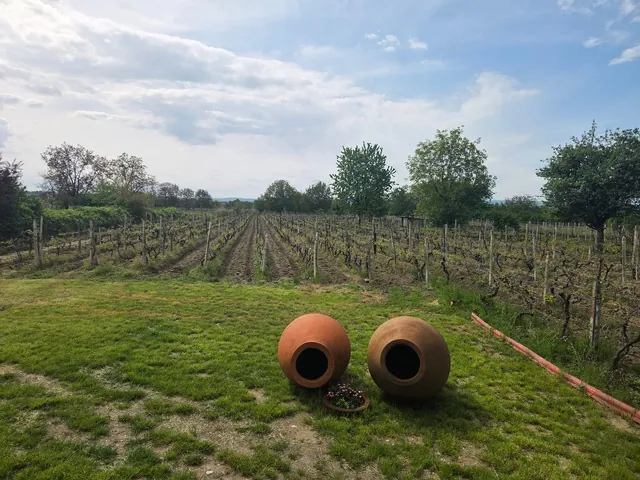
The wineries of Kakheti sit in three compact clusters: around Telavi and Tsinandali, around Kvareli, and around Sighnaghi. From Tbilisi any of them is between 1.5 and 2.5 hours behind the wheel, and in one day you can realistically manage two or three tastings, not eight. Down to business: who's worth the detour, what entry costs, where you need to book, and who in the group stays sober.
How wine-country Kakheti is laid out
Almost all Kakhetian winemaking lies in the Alazani Valley, between the Caucasus range to the north and the Gombori range to the south. It's a strip roughly 120 kilometres long, and every estate worth driving to falls into one of three districts.
Telavi and around. The regional capital plus the villages of Tsinandali, Kisiskhevi, Napareuli, Shalauri and Ikalto. This is where the variety is: from a 19th-century princely estate to a garage marani run by four friends. It's also the closest base for Alaverdi Monastery. Picking up a car in Telavi itself is convenient if you're already based in Kakheti.
Kvareli. The home of Kindzmarauli. Two large wineries with a full visitor programme, restaurants and shops, plus Ilia's Lake right next door if you need to occupy the non-drinking half of the group.
Sighnaghi and the south of the valley. Sighnaghi, Bodbe, Velistsikhe, Gurjaani, Mukuzani. Natural wine, small family cellars, and the best panoramas over the valley and the Caucasus.
Between the two extremes, Sighnaghi and Kvareli, there's about 60 km and an hour and a half to two hours of winding road. In a single day those two clusters don't join up without rushing. In two days they join up comfortably. The classic loop for the map is Tbilisi → Sighnaghi → Telavi: the south of the valley first, then the climb up to the regional capital.
What you'll be tasting: grapes and styles
Kakheti produces roughly two thirds of all Georgian wine, and the spread of styles inside the region is wider than the supermarket shelf suggests. Working out what you actually like saves you half a day and one tasting too many.
White grapes. Rkatsiteli is the backbone, with mtsvane, kisi and khikhvi alongside it. Khikhvi and kisi turn up less often, and at small estates it's worth asking for them specifically.
The red grape. Practically everything red in Kakheti is made from saperavi. It's one of the few vines in the world with coloured flesh, not just coloured skin, which is where the almost inky shade of the young wine comes from.
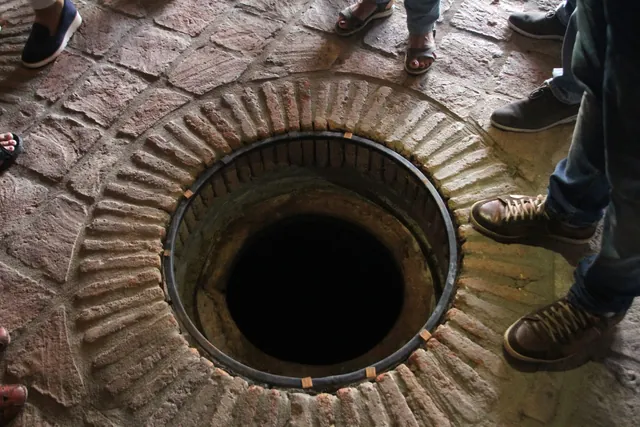
Two production methods. The Kakhetian one means fermenting in qvevri together with skins and stems: white grapes give an amber wine with tannins, noticeably denser than white wine as you usually know it. Qvevri technology has been on the UNESCO intangible heritage list since 2013. The European method means steel, temperature control and pale wine in the familiar sense. Most large estates do both, but everyone puts the emphasis somewhere different.
Micro-zones. The names on the labels aren't brands, they're geographical appellations. Tsinandali means a dry white from rkatsiteli with mtsvane; Mukuzani a dry red aged in barrel; Kindzmarauli and Akhasheni naturally semi-sweet reds from saperavi. The first of those comes from around Kvareli, the second from near Gurjaani.
Which gives you a simple way to choose. If you like dry amber wine with character, head for the family maranis and the natural winemakers in Sighnaghi. If you prefer semi-sweet, that means Kvareli. If you want European style and a tasting with a clear structure, take the large estates around Telavi.
Getting there from Tbilisi: two roads
Two roads lead to Telavi, and they make for fundamentally different drives.
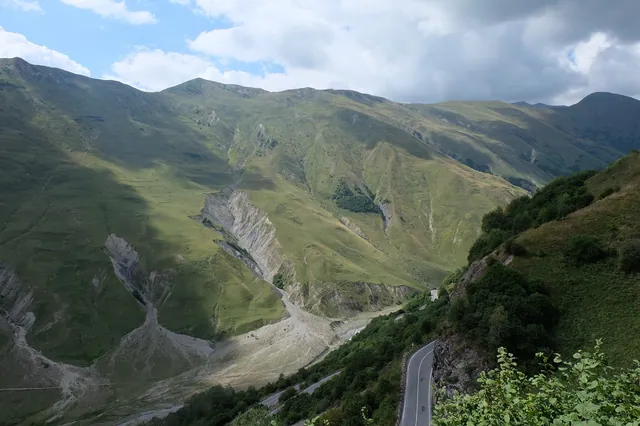
Over the Gombori Pass: 94 km, about 1 hour 40 minutes. Switchbacks, a high point at 1,620 metres, beech forest, and along the way the ruins of Ujarma fortress with a small car park and an information board. The asphalt is fine, but there are a couple of blind corners where rocks regularly come down off the slope. In heavy snow the pass is sometimes closed in winter.
Via Sagarejo and Bakurtsikhe: some fifty kilometres longer, but flat, with no climb and no car sickness in the back seat. This option makes sense if you're heading straight for Sighnaghi: 105–110 km, about two hours. Kvareli via Gombori is roughly 140 km and two and a half hours.
On the descent from the pass your phone loses signal for ten minutes or so. Download the route to your particular winery offline in advance, because village addresses in a navigator often lead to the centre of the village rather than to the gate. There are petrol stations on the highway, but out in the valley it's better not to let the tank drop below half.
Public transport doesn't reach the wineries. Marshrutkas run to Telavi and Sighnaghi, but the estates stand in villages 5–20 km from the bus stations, and a taxi waiting at three stops works out more expensive than a day's car rental. It makes sense to book a car before you fly: on MY.DRIVE you see the final price and can choose pickup at Tbilisi airport, so you don't spend the first day driving into town and back. An ordinary sedan is enough for everything described here: the roads between Telavi, Kvareli and Sighnaghi are paved. A crossover only makes sense if after the tastings you carry on towards Lagodekhi or onto the dirt approaches to particular estates — there's a "sedan or jeep" breakdown in a separate guide.
Large Kakheti wineries with a ready-made programme
I'll start with the ones you can turn up to without booking, where there's certain to be a guide who speaks Russian or English.
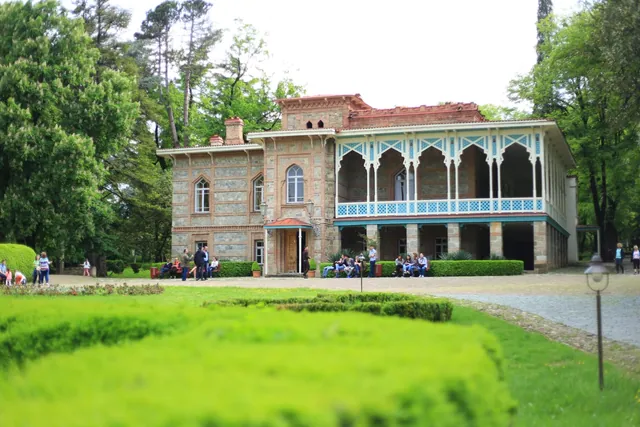
Chavchavadze Estate, Tsinandali. A 10 GEL ticket includes a tour of the house-museum and the old wine cellar plus a walk through the 18-hectare park. For 12 GEL they add a glass, for 35 GEL a five-wine tasting with chacha. Open daily 10:00 to 18:00. This is where, in the 1840s, wine was first bottled in Georgia in European-style glass bottles, and the vinotheque with its 19th-century bottles has survived. The white "Tsinandali" is named after this village. More about the estate itself in the guide to Tsinandali.
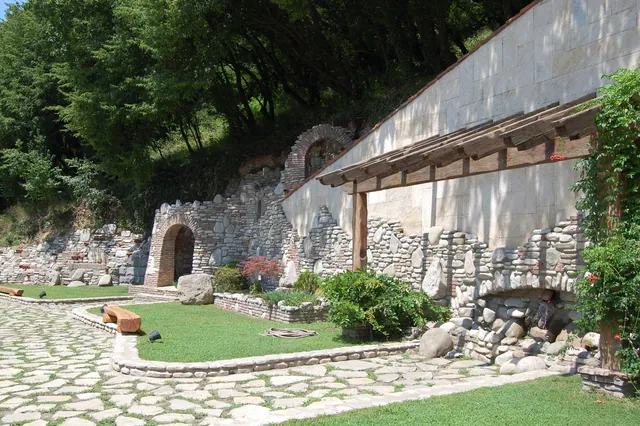
Khareba Wine Tunnel, Kvareli. The passages were cut into the rock in the 1950s for military purposes; today it's 7.7 km of tunnels, two main galleries and 13 connecting corridors between them. Inside it stays 12–14 °C all year with humidity around 70 per cent. Packages start with a token walk through the tunnel and go up to an extended seven-wine tasting with masterclasses in churchkhela and tone-baked bread — in lari, roughly 5 to 100 depending on the programme. Above the tunnels there's a restaurant with a terrace over the valley.
I went in wearing a sundress in August and was shivering twenty minutes later. They hand out blankets at the entrance, but a big group can run them out, so a hoodie in the boot won't go to waste.
Kindzmarauli Corporation, Kvareli. Industrial production: a free tour of the workshops and a tasting of four wines for 8–15 GEL. Not the most atmospheric place on the list, but a useful one. You can see how the production line works, and the factory shop has prices noticeably below Tbilisi's.
Shumi, Tsinandali. A winery, a museum, a collection vineyard with rare varieties and a tasting terrace with grills. Tastings from 15 GEL. It pairs easily with the Chavchavadze Estate — they're in the same village, a ten-minute walk apart. The estate has no working website at the moment, so you book by phone or through wine-tourism platforms.
Mid-sized estates with a signature
Schuchmann, village of Kisiskhevi. Five kilometres from Telavi. A Georgian-German project from the mid-2000s, one of the first of the new wave. The tour of the production, the qvevri cellar and the barrel hall takes about an hour and a half, and the tasting is usually 5–8 wines. There's a hotel on site, a pool and a spa with red-wine baths. A sensible base if you've decided to sleep in Kakheti rather than race back to Tbilisi.
Twins Wine Cellar, Napareuli. The Gamtkitsulashvili brothers' estate, a restored 18th-century family cellar. The main thing here is the qvevri museum: an eight-metre qvevri monument in the courtyard that you can step inside, and rooms showing the whole cycle from shaping the vessel to bottling. More than 135 qvevri are in use. The museum with a tasting runs around 17–25 GEL; there's a hotel, a restaurant and a pond on the grounds.
Shalauri Cellar, on the edge of Telavi. A small winery founded by four friends. The format is intimate, the wines are qvevri wines, and the serving comes without theatre. A good contrast after the industrial scale: the person pouring your glass is the one who made it.
Family maranis: where the wine is poured straight from the qvevri
The most interesting part of wine-country Kakheti, and the most demanding to plan. You can't drop in on a family cellar on impulse: the owner may be out in the vineyard, at the market or simply in another village.
Numisi, Velistsikhe. An ancestral cellar that doubles as a museum: a limestone press, a collection of qvevri and jugs, old tools that clearly weren't bought for effect. A husband and wife receive guests, and lunch is cooked by prior arrangement. The owner's English is basic, her Russian noticeably better.
Vakho Okruashvili's cellar, Velistsikhe. A tiny estate where you see the grape's whole journey: from the garden the juice runs down channels built into the cellar wall and straight into the qvevri. It's poured from the qvevri too, into clay bowls. They cook Kakhetian mtsvadi over vine cuttings. Booking is essential.
Papari Valley. An organic family estate where the Akhasheni, Mukuzani and Gurjaani terroirs meet, with the marani standing in the middle of its own vineyard. The wines are qvevri-made and unfiltered; sediment in the bottle here is the norm, not a fault.
What's worth remembering about all the small estates:
- Arrange it 1–3 days ahead, ideally over WhatsApp. Plenty of them never read email at all.
- Bring cash in lari. Card terminals are far from universal, and the nearest ATM is in the district centre.
- Allow at least two hours. If lunch has been offered, three.
- Check whether food is included in the tasting price. Usually it isn't.
- Numisi, Vakho's cellar and Shalauri Cellar have no websites. Contact goes through the phone, Instagram or Facebook, and the easiest way to find them is by name on the map.
I once planned a day down to the minute: three estates, forty minutes of driving between each. We left the first one three hours later, because turning down a laid table is physically impossible, and the remaining two stops had to be cancelled from the car. Now I put nothing in the plan after a family marani.
Monastery cellars: Alaverdi, Ikalto, Nekresi
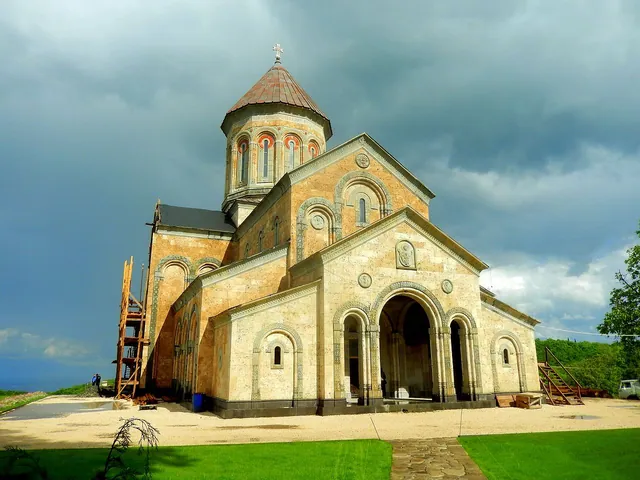
Alaverdi stands 18 km from Telavi, and the cathedral, up to 50 metres tall, is visible from the highway long before the turning. The monks make wine in qvevri, and the labels read "since 1011", after the year of the first harvest. Production was interrupted for centuries and revived in 2006; today several monks run the marani. Excavations on the grounds turned up qvevri from the 8th–10th centuries.
I try to get to Alaverdi for opening time. At nine in the morning there's one monk with a broom in the courtyard and nobody else; the coach groups start arriving closer to eleven.
Ikalto, less than 10 km from Telavi. The ruins of the academy where, by tradition, Shota Rustaveli studied, with stone presses and qvevri sunk into the ground right among the ruins. There are no tastings, but it's free and almost always empty.
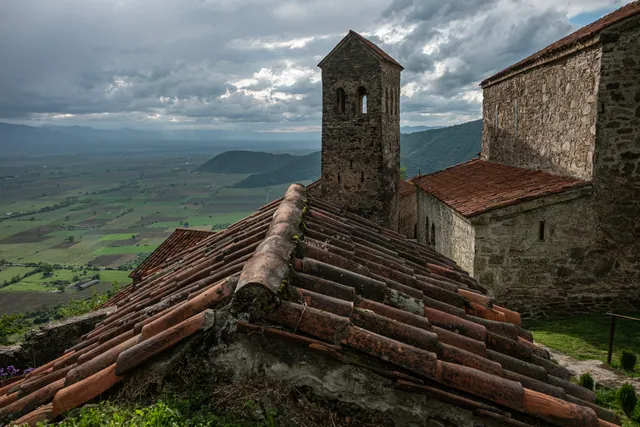
Nekresi above the northern edge of the valley. A 9th-century bishop's palace with a large marani, the circles of buried qvevri still visible in the floor. A shuttle runs up to the complex from the car park; on foot the climb takes about forty minutes.
Monasteries call for covered clothing: shoulders and knees covered, and for women a headscarf and a skirt. There are usually wraps at the entrance, but in season they get taken.
Sighnaghi: natural wine and views over the valley
Pheasant's Tears. The estate of the American artist John Wurdeman and winemaker Gela Patalishvili, one of the places that started the international fashion for Georgian natural wine. Qvevri, no added sulphur, rare varieties like khikhvi and tavkveri. The winery has a restaurant with a seasonal menu: the chef buys at the market in the morning and takes it from there. Book a table in advance, especially in September and October.
Okro's Wines. Joni Okruashvili's estate in Sighnaghi itself. Grapes from his own plots in Tibaani, Manavi and Nukriani. Small batches, a terrace over the valley, and a conversation with the owner instead of a rehearsed tour.
Cradle of Wine Marani. Another spot in Sighnaghi itself, walking distance from the square. The format is simple: a tasting of qvevri wines and a conversation without the tour-guide pathos. Handy if the car is already parked at your hotel and you don't feel like driving anywhere. Neither Okro's nor Cradle of Wine has a working website at the moment, so you'll be arranging things on social media or in person.
Nearby are Bodbe Monastery, where the relics of Saint Nino rest, and the viewpoint over the Alazani Valley. Velistsikhe with its family cellars is half an hour's drive from here. A full breakdown of the town is in the guide to Sighnaghi.
What to expect on Kakhetian roads
The asphalt in the valley is decent, and the difficulties start where you don't expect them.
- Livestock on the road. Cows, pigs and whole herds at sunset, when they're driven home. Brake early — the animal will not give way.
- Tractors in September and October. Trailers full of grapes crawl along narrow roads. Overtaking on switchbacks is a bad idea; it's easier to accept it and follow along.
- Village streets. In Velistsikhe, Napareuli and Kisiskhevi, passing another car sometimes means reversing to the nearest lay-by.
- Night. There's no lighting at all between villages, and the markings are worn away in places. Driving back to Tbilisi over Gombori in the dark is unpleasant — plan to leave in daylight.
- Speed limits. There are cameras on the Kakheti highway, and the limits change on the approaches to villages and towns more often than you'd like.
My worst fifteen minutes behind the wheel in Kakheti happened not on the pass but on a street in Velistsikhe: a herd in front, a tractor and trailer behind, fences on both sides. There were no options at all, only waiting.
Kakheti wineries: the short table
| Winery | Where | Format | Tasting | Booking |
|---|---|---|---|---|
| Chavchavadze Estate | Tsinandali | Museum, park, old cellar | 10–35 GEL | Not needed |
| Khareba | Kvareli | 7.7 km tunnel, restaurant | ~5–100 GEL | For groups |
| Kindzmarauli | Kvareli | Factory, shop | 8–15 GEL | Not needed |
| Shumi | Tsinandali | Factory, museum, vineyard | from 15 GEL | Not needed |
| Schuchmann | Kisiskhevi | Production, hotel, spa | depends on programme | Advisable |
| Twins Wine Cellar | Napareuli | Qvevri museum, hotel | 17–25 GEL | Advisable |
| Numisi | Velistsikhe | Ancestral cellar-museum | by arrangement | Essential |
| Papari Valley | Gurjaani | Organic, marani in the vineyard | by arrangement | Essential |
| Pheasant's Tears | Sighnaghi | Natural wine, restaurant | depends on programme | Essential |
| Alaverdi | 18 km from Telavi | Monastery marani | by arrangement | Advisable |
Prices are indicative: the estates revise them every season, and what's in the tasting depends on which qvevri are open. The names in the table lead to the official websites, where you'll find current rates and booking forms.
Who's driving
The legal limit in Georgia is 0.3‰ — more in our Georgia traffic rules guide. That's less than one glass of dry wine. Going over it means a fine of around 700 GEL and the loss of your licence for up to six months, and the insurance on your rental contract most likely won't help you in that situation.
There are three workable options:
- Appoint a driver. Boring, but honest. They sniff, you taste, and the bottles ride home in the boot.
- Taste but don't swallow. A spittoon exists, or is found instantly, at any winery — you only have to ask. Big producers have long been used to it. At a family marani you'll have to explain that you're driving, but after that the owner usually starts making sure nobody tops you up.
- Stay the night. There are hotels at Schuchmann and Twins, plus every kind of accommodation in Telavi, Kvareli and Sighnaghi. The most honest option of the three: an evening feast in Kakheti always runs longer than you planned.
How a tasting at a family marani actually works
At the big estates the format is clear: a guide, glasses, an order of service, a spittoon. In a family cellar everything is different, and a couple of small things make life noticeably easier.
- A table is laid almost every time, even if you only agreed on a tasting. Refusing is impolite, but you can say honestly that you're driving.
- The first toast is made by the host, who is also the tamada. Nobody drinks before that.
- The memorial toast is drunk without clinking glasses. If the table suddenly goes quiet, just follow everyone else.
- "Thank you, that's enough for me" works. "Thank you, I'm driving" works better and straight away.
- A small gift from guests isn't expected here, though it doesn't surprise anyone either. Tips are rarely left; people buy a couple of bottles instead.
The first time, I honestly tried to keep the tamada's pace. I don't try any more.
If the group includes non-drinkers and children
A full day of wine wears out anyone who isn't drinking, so it's worth stitching at least one non-wine stop into the route.
- Ilia's Lake in Kvareli. A beach, boats, cafés, right next to both of the town's big wineries.
- Batonistsikhe Fortress in Telavi. The palace of the Kakhetian kings, a museum, and a plane tree in the courtyard that's several hundred years old.
- The Pirosmani house-museum in Mirzaani not far from Sighnaghi, and more of his work in the town itself.
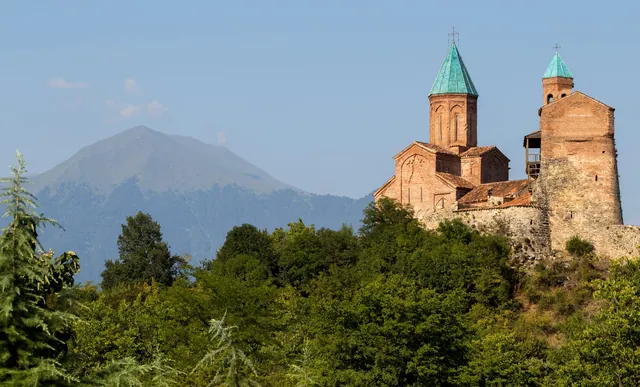
- Gremi Fortress on the road between Telavi and Kvareli. The climb is short and the view over the valley is wide open.
At the large wineries children are usually offered grape juice and a churchkhela masterclass, so an hour or an hour and a half there passes fine.
What to buy and how to carry it
At the estate a bottle costs 10–25 GEL; the same bottle in a Tbilisi wine shop is 40–80. The difference is real, so clear out the boot in advance.
A few things I didn't work out the first time:
- In summer, don't leave wine in the car. In the boot in the sun it easily goes over 40 °C, and that kills sulphur-free qvevri wine in a couple of hours. That's how I lost two bottles of saperavi, bought in the morning and forgotten until evening.
- Six- and twelve-bottle boxes are sold almost everywhere, but the cardboard dividers inside can be flimsy. A couple of T-shirts between the bottles solves it.
- Check the alcohol import limits for your own country; they differ everywhere.
- Chacha is noticeably stronger than it seems at a tasting, where it's poured last.
When to go
September and October is rtveli, the grape harvest. Qvevri are opened, grapes are pressed in courtyards, and many estates let guests into the process. The liveliest time and the busiest: you need to book weeks ahead, not days.
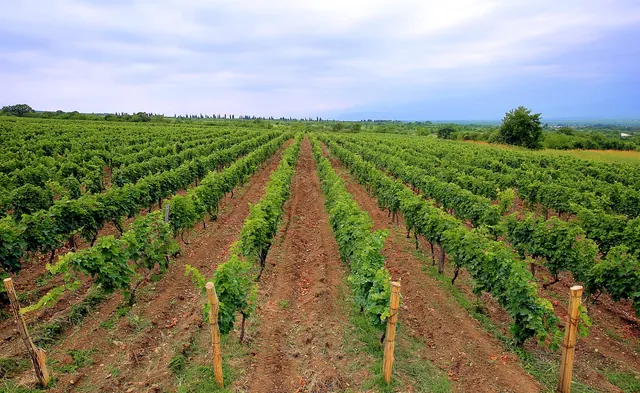
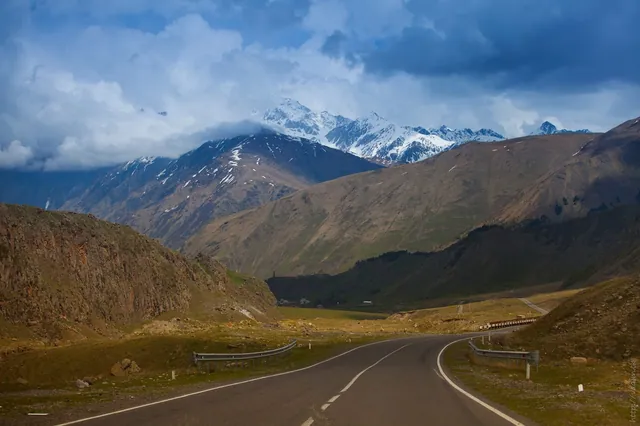
May and June. The valley is green, there are noticeably fewer tourists, there's still snow on the ridge while it's already hot down below. Tastings are unhurried, and the owners aren't busy with the harvest, so they talk for longer.
July and August. The valley can go over 35 °C, and by the middle of the day everything freezes until evening. In that weather the cool tunnel in Kvareli feels like an attraction.
November to March. The large wineries work year-round; family maranis often only by arrangement, and not every day. On the other hand you can sit down in any restaurant in Telavi without booking, and the roads are empty.
Routes for one, two and three days
Kakheti fits well into both day trips out of Tbilisi and summer road trips lasting several days.
One day: Telavi and Tsinandali. About 200 km there and back.
- 8:30 leave Tbilisi over the Gombori Pass.
- 10:15 Chavchavadze Estate in Tsinandali, museum and cellar.
- 11:45 Shumi in the same village, or Schuchmann in Kisiskhevi.
- 13:30 lunch in Telavi.
- 15:00 Alaverdi Monastery.
- 16:30 set off back, in Tbilisi around 18:30.
One day: Sighnaghi and the south of the valley. About 230 km.
- 9:00 leave along the Kakheti highway via Sagarejo.
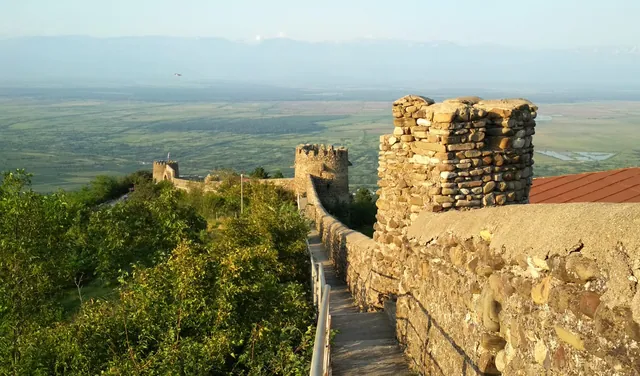
- 11:00 Sighnaghi: the fortress wall, the viewpoint, Bodbe.
- 13:00 lunch at Pheasant's Tears, table booked in advance.
- 15:00 a family cellar in Velistsikhe, by arrangement.
- 17:30 set off, in Tbilisi around 19:30.
Two days: Telavi plus Kvareli. Day one as above, but without the drive home: Tsinandali, Twins in Napareuli, a night in Telavi or at a winery. Day two starts with Alaverdi in the morning, then Kvareli with the Khareba tunnel and Kindzmarauli, and back along the Kakheti highway with a stop in Sighnaghi for sunset. That loop removes the main problem with a day trip, where half the time goes on driving.
Three days. Base in Telavi for two nights, the third in Sighnaghi. Family maranis, Ikalto and Nekresi get added, and the tastings stop running back to back. This is the version where you can afford to actually drink on at least one of the evenings.
The short version
The wineries of Kakheti fall into three clusters: Telavi with Tsinandali, Kvareli, and Sighnaghi. For a single day out of Tbilisi it's sensible to take one cluster and two or three stops within it, no more. The large estates take visitors without booking and suit a first acquaintance; family maranis and the monastery cellar at Alaverdi need a reservation, cash and time in hand. And decide in advance who isn't drinking: a limit of 0.3‰ leaves no room for "half a glass with lunch".