
Gremi: The Archangels' Church and Fortress in Kakheti
Gremi in Kakheti, Georgia — 16th-century history, what to see, ticket prices, and how to get there by car from Tbilisi.
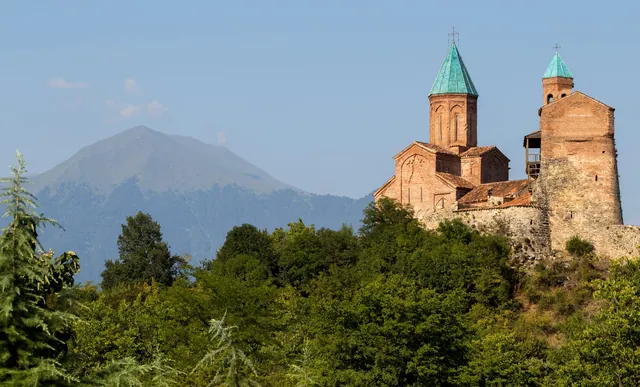
Gremi is a 16th-century architectural complex in Kakheti, once the capital of the Kingdom of Kakheti. On a hilltop above the Alazani Valley you'll find the Church of the Archangels Michael and Gabriel, a three-story bell tower housing a small museum, and the remains of the fortress walls. The grounds and church are free to enter, and the easiest way to get there is by rental car, about a two-hour drive from Tbilisi.
The history of the town and the church
Gremi became the capital of the Kingdom of Kakheti in the early 16th century and quickly grew into a major trading town on the Silk Road, with caravans carrying silk, spices, and fabric between Persia and Europe. Archaeologists estimate the town once covered about 100 acres (40 hectares), split into three parts: the church complex on the hill, the royal residence, and the commercial quarter down by the river.
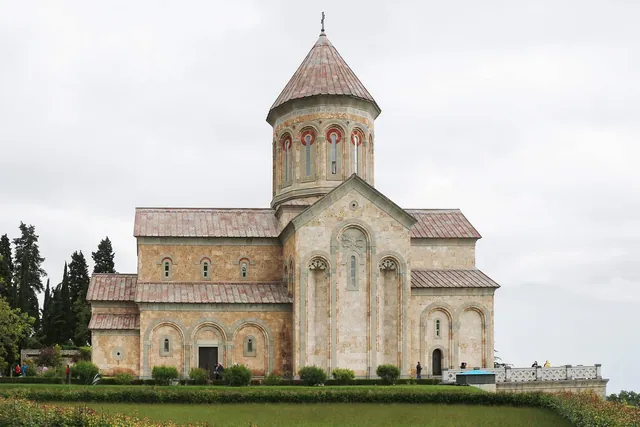
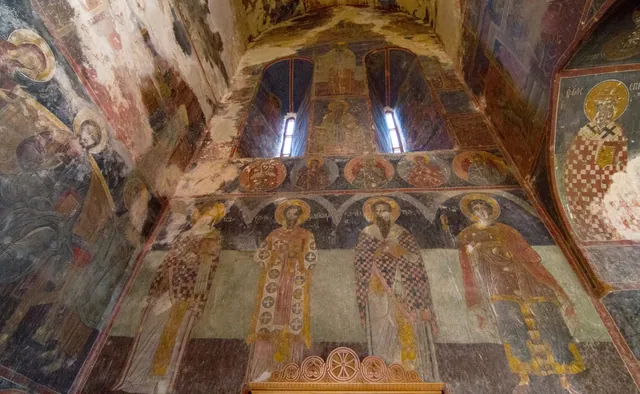
The Church of the Archangels Michael and Gabriel was built between 1565 and 1577 on the orders of King Levan of Kakheti, the same ruler who made Gremi his capital. It's a cross-domed church built of hewn stone, and its design blends traditional Georgian masonry with elements of contemporary Iranian architecture, a reflection of Kakheti's close trade and political ties with Persia at the time. The church has three entrances, facing west, south, and north, and the facade is divided into three arched sections. The dome rests on the corners of the sanctuary and two supporting piers, and its drum is ringed by eight windows. The frescoes inside were completed by 1577, and parts of them survive today, along with King Levan's tomb.
In 1615, the Persian army of Shah Abbas I destroyed the town almost entirely: the trading quarter, the residential streets, and the royal residence were all lost. Only the church complex on the hill survived, likely thanks to its defensive walls and elevated position. The town was never rebuilt, and by the mid-17th century the Kakhetian kings had moved their capital to Telavi, which remains the region's center today.
Under Soviet rule, the monastery attached to the church went largely dormant for decades, with almost no services held between the 1940s and 1999, though a handful of monks stayed on the grounds. Regular services resumed in 1989, and the monastic community was formally reestablished in 1999. Queen Ketevan is considered the site's patron saint, and a daily prayer service is held in her honor. Systematic archaeological excavations took place in 1939–1949 and again in 1963–1967, and since 2007 Gremi has been on UNESCO's tentative World Heritage list.
What to see on site
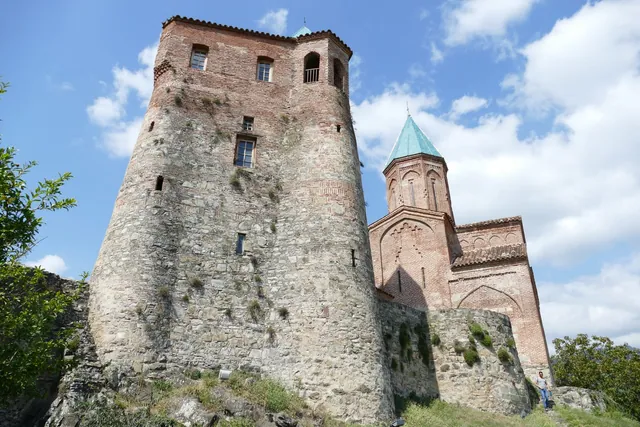
- Church of the Archangels Michael and Gabriel — the main surviving building, with 16th-century frescoes and King Levan's tomb.
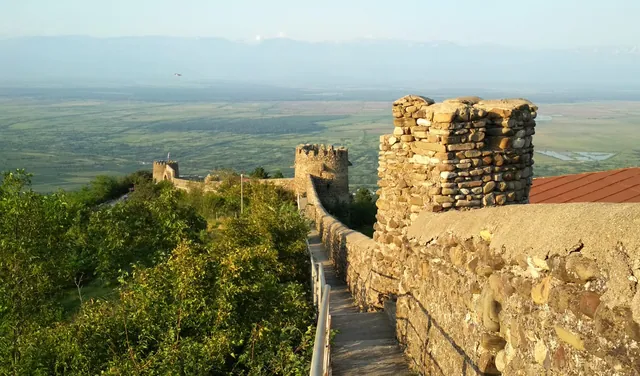
- The bell tower — three stories, now home to a small museum with archaeological finds and a 16th-century cannon. The walls feature portraits of Kakhetian kings by contemporary Georgian painter Levan Chogoshvili (1985). Climb to the top for views over the Alazani Valley.
- Fortress walls with embrasures and turrets that once encircled the church complex.
- A wine cellar (marani) and the remains of a secret tunnel leading to the Intsobi River, likely used to bring water in during a siege.
Plan on 30 to 40 minutes if you don't linger in the museum.
Hours and tickets
The grounds and church are open daily, and services are held regularly. The museum in the bell tower is open roughly from 9 am to 6 pm, and admission runs about 10 GEL (around $4). Prices and hours at small regional museums in Georgia change from time to time, so it's worth confirming on arrival. The ticket booth is usually right at the entrance to the grounds.
Getting there
Gremi is 71 miles (115 km) from Tbilisi. The drive takes 2 to 2.5 hours, depending on the route:
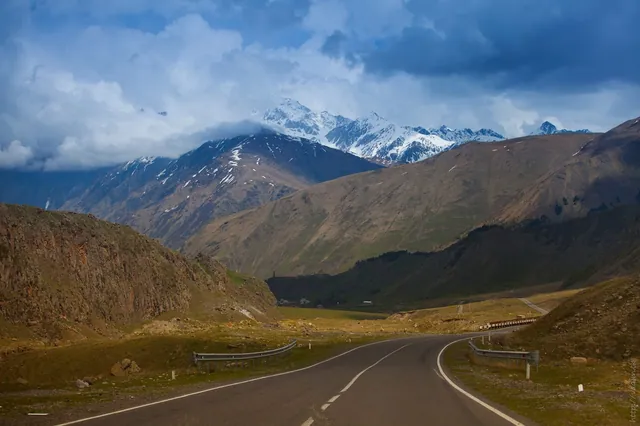
- via the Gombori Pass, the shorter option, though the pass sits above 5,300 feet and can close temporarily in bad weather;
- via Sagarejo and the Alazani Valley, 30 to 40 minutes longer but without the mountain climb.
A minibus from Tbilisi to Gremi takes around 2 hours 20 minutes, dropping you right by the road near the complex, but getting to anywhere else in Kakheti from there means finding a shared taxi or hitching a ride. With a rental car, you cover the same 71 miles without transfers or waiting for the next departure, and you can stop at Nekresi or Tsinandali along the way without working around a bus schedule. Taxis and private transfers are the other options if you're not driving yourself, but on a route with several stops, a rental car usually works out cheaper and more flexible timewise.
What's nearby
Gremi sits right on the road, so it's almost always paired with other Kakheti sights in a single day:
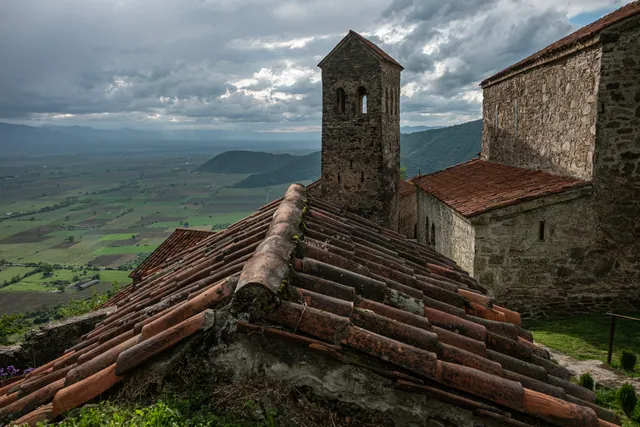
- Nekresi Monastery — 6 miles (10 km) away, one of the oldest monasteries in Georgia, though reaching it means a walk uphill (or a local shuttle).
- Kvareli — wine cellars and lakes, about 15 minutes by car.
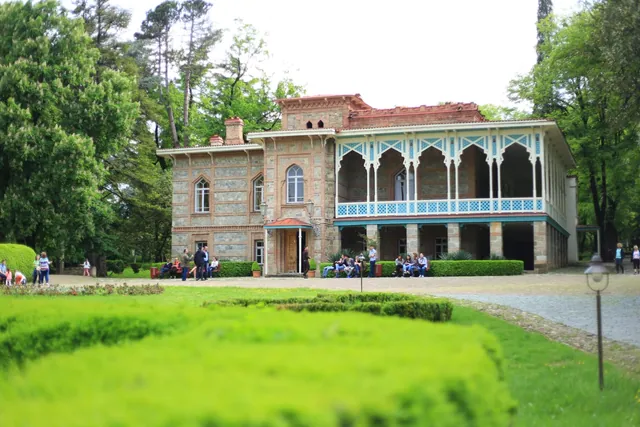
- Tsinandali — the Chavchavadze family estate and vineyards, on the way back toward Tbilisi.
- Telavi — Kakheti's regional center, home to the Batonis-Tsikhe fortress and a 900-year-old plane tree, 12 miles (20 km) from Gremi.
Gremi, Nekresi, and Kvareli fit comfortably into one day if you leave Tbilisi in the morning.
Worth knowing
Gremi is a short stop, 30 to 40 minutes, but it fits naturally into a Kakheti day trip alongside Nekresi, Tsinandali, and Kvareli. The grounds are free, and the museum plus tower climb runs about 10 GEL. The drive from Tbilisi takes 2 to 2.5 hours each way, and covering that distance by car makes it far easier to combine with the nearby sights than working around minibus timetables.