
Parking in Tbilisi: zones, rates and how to avoid a fine
How parking works in Tbilisi: the zonal system, 1 GEL per hour around the clock, the Tbilisi Parking app, passes and fines starting at 50 GEL.
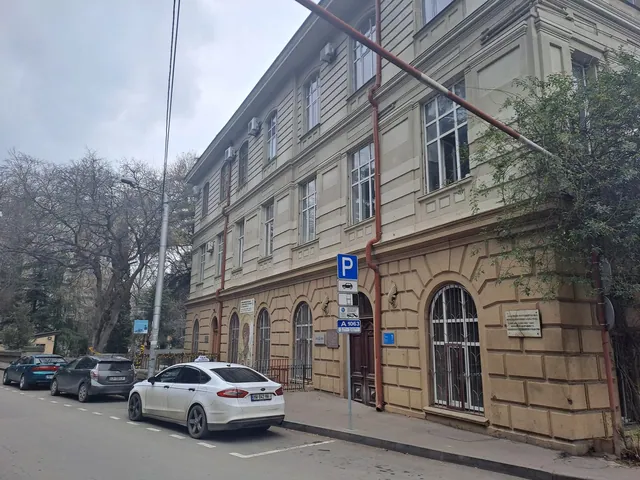
Parking in Tbilisi is far more logical than it feels on your first day behind the wheel: what unsettles people isn't the system, it's the habit of hunting for a catch in it. The centre runs on paid zonal parking — 1 GEL per hour, paid through an app or a terminal. An unpaid spot earns you a 50 GEL fine, and on a bad day the car gets towed. But drive a couple of blocks out of the centre and parking is free again, as if no system existed at all.
Let me take it in order: how to tell whether a spot is paid, how to pay, when a pass is worth buying, and what to do about the men in vests.
Three types of parking: you'll tell them apart within a day
The first thing worth learning is how to read the spot you're pulling into. There are only three options.
Free street parking. This covers most residential blocks and everything outside the centre. No markings and no zonal parking sign — leave the car and get on with your day. The only thing asked of you is not to block the roadway, courtyard entrances or pedestrian crossings. In Tbilisi courtyards that isn't a formality: a narrow passage is easy to block with one badly parked car, and you'll be sorting it out with the neighbours.
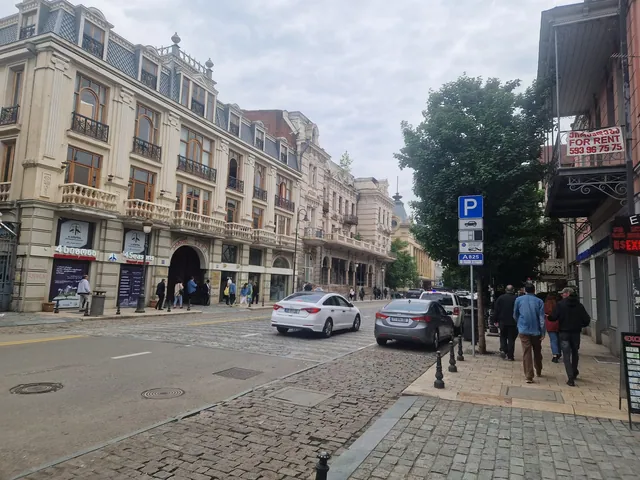
Zonal hourly parking. The centre: Kote Abkhazi, Abanotubani, Rustaveli Avenue and the lanes around them. The giveaway is simple — a sign on the pole with a blue "P" and a code like A722. That's the zone number, and it's exactly what you enter when you pay. If there's a code on the plate, the spot is paid, no exceptions.
Enclosed car parks — underground and guarded lots at shopping centres and hotels. You pay on entry or on the way out; it's pricier than the street, but in the Old Town it's sometimes the best call: leave the car, walk around, and stop counting your mirrors on the tight turns.
How much parking costs in the centre
In practice, nearly all of central Tbilisi is a single tariff zone: 1 GEL per hour. Zones B and C with higher rates, 2–3 GEL, were written into the system from the start, but in reality they aren't applied. So go ahead and budget 1 GEL/hour — that's the real price of any zonal spot.
The first 15 minutes are free: you can dash into a pharmacy or pick up an order without paying anything.
Here's what to make peace with straight away, though: zonal parking runs around the clock. There's no free night window here — the rate applies at three in the morning, on a Sunday and on public holidays alike. Arrive at your place in the centre late in the evening and the meter is still running.
The zone type and the rate are always written on the plate beneath the "P" sign. A small thing, but a useful habit: look at the pole before you walk away from the car, not after you come back to it with a fine.
How to pay: three ways, and all of them work with a foreign plate
- The Tbilisi Parking app (App Store / Google Play) — the most convenient option. Download it, enter your plate number and the zone number from the pole, top up the balance with a card. The app handles foreign plates just fine.
- parking.tbilisi.gov.ge — the same logic, only in a browser, with nothing to install.
- Street payment terminals — they stand within 50 metres of any paid zone and take both cash and cards.
The plate number is entered in Latin characters — the one place where newcomers regularly trip up. There are no special rates or exemptions for foreigners: everyone pays the same.
The same site, parking.tbilisi.gov.ge, also lets you check whether a fine has already been issued: enter your plate and look. Before returning a rental car this is worth doing without fail — it saves nerves for you and for the rental company. If a fine has already landed, the procedure is the same as for ordinary traffic fines: find it first, then pay it.
Passes: there are two of them, and they get confused constantly
Tbilisi has two parking passes, and the difference between them is fundamental — which is exactly where most of the misunderstandings come from.
The city (municipal) pass works on ordinary marked parking spaces across the city — the ones where the "P" sign stands without a zone code. It costs 50 GEL per year, 25 GEL for six months or 4 GEL per week. You buy it through parking.tbilisi.gov.ge or at a street terminal.
The key point: it does not cover zonal spots in the centre. There you still pay your 1 GEL per hour separately. The city pass is about non-central districts, where there are markings but no hourly rate.
The all-inclusive zonal pass covers the centre as well. Prices: 800 GEL per year, 500 GEL for six months, 300 GEL per month, 100 GEL per week, 20 GEL per day.
When a pass is genuinely worth it
The maths takes two lines. The daily zonal pass costs 20 GEL, and an hour of parking costs 1 GEL. So it only pays for itself if you keep the car in zonal spots for more than 20 hours a day. For someone who came to see the city, that's pure fantasy.
The weekly one at 100 GEL already makes more sense: it's justified if you're living in Tbilisi for longer than two weeks, driving every day and genuinely leaving the car in the centre for 5–6 hours daily.
For most tourists on a 3–10 day trip, a pass isn't needed. It's simpler to pay as you go through the app — and noticeably cheaper.
There's one exception worth knowing about: if you're renting a place outside the centre but driving into the centre every day, the city pass at 4 GEL per week pays for itself almost immediately — but only on ordinary municipal spaces without a zone code. It still doesn't cover the centre with its A722-style codes: there you pay 1 GEL per hour separately. For non-central parking, that's a sum not worth a second thought.
Attendants in vests: to pay or not
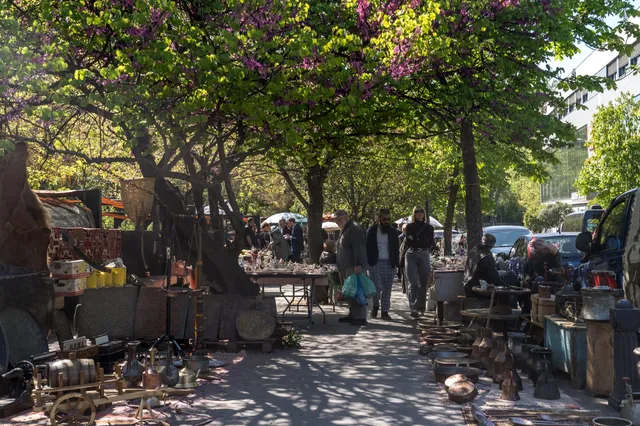
Near markets, hospitals, restaurants and tourist spots you'll invariably meet people in orange or green vests, waving their arms and guiding you into a space. Everyone's first question is the same: is this official?
No. Their services are not compulsory and not regulated: by law they can't demand money, and the lot where they're on duty is usually free anyway. Most drivers hand over 0.50–2 GEL — and for help with a manoeuvre on a narrow street on a slope, that's honestly reasonable money. You can also decline, with no consequences whatsoever.
An important corollary: the presence of an "attendant" doesn't make the spot paid. No zonal parking sign means nothing owed to the city.
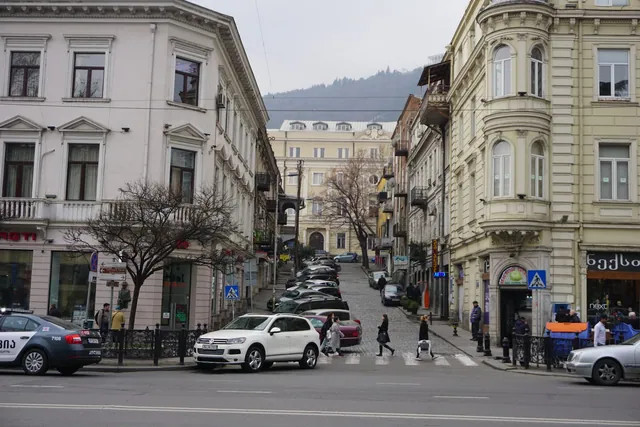
Fines and towing
The system looks relaxed, but it works — and that's worth keeping in mind.
- 50 GEL — an unpaid zonal spot or parking where it's prohibited
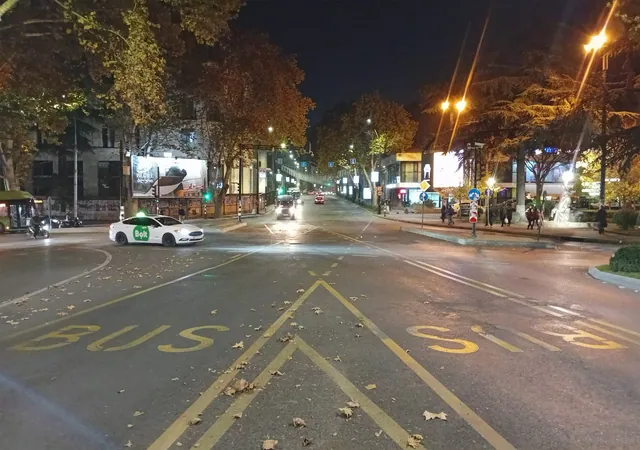
- 100 GEL — parking in a public transport lane
- Towing — around 200 GEL on top of the fine itself. There are three impound lots in the city, and retrieving a car on a weekend is a half-day quest of its own
Inspectors walk around in plain clothes with tablets and simply check plates against the database. Nobody warns you or leaves a note under the windscreen — you find out about the fine later, on the website. How traffic rules in Georgia work in general is covered in a separate guide; parking gets a short mention there too, if you want a cheat sheet before setting off.
Where to look for free spots
- Sololaki and Mtatsminda — residential blocks 10–15 minutes on foot from the tourist spots, no zonal signs there, and you can park in the courtyards. Just watch for no-parking signs, they do turn up.
- Districts outside the centre — Isani, Chugureti, Nadzaladevi: beyond the paid zones, parking is free almost everywhere.
- A hotel with its own parking — check before you book. Small guesthouses in the Old Town usually don't have any, and you find this out at the worst possible moment, with suitcases in the boot.
And the trick that works best of all: ask your apartment host where the locals park. Those spots never make it into tourist guides, but every resident of the building knows them.
Parking with a rental car
The traffic rules and the rates are the same for everyone: foreign and Georgian plates are charged identically, and the app accepts any plate number. Before your first drive it's also worth refreshing what matters when renting a car in Tbilisi — documents, deposit and insurance all in one place.
Some rental companies include municipal parking in the rental price — in which case you pay nothing extra at all on ordinary street zonal spaces. Check this in advance; it's the kind of question that saves both money and email threads.
And one more detail about the centre that rarely gets written about: the streets of Sololaki and Mtatsminda are narrow and steeply pitched. Squeezing into a space between two cars there is noticeably calmer in a car with an automatic — pulling away uphill on a manual in those lanes is a below-average pleasure.
At MY.DRIVE the rental terms are transparent: everything included in the price is visible before you book, and you can ask about parking and the rest through support.
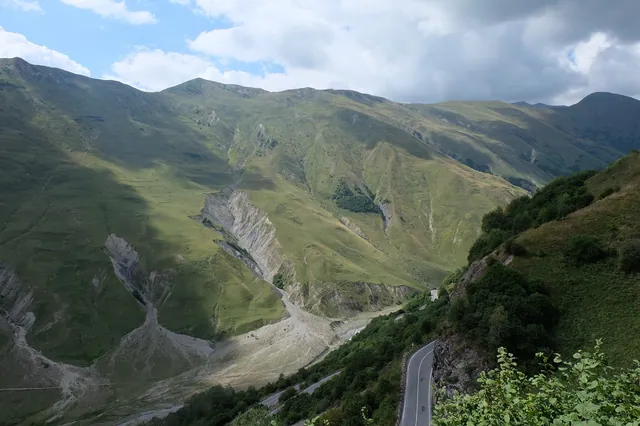
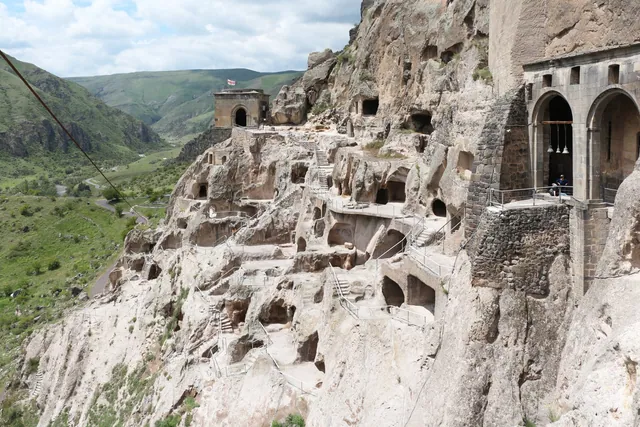
If you're planning to get out of the city — day trips to Mtskheta, Kazbegi and Vardzia are collected in the Journal, and common questions are answered in the FAQ.
In short
In central Tbilisi it's 1 GEL per hour around the clock, the first 15 minutes free, paid through the Tbilisi Parking app or a street terminal. Outside the centre parking is mostly free. The fines are real: 50 GEL for an unpaid spot, 100 GEL for a bus lane, around 200 GEL for a tow. A tourist on a 3–10 day trip doesn't need a pass — the app is enough; it only makes sense for people living in the city and driving into the centre every day. And the one habit that spares you all of this at once: look at the pole before you walk away from the car.