
Kutaisi Airport: what to know before you land
How Kutaisi Airport works, how to get to Tbilisi and Batumi, where to pick up lari and what to do when your flight lands in the middle of the night.
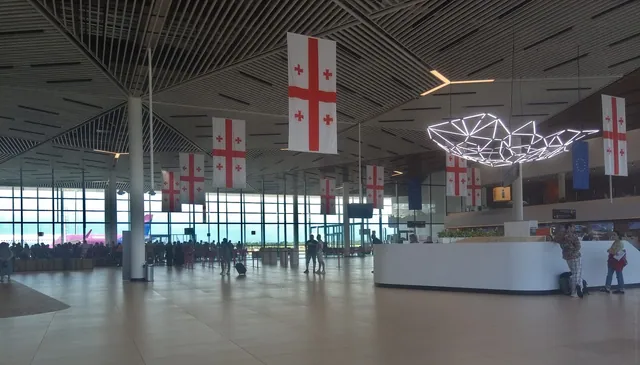
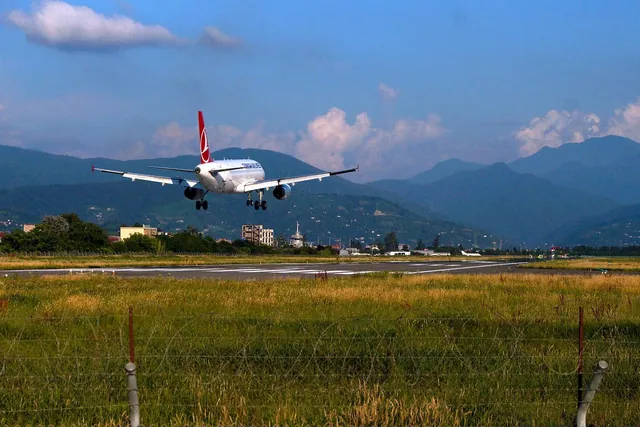
Kutaisi Airport (Kopitnari, code KUT) is the Wizz Air base in Georgia and the main way in for anyone flying on a budget: tickets here are often cheaper than to Tbilisi. The terminal is small, it stands 20–25 km from the centre of Kutaisi in open countryside, and leaving is harder than arriving. Here's how the place works and what's worth deciding in advance.
Where Kutaisi Airport is
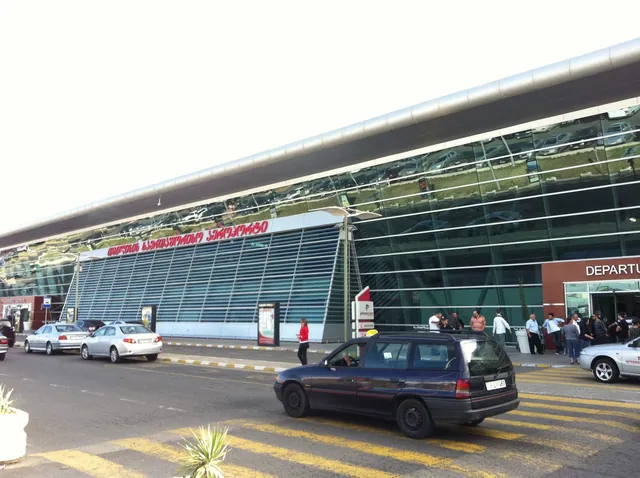
Officially it's David the Builder International Airport, but in conversation and on road signs you'll far more often hear "Kopitnari", after the village next door. It's about 20 km from the terminal to Kutaisi, roughly 125 km to Batumi and about 230 km to Tbilisi. There's no town around it: a petrol station, the highway, fields. You can't walk anywhere useful from here, so the "I'll land and figure it out" plan works badly, especially at four in the morning.
How the terminal works
The airport is built for roughly one or two simultaneous flights, and you can feel it. Arrivals and departures share one building, and it takes about ten minutes from the aircraft steps to the arrivals hall if you're lucky with the passport control queue. If you're not, and several aircraft have landed back to back, that queue stretches to forty minutes and more. For comparison: Tbilisi Airport is bigger both in passenger flow and in infrastructure, while Batumi Airport sits closer to its city and to the sea.
Inside there are:
- ATMs and a currency exchange counter in the arrivals hall;
- a couple of cafés and a small duty free airside;
- car rental and transfer desks by the exit;
- free Wi-Fi, patchy but good enough to send an email.
There's no left luggage, and no rest lounges either. Power sockets are few, and at night there's mild competition for them.
Night flights: what to expect
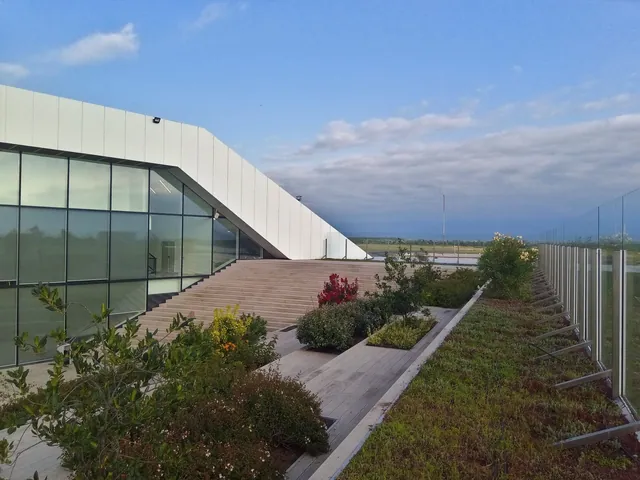
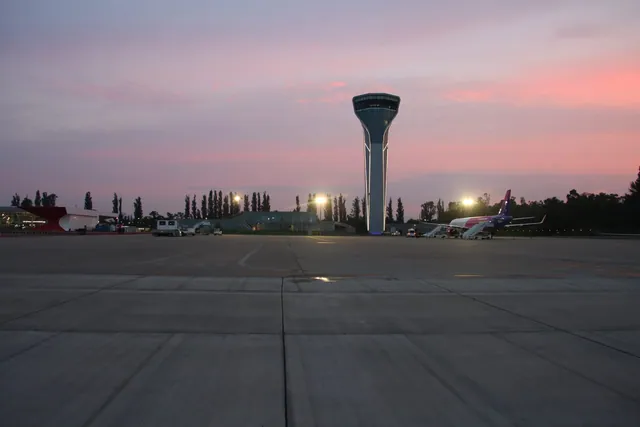
A large share of the schedule falls at night and in the early morning — that's how low-cost carriers save on airport charges. The practical effect: you land at two in the morning, the café is closed or barely operating, and it's fresh outside even in summer, because Imereti is a valley in the foothills, not the coast. On my first arrival I stood at the exit in a T-shirt for a good twenty minutes while the driver hunted for the right car in the car park. A thin jacket has travelled in my hand luggage ever since.
One more detail: at night passport control doesn't open all the booths. Allow an extra half hour if you have a scheduled bus or a transfer booked for a fixed time.
Money, connectivity, water
Georgia's currency is the lari. There are Bank of Georgia and TBC ATMs in the arrivals hall, but the exchange rate at the airport is traditionally worse than in town. It makes sense to withdraw just enough for the journey and a taxi, and change the rest in Kutaisi or Tbilisi. Cards are accepted almost everywhere, but minibus drivers and markets want cash.
You can buy a SIM card at the airport itself if the operator's desk happens to be open when you land; at night they often aren't. The alternative is an eSIM set up in advance, or a phone shop in town, where the choice of tariffs is wider. More on that in the guide to SIM cards and mobile internet in Georgia. Water in the terminal is expensive. An empty bottle in your hand luggage and the water cooler past security solve that on the way out.
How to get away from Kutaisi Airport
The main options:
- Georgian Bus and Omni shuttles. They run to a timetable tied to the flights, going to Kutaisi, Batumi and Tbilisi. It's easier to buy the ticket in advance online — in high season the seats go. The cheapest way to travel.
- Marshrutkas from the highway. Cheaper than the shuttle, but with no timetable: they leave when they're full. With suitcases, and at night, not the best choice.
- Taxi. They wait by the exit, name the price on the spot and it's usually above the going city rate. Ride-hailing apps do work in Georgia, but there aren't always many cars near the airport at night.
- Transfer. Booked in advance, with the driver meeting you holding a sign. Pricier than the bus, but you don't have to solve logistics after a night flight.
- Car rental. Worth it if Kutaisi isn't a transit point for you but the start of a route across western Georgia. Book the car in advance: at the desk in the airport or in the city itself it's easier to collect a car you've already chosen than to choose from whatever is left after a night arrival.
There's a railway station at Kopitnari about 2 km away, but the trains are infrequent and barely connected to flight times. I wouldn't count it as a working option.
How long it takes to Tbilisi and Batumi
- Kutaisi — 20–25 minutes.
- Batumi — around 2–2.5 hours on the highway along the west of the country.
- Tbilisi — 3–4 hours on the E60 via the Rikoti pass.
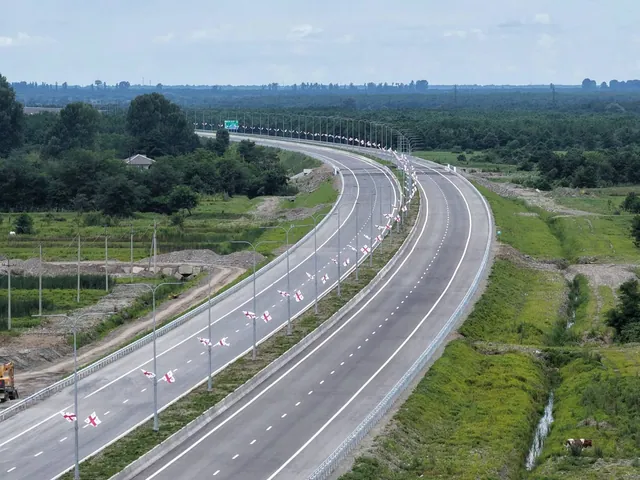
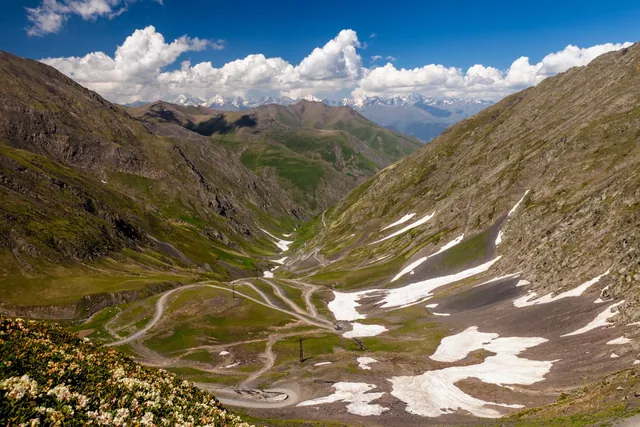
The road to Tbilisi is now fully open along the new expressway: the old switchbacks over the pass have been replaced by tunnels and bridges, and the whole way to the capital runs on highway. The drive has become noticeably faster and calmer, and the mountain road is now something you'd only choose deliberately, for the views. That same corridor forms the backbone of the Tbilisi — Batumi route.
What's nearby if you have half a day free
The airport is conveniently placed for several well-known spots in Imereti and Samegrelo:
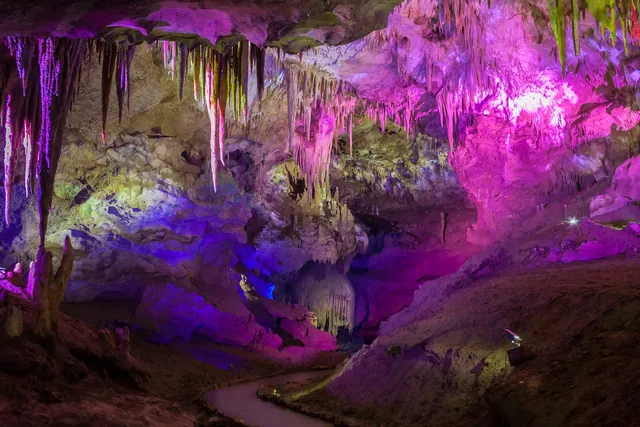
- Prometheus Cave — about 20 km, floodlit underground halls and a short boat ride;
- Sataplia — a reserve with dinosaur footprints and a glass viewing platform, right next to Prometheus;
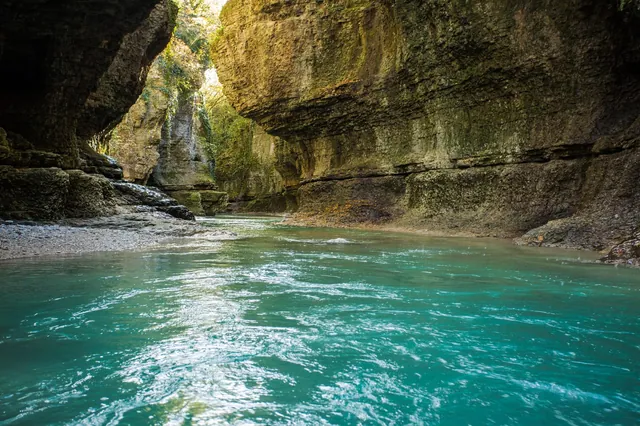
- Martvili Canyon — roughly 40 km, boats between sheer green walls.
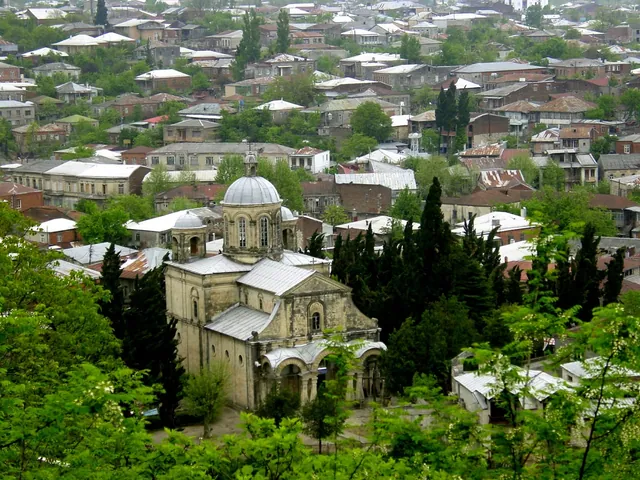
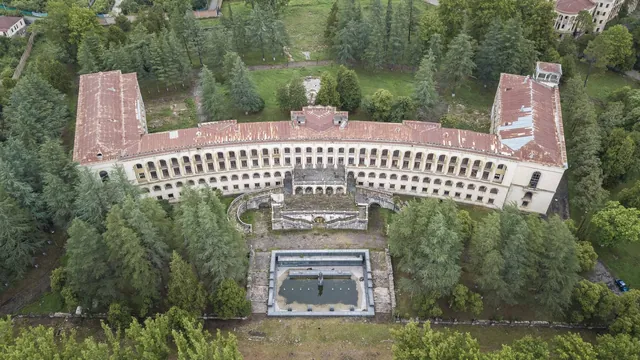
All of it fits into a single day, as long as you're not rushing for an evening flight. Closer to the city, Tskaltubo is an easy stop to add.
Departures: when to arrive
The terminal is small, and there are no queues here on the scale of Tbilisi or Istanbul. Two hours before departure is plenty, and an hour and a half works too if you only have hand luggage and you've checked in online. On baggage specifically: hand luggage dimensions are checked strictly, the sizer sits right at the entrance to security, and paying at the airport is noticeably more expensive than buying a bag allowance online.
In short
Kutaisi Airport is a compact low-cost hub 20 km from the city and 3–4 hours from Tbilisi on the new highway. There's no left luggage, few services at night and no town around it — so the bus, the transfer or the car is better sorted out before you fly, not in the arrivals hall. Bring cash lari for that first journey and something warm in your hand luggage. Everything else here is simple, and that's the main advantage of small airports.