
Mobile Internet in Georgia: A Tourist SIM Card Guide
Which SIM card to buy in Georgia: Magti, Silknet and Cellfie compared, plan prices, coverage on mountain roads, and when an eSIM makes more sense.

Mobile internet is one of the rare expenses in Georgia you don't need to economise on: a month of unlimited data costs 30–50 GEL (~$11–18), and 4G reaches even the switchbacks. The only real questions are which operator to choose and where to buy the SIM so you don't pay double for the exact same plan. I've set up local numbers both for travellers and for myself, and driven with them from Kakheti to Svaneti — below is what actually matters for staying connected on the road.
Three operators and who each one suits
The choice in Georgia is small: three networks, and the difference between them becomes obvious the moment you leave the city.
Magti (MagtiCom) — the market leader and my default pick for any trip with a car. 4G coverage is claimed at 99% of populated territory, Kazbegi and Svaneti included. On the Georgian Military Highway from Tbilisi to Stepantsminda the signal holds almost without a break, so navigation doesn't cut out on the worst possible bend. In central Tbilisi speeds run 50–100 Mbps, which is plenty for video calls and for uploading the day's photos from your apartment in the evening.
Silknet (formerly Geocell) — the second-largest network. Stable in cities and on the main tourist routes, and it works at altitudes up to 2,600 m. In deep gorges the signal drops more often than Magti's. A sensible choice if your route is Tbilisi, Batumi and the tarmac in between.
Cellfie (formerly Beeline Georgia) — the budget network for city trips. The cheapest short plans, but coverage outside the big cities is noticeably weaker. Take it if you're based in Tbilisi and don't plan to go further than Mtskheta.
The very short version: heading into the mountains or renting a car — Magti. Staying in the city for a couple of days — you can save on Cellfie and never notice the difference.
What it costs
The SIM itself runs 2–10 GEL: a blank Magti or Silknet card costs less than a dollar, slightly more if it already has a plan loaded. After that you simply top up the balance and activate a package.
Magti — tourist plans:
- 15 GEL (~$5.5) — 5 GB + unlimited SMS, 15 days
- 30 GEL (~$11) — 20 GB + on-net calls, 15 days
- 50 GEL (~$18) — unlimited internet + 500 minutes, 30 days
Silknet:
- 5 GEL — 800 MB
- 15 GEL — 6 GB
- 37–40 GEL — unlimited for a month
Cellfie:
- 3 GEL — 1.5 GB for 14 days
- 6 GEL — 4 GB for 14 days
- 15 GEL — 30 GB for 14 days
These figures are current for 2025–2026, but the operators reshuffle what's inside their plans more often than one would like: before buying, open the Magti or Silknet website and check the data allowance and validity. Plan names at the kiosk and on the website don't always match — go by the price and the gigabytes.
⚠️ Important: at the airport the same plans cost 20–30% more than in the city. Unless you're in a rush, buy your SIM once you're in Tbilisi.
Where to buy: airport or city
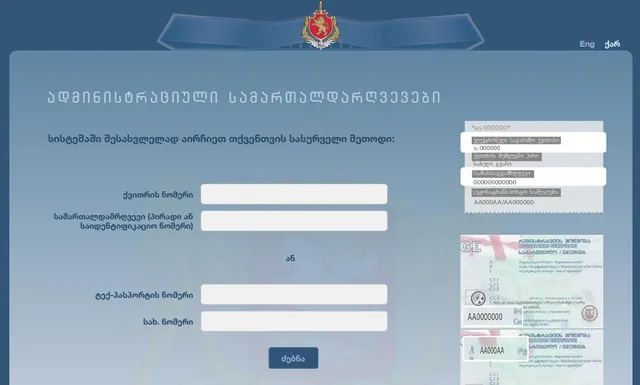
You'll need your passport — under Georgian law a SIM card is registered to a document, and without it even the smallest kiosk won't sell you one.
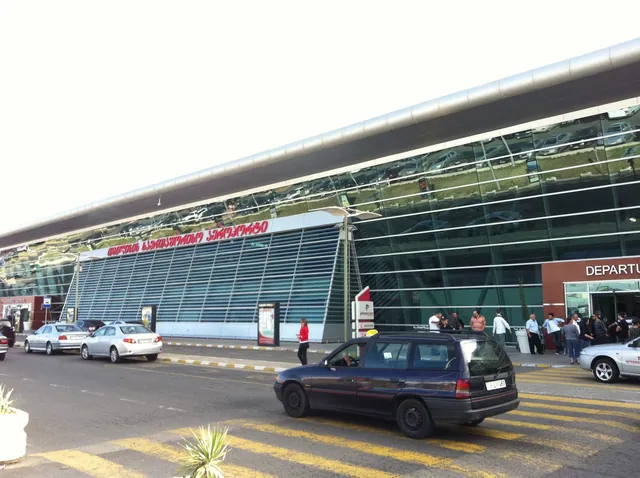
At Tbilisi airport the Magti and Silknet kiosks are right at the arrivals exit. That's convenient if you land at night and get straight into a car: you'll have internet within ten minutes. But you pay for those ten minutes with the markup.
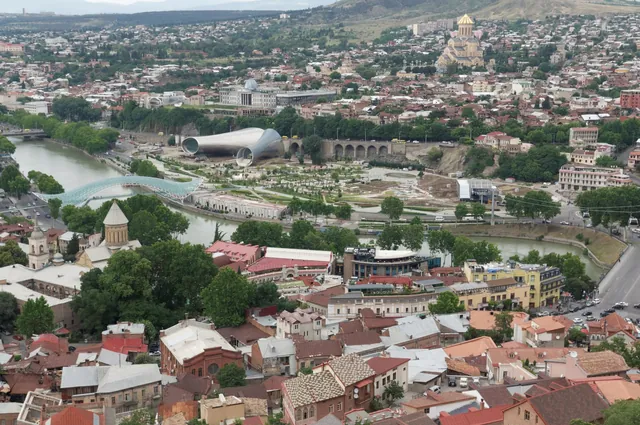
In the city the choice is wider and the prices are fairer:
- Rustaveli and the surrounding streets — dozens of small sales points along one stretch;
- the Marjanishvili metro area — the densest concentration of kiosks;
- the Old Town (Abanotubani, Metekhi) — SIM cards are available, but at tourist prices;
- Zoommer and Metromart — electronics chains, official tariffs with no mark-ups;
- Carrefour and Goodwill — supermarkets; they sell cards and top them up too.
Operator offices keep weekday hours, while kiosks are open most of the day and part of the night. In the tourist districts the sellers speak English, often Russian as well, so explaining that you want "a month of unlimited" is no trouble at all.
eSIM: when it genuinely helps
If your phone supports eSIM — and most models from 2018 onwards do — you can buy a virtual SIM at home and activate it right after landing, without even leaving the terminal.
- Airalo — from about $2–5 per GB, runs on the Magti network, straightforward app;
- Yesim — a Swiss service, available to Russian users and accepts MIR cards;
- Holafly — unlimited data at a fixed daily price.
The upsides are obvious: no queues, no passport, no hunting for an office. There is exactly one downside, but it's a real one — for comparable data volumes an eSIM works out 2–3 times more expensive than a local plan. For three or four days that's a fair trade-off. For a month or longer, a physical Magti card is cheap enough that it's worth spending half an hour finding a kiosk.
How coverage behaves outside the cities
While you're in town the operator hardly matters. Everything changes once the route heads into the mountains: up there the signal disappears not "occasionally" but quite predictably — in gorges, behind a ridge, in tunnels.
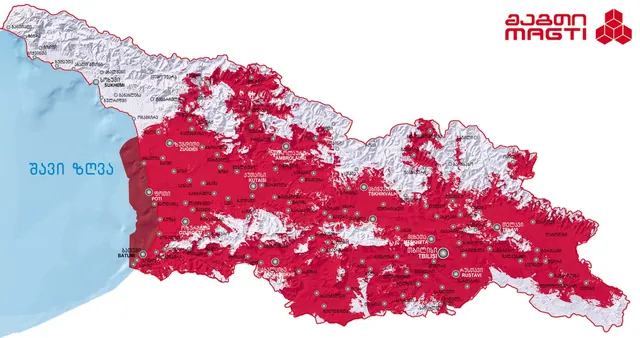
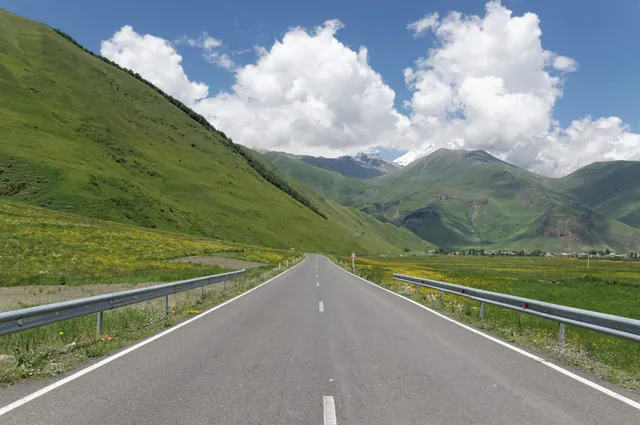
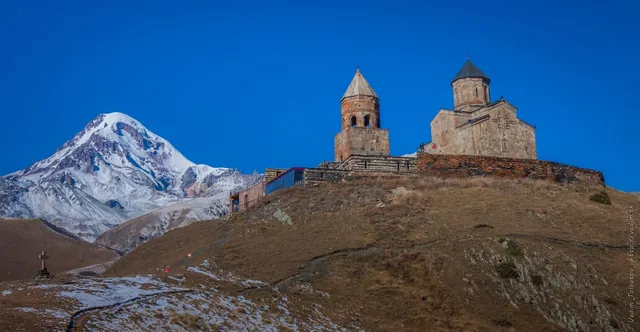
Georgian Military Highway (Tbilisi → Kazbegi). Magti holds the signal almost continuously, Silknet is stable on the main sections and loses it in the gorges, Cellfie comes with gaps. On the climb to Gudauri and at the Jvari Pass the difference between operators is at its most noticeable.
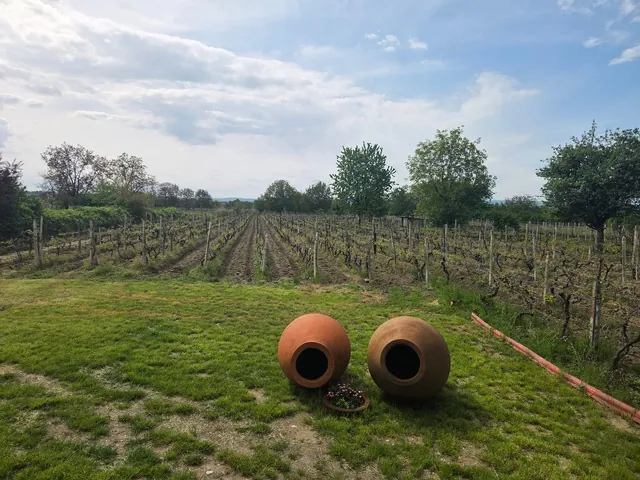
Kakheti (Sighnaghi, Telavi). All three networks work well and 4G is a non-issue — even among the vines on the approach roads to the wineries.
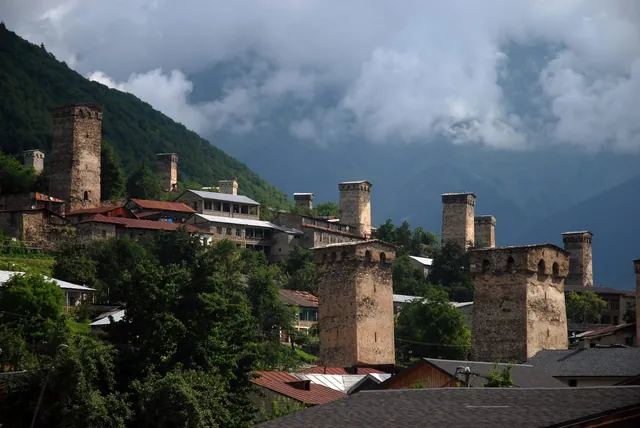
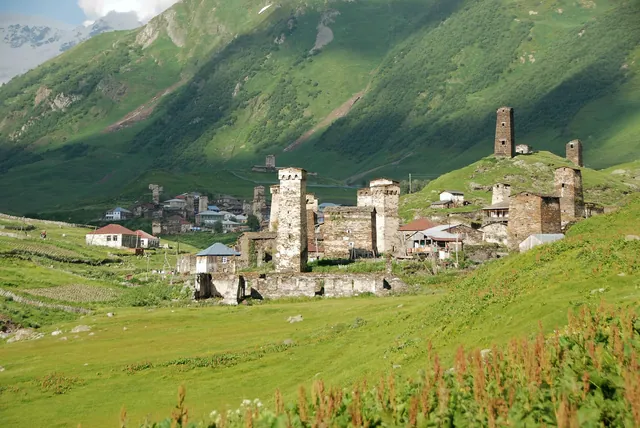
Western Georgia (Kutaisi, Batumi, Mestia). Magti and Silknet cover the main highways. In Svaneti there's signal in Mestia itself, but in the remote villages — on the road to Ushguli, for instance — it's unreliable on all operators at once.
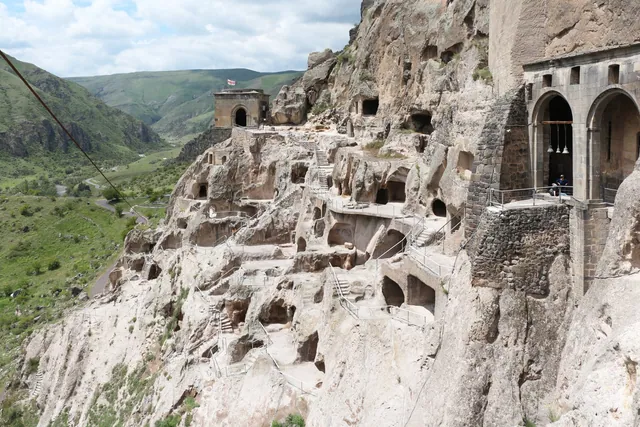
Vardzia and the south. There's signal on the highway; inside the cave city among the cliffs it can almost vanish.
One rule that works regardless of operator: download offline maps in Google Maps or Maps.me before you set off. Mountain gorges smother the signal even for Magti, and being left without navigation at a fork in the road in Svaneti is far more annoying than being left without internet.
Topping up, and five habits that save money
You can top up through the operator's app (Magti App, Silknet App), at payment terminals — there's one in every supermarket and at almost any petrol station — or on the operator's website: Magti and Silknet accept Visa and Mastercard.
And here's what I tell everyone getting a local number for the first time:
- Don't buy at the first kiosk in the airport. Walk past a couple of points and compare: the price of the very same plan can differ by as much as one and a half times.
- Don't buy unlimited for three or four days. Magti's 20 GB for 30 GEL will cover navigation, maps, music and evening series with plenty to spare.
- Do the maths on when your plan runs out. The 15-day plans expire at the least convenient moment — somewhere on the way out of Mestia. For a two-week trip, take the 30-day one.
- Use an eSIM as a temporary bridge. Activate it on the plane, get to the city, then calmly buy a physical card on a decent tariff.
- Download offline maps before departure. Especially if a mountain route is coming up: navigation has to work without a network too.
Wi-Fi: where you can count on it
In Tbilisi Wi-Fi is everywhere — cafés, hotels, apartments, the metro, shopping centres; some parks and central streets have free city Wi-Fi. In smaller towns you're safer sticking to mobile internet. In mountain villages Wi-Fi technically exists, but the quality is a lottery: home providers in Georgia are unstable, and an evening call over guesthouse Wi-Fi in Kazbegi is a gamble.
What to choose in the end
For most trips the formula is simple: Magti for 30–50 GEL if you're getting behind the wheel and need navigation without gaps; an eSIM if you want to be online from the moment you land and not go looking for an office with your passport in hand. Buy the SIM in the city rather than at the airport — that's the same 20–30% you'd otherwise spend on lunch. And offline maps: Georgia is at its most beautiful exactly where the confident signal ends, and that's worth preparing for in advance.