
Tbilisi Airport: how to get there and what you need to know
Tbilisi Airport explained: check-in and passport control, getting to the city and back, bus 337, taxi or a rental car.
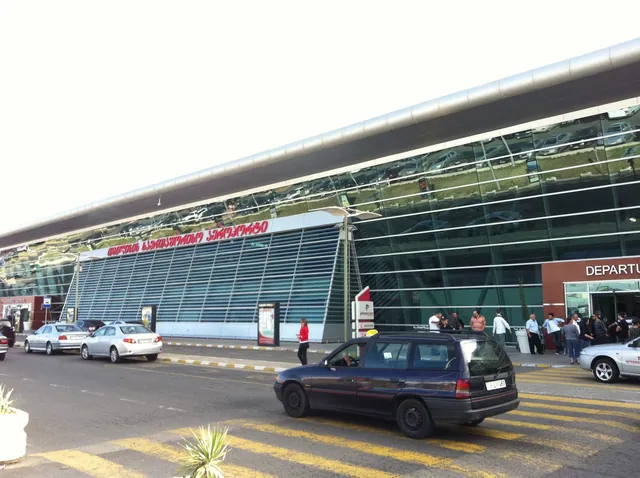
Shota Rustaveli Tbilisi International Airport (TBS) sits 17 kilometres east of the city centre, in the Lochini district. There is only one terminal, so it's hard to get lost: arrivals and departures are separated only by floors, and you can reach Freedom Square in three different ways, with the price ranging from 1 to 35 GEL.
Where the airport is and how the terminal is laid out
The terminal is a two-storey building with a technical mezzanine in between. On the ground floor, to the right of the entrance, are check-in, banks, cafés and toilets. To the left, in the arrivals area, you'll find the baggage belts, a police office, a medical point and taxi desks. Between the entrances there's a shared information desk where you can ask for directions in English or Russian.
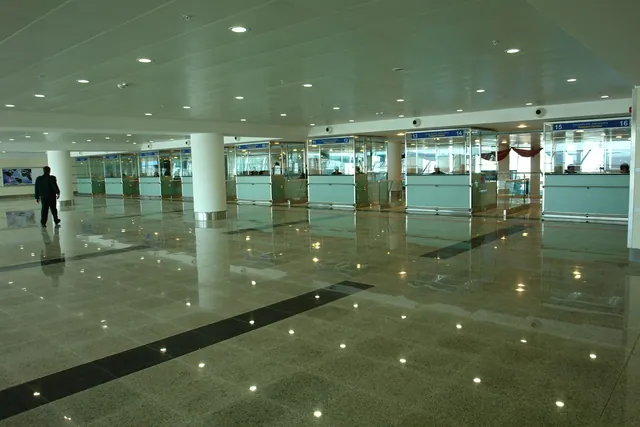
Passport control runs through 35 booths, so even when several wide-body planes land at once the queue rarely stretches beyond 20–30 minutes. Citizens of most countries — including the EU, the US, the UK and Russia — enter visa-free for up to one year. A regular passport is enough and no separate visa is needed; the details are in our piece on whether you need a visa for Georgia.
Check-in and departure
Opposite the main entrance are 25 check-in desks; the desk number for your flight appears on the board 2–3 hours before departure. Most airlines open online check-in 24–48 hours ahead, which saves time at the desk, especially if you're travelling without checked bags. After check-in, passport control and security screening, you reach the shared area in front of the boarding gates — also on the second floor — where the Duty Free and cafés are.
Screening is standard: liquids up to 100 ml in a clear bag, laptops and tablets taken out of your bag separately. In high season, from June to September, the security queue can take up to 30–40 minutes, and that's worth budgeting for separately from the check-in queue.
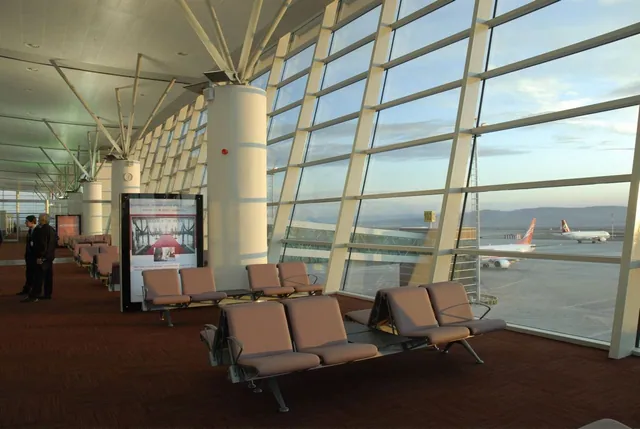
Duty Free and what's in the departure area
Past passport control and security, the Duty Free area opens up: spirits, perfume, Georgian wine and churchkhela are sold tax-free. The wine prices here aren't always better than in town, so for the more interesting labels it's worth stopping by a dedicated wine shop in the city and using Duty Free for something familiar or a gift. Nearby there are a few cafés, takeaway food points and Tax Free desks, where you can process a VAT refund on purchases made in the city. You can't reach this part of the terminal from arrivals — access is only after the check-in desks and security.
Wi-Fi and food in the terminal
Free Wi-Fi covers the whole terminal, from arrivals to the boarding gates, connecting without a password through a standard login portal. Cafés and restaurants are spread across both floors, some open around the clock, and among them are places serving Georgian cuisine as well as regular fast food. Prices are noticeably higher than in town: coffee from 8–10 GEL, a full lunch from 25–30 GEL per person. If your flight isn't too early, having breakfast or lunch in the city before you set off works out cheaper.
VIP lounge (CIP)
On the second floor of the departure terminal, right after passport control and to the right, is the Primeclass lounge: a quiet zone with drinks, snacks and Wi-Fi, styled like a small art gallery where some of the works are for sale. It's open around the clock, with access limited to three hours before departure. A single pass costs from 50–55 euros per person; you can get in free with a Priority Pass or Diners Club card, or when flying business class.
Separately from the lounge, you can book the full CIP service: an agent meets you at the aircraft steps or the terminal entrance, walks you through passport and customs control without the queues, helps with your luggage and sees you into the lounge. This package is usually booked ahead through travel agencies; the price starts from 150–200 euros per person and depends on the company and the set of services. It's meant for one-off comfort on an important trip rather than everyday use.
Money and connectivity right after landing
In the arrivals area there are exchange offices and ATMs from several banks. The airport rate is usually 1–3% worse than the exchange offices in the city centre, so it makes sense to change a small amount for your first expenses and do the main exchange later in Tbilisi. Visa and Mastercard are accepted almost everywhere in the city; the Mir card does not work in Georgia.
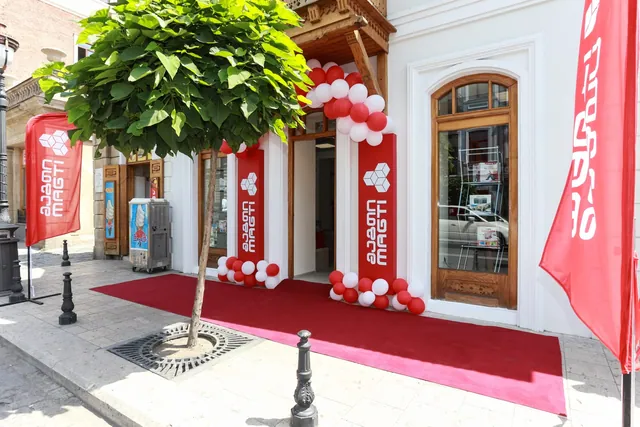
SIM cards are sold at the Magti, Silknet and Cellfie kiosks right in the arrivals area. A tourist plan with data for 2–4 weeks costs 10–20 GEL and is set up with your passport in a few minutes. A comparison of operators and plans is in our guide to a SIM card and internet in Georgia. Before you fly out, it's also handy to run through the overall Georgia travel checklist.
Getting to the city: comparing cost and time
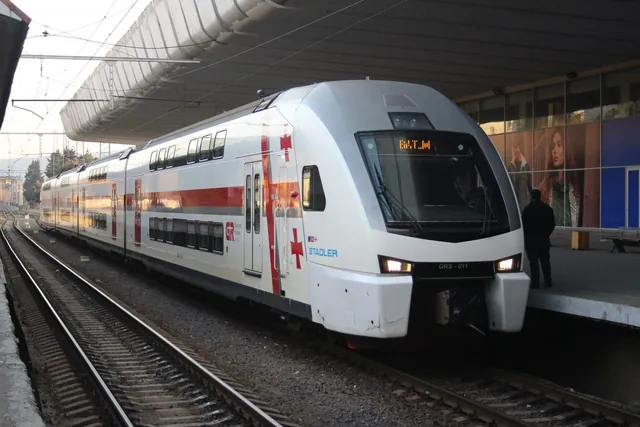
The airport railway station — the one with the golden windows, 70 metres from the terminal — formally exists, but trains to the city no longer run: the route was closed due to low demand. If you see a train timetable on old sites or forums, it's out of date; there are no current services. There are three working ways into the city.
Bus 337. It runs from 06:59 to 22:59, with the stop just outside the arrivals exit. The interval is 15–20 minutes. The fare is 1 GEL when paid with a Metro Money card or a bank card, and it's valid for 90 minutes with unlimited transfers. It goes as far as Avlabari metro and Station Square, making many stops along the way, so the trip to the centre takes 50–60 minutes. There's little room for suitcases: with a single bag or backpack you'll be comfortable, but with a couple of large suitcases for two at rush hour it gets tight. A good option with light luggage, as long as your flight doesn't land in the dead of night.
Taxi. The taxi rank is right by the arrivals exit. The touts with signs standing right at the door usually charge more than the cars at the rank a little further along, so it's worth walking the extra twenty metres. The trip to the centre takes 20–30 minutes and costs 25–35 GEL depending on the district and the time of day. There's no Uber in Georgia, but Bolt and Yandex Go work here; the app shows the price in advance, so there's no need to haggle.
Car rental. The rental company desks are on the ground floor of the terminal, in the left wing of the arrivals area, while the 80-space rental car park is a couple of minutes' walk from the exit. This option starts to make sense when your trip isn't limited to the city: Tbilisi sits at the crossroads of the roads to Kakheti, the Georgian Military Highway and Borjomi, and picking up a car straight from the airport saves the day you'd otherwise spend going back into town for one. For getting around central Tbilisi alone, where parking is paid and tight in places, a taxi or the bus is often more convenient — more on that in our piece on what's important to know when renting a car in Tbilisi.
To pick up a rental on the spot you'll need a passport and a national driving licence; for some countries an international driving permit is recommended. It's worth choosing the transmission at the booking stage: an automatic is calmer than a manual in Tbilisi traffic. Companies that work through aggregators like MY.DRIVE usually lock in the price at the booking stage, so at the desk all that's left is to show your documents and grab the keys, with no recalculation on the spot. You can find a car with airport pickup at mydrive.club. It's also worth checking the deposit amount in advance: with the international chains in the terminal it's usually higher than with local rentals.
If you still have a day in the city after landing, there's a compact route in our guide Tbilisi in one day.
Parking at the airport
There are three official parking zones by the terminal, and around them, barely five hundred metres away, plenty of private lots that compete with them on price. The hourly rate at most of them starts from 7 GEL, and for a trip of several days a daily package works out better. There are lots of spaces and you'll find a free one at almost any time, so leaving the car for a couple of hours to meet guests, or for a couple of days before a flight, is no problem. For city parking in general, see our separate article on parking in Tbilisi.
What to keep in mind for a late or early flight
If your flight lands after 23:00 or before 7 a.m., bus 337 isn't running at all: the only working options are a taxi or a rental arranged in advance with 24/7 pickup. For an early-morning departure, the opposite applies — leave a buffer for passport control and security, especially in the high-traffic season from June to September.
Standard check-in for an international flight closes 40–60 minutes before departure, but in high season it's wiser to arrive 2.5–3 hours ahead rather than the usual two.
In short
Tbilisi Airport is compact, with a single terminal and a clear logic for moving between floors. You can reach the city for 1 GEL on bus 337 if your flight isn't a night one, or for 25–35 GEL by taxi with no waiting. Renting a car at the terminal exit makes sense when your route goes beyond Tbilisi itself, rather than as a replacement for city transport.