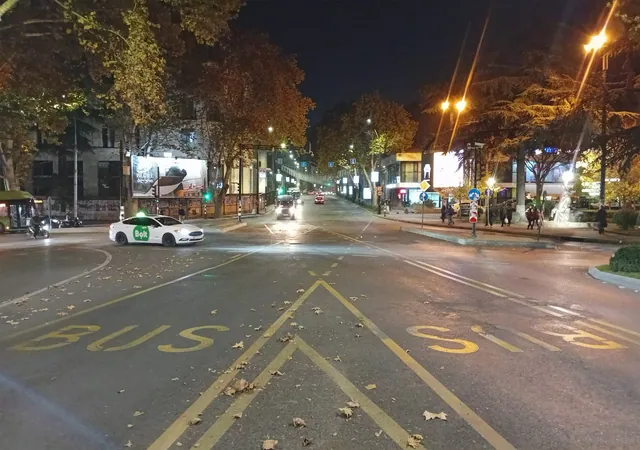

Mtskheta: What to See in a Day and How to Get There from Tbilisi
Mtskheta is 25 km from Tbilisi: Svetitskhoveli, Jvari, Samtavro. What order to see them in, where to park, what transport costs and how much time to allow.
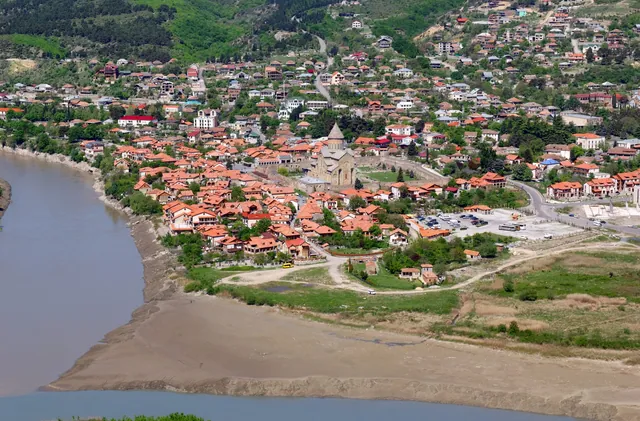
Mtskheta ends up on almost every Georgian itinerary, usually without much debate. The country's ancient capital, the spiritual centre of Georgian Orthodoxy, a UNESCO site. And it sits only 25 kilometres from Tbilisi, under half an hour on a good road. Of all the day trips out of the capital, this one has the simplest logistics and some of the richest content.
There is one complication, and it is transport. The town lies down in the valley, while Jvari Monastery stands on the mountain above, and you reach the two in very different ways. More on that below.
A little history: why Mtskheta matters
Mtskheta is one of the oldest cities in Georgia. Archaeology places people here as far back as the second millennium BC, and the city itself took shape somewhere around the 5th and 6th centuries BC. For several centuries it was the capital of the Kingdom of Iberia (Kartli), the predecessor of modern Georgia. In 337 King Mirian III adopted Christianity here under the influence of Saint Nino of Cappadocia, and the faith began to spread across the country from this spot.
Ever since, the town has carried the unofficial title of the "Second Jerusalem". The political centre moved to Tbilisi long ago, but Mtskheta is still the spiritual capital of Georgia. In 1994 its historic monuments were added to the UNESCO World Heritage List.
About eight thousand people live in Mtskheta. In high season there can be more visitors than residents, yet even on a busy day the place keeps the feel of somewhere quiet, unlike the heavily marketed stops.
What order to see it in
If you have a car, it makes sense to start at the top. Jvari first, while the hill is still cool and the morning light falls on the meeting of the rivers. Then drive down into town, leave the car by Svetitskhoveli and carry on foot: the cathedral, Samtavro, the old streets, the riverbank. By midday the viewpoint at Jvari is crowded with coaches, while down below it is still pleasant to walk around and have lunch.
If you are coming by marshrutka, the order reverses: the centre first, then a taxi up the hill. It works, it just takes longer.
The main sights
Svetitskhoveli Cathedral
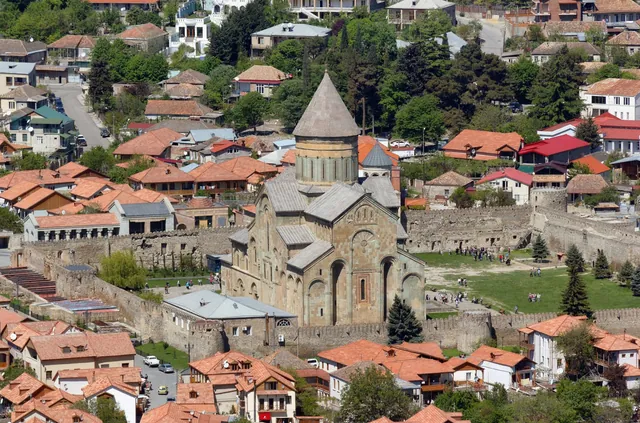
The heart of Mtskheta: the patriarchal cathedral of the Georgian Orthodox Church, dedicated to the Twelve Apostles. The name translates from Georgian as "the life-giving pillar", and behind it lies one of the country's best-known legends.
Tradition holds that the robe of Christ rests beneath the altar, bought from Roman soldiers by a Georgian Jew named Elioz and carried home. The place where the robe was buried was marked, so the story goes, by a miracle. Hence the name of the church.
The present building went up between 1010 and 1029. For centuries Georgian kings were crowned and buried in Svetitskhoveli. Today it is the largest surviving historic structure in the country. Once inside, look up: the cathedral is bigger than it appears from the outside.
Open daily from 8:00 to 19:00, entry free. Women need a skirt and a covered head; scarves and skirts are handed out at the gate.
Jvari Monastery
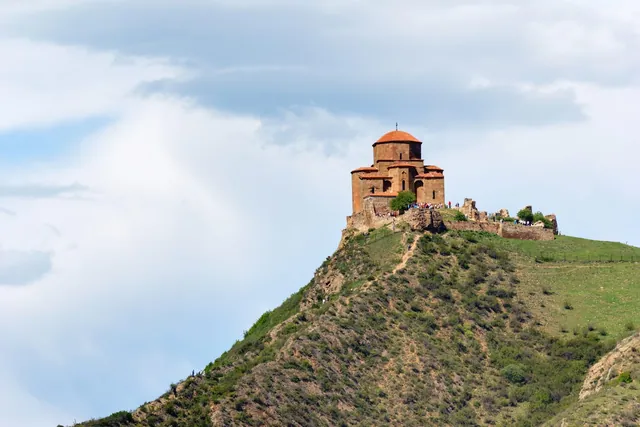
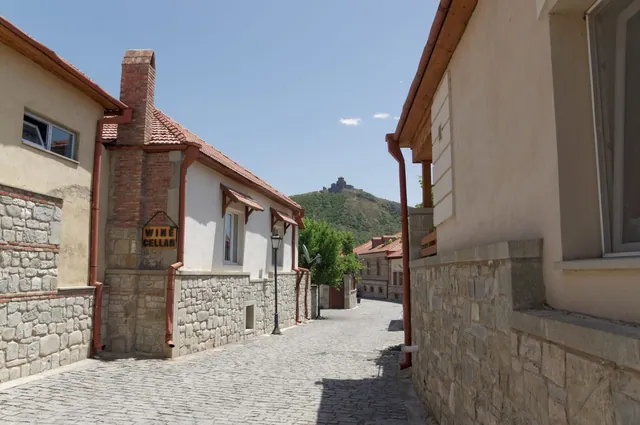
Jvari stands on the mountain above the confluence of the Kura and the Aragvi. The view from up there has become one of the most recognisable images of Georgia: two currents of different colours that stay apart for a long stretch, and Mtskheta below.
The monastery was built in the late 6th and early 7th centuries, roughly between 585 and 604, on the spot where Saint Nino is said to have raised the first wooden cross. The word "jvari" is Georgian for "cross". It is on the UNESCO list and counts as a model of early medieval Christian architecture in the South Caucasus. Inside it is bare and austere: no frescoes, just a large wooden cross on a stone base.
Mtskheta and Jvari are thought to have inspired Lermontov's poem "Mtsyri"; he spent time here while serving in the Caucasus.
Jvari is on the far side from central Mtskheta, up on the mountain. Walking there is not realistic: about 10 km from the railway station. In season a marshrutka sometimes runs two or three times a day, but do not count on it. That leaves two real options: a taxi from Mtskheta (usually 20–30 GEL there and back with waiting time) or your own car. The road up is paved and the switchbacks are gentle, so an ordinary saloon manages without trouble. There is a large free car park at the foot of the church, two to four minutes' walk from the entrance.
Samtavro Monastery
A few minutes' walk from Svetitskhoveli is the Samtavro convent. King Mirian III and Queen Nana, who adopted Christianity in the 4th century, are buried here. It is a working convent, quieter, with fewer tourists. Twenty to thirty minutes is enough.
The old town and the riverbank
After the big churches it is good to simply walk. The tourist street runs from the car park to Svetitskhoveli and on down to the river: souvenirs, churchkhela, small cafés and restaurants serving Georgian food. Prices run a little above Tbilisi, but nothing outrageous. There are few people down by the water, since most visitors turn back at the cathedral and drive away.
If you have time to spare: Shiomghvime
The cave monastery of Shiomghvime is about 10 kilometres from Mtskheta, with the last stretch on a dirt road. It is a quiet place, with no tour buses. A good stop on the way back if you have a car and your day is not planned to the minute.
Getting there from Tbilisi
From central Tbilisi to Mtskheta is about 25 km, 20 to 30 minutes.
By car. Take the Tbilisi–Senaki–Leselidze highway, then the exit for Mtskheta. The road is straightforward and well signposted, and navigation apps handle it without surprises. This is the only way to see both the town and Jvari in a single trip, without fitting around someone else's timetable. If you are setting off from the capital in the morning, allow extra for getting out of the city: at rush hour the first few kilometres eat more time than the rest of the drive.
By marshrutka. From Didube bus station (Didube metro), every 15–20 minutes from 7:30 to 20:30, around 2 GEL. It stops in the centre, near Svetitskhoveli. It does not go to Jvari, so you will still need a taxi for the hill.
By taxi from Tbilisi. Around 50–80 GEL for the round trip, with the driver waiting while you walk around. Reasonable for a group of three or four, harder to justify for two.
By train. It runs to a schedule and costs very little, but Mtskheta station is about 2 km from the centre and a full 10 km from Jvari. Worth it only if a long walk suits you, or you plan to take a separate taxi once you are there.
You can see Mtskheta without a car. Seeing Mtskheta together with Jvari, comfortably, is another matter.
Where to park
Svetitskhoveli has a guarded paid car park, 2 GEL, about five minutes from the cathedral entrance. On weekends and at the height of the season it fills up by midday, after which people hunt for space on the narrow approach streets. Jvari has its own car park, free and large, but by the middle of the day the tour buses arrive and it gets tight.
What to combine it with
Mtskheta sits on the way out of Tbilisi in two popular directions, which makes it easy to fold into a longer day.
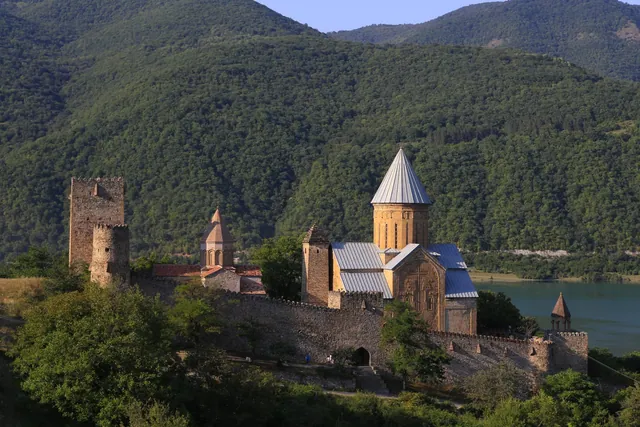
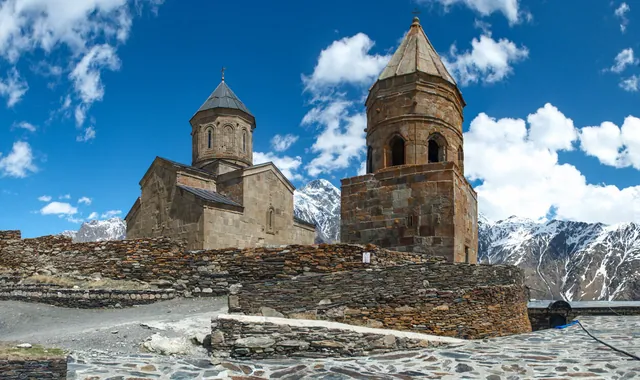
The Georgian Military Highway. The road into the mountains begins just past Mtskheta. One combination: Mtskheta in the morning, then Ananuri on the Zhinvali reservoir, then Gergeti and Kazbegi. Tight for a single day, but doable. Splitting it over two is calmer.
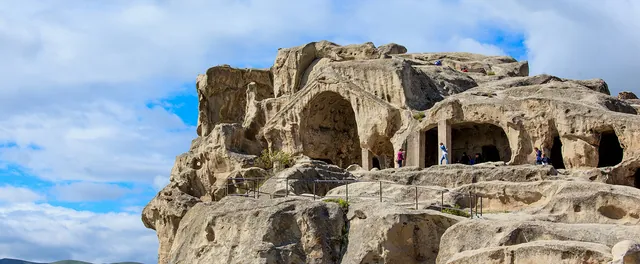
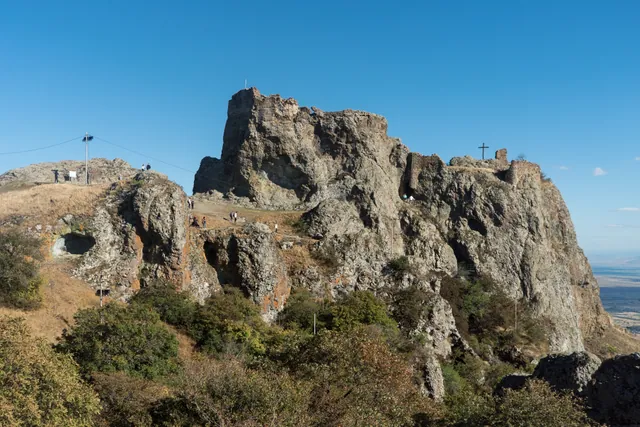
Heading west. If you are driving towards Gori, Mtskheta is the first stop, and further along the same road come Gori and the cave city of Uplistsikhe. A full day, with almost no wasted kilometres.
Practical information
How much time to allow. Svetitskhoveli and Samtavro with a walk through the old town takes an unhurried hour and a half to two hours. Jvari with the drive adds about another hour. That makes 3–4 hours for a proper visit, or half a day with lunch and no rushing.
When to go. Any time of year. Summer is hot, +30 and above, so set off early. Spring and autumn are the most pleasant: soft light and moderate heat. Winter is mild and quiet, though the climb to Jvari can be slippery in a frost. The worst time is a weekend at the height of the season, close to midday.
Dress code. In working churches women need a headscarf and a skirt, both handed out free at the entrance. Men just need to avoid shorts.
Where to eat. Mtskheta has several decent Georgian restaurants aimed at visitors: the quality is consistent, prices a little above the capital's. If you are watching the budget, lunch makes more sense back in Tbilisi.
Small things. Bring cash in lari: parking, candles and churchkhela on the street are easier to pay for with coins. Buy water down in town, there are no shops on the Jvari grounds.
Is it worth going
Two and a half thousand years of history, eleventh-century stone, the view from the mountain over two rivers meeting, and the quiet of a monastery courtyard, all half an hour from a noisy capital. Half a day, minimal logistics, a strong impression. If you have a car and a free morning, go.