
The Botanical Garden in Tbilisi: prices, entrances and a half-day route
The Botanical Garden in Tbilisi: what admission costs, which of the two entrances to choose, what to see inside, how much time to allow and where to leave the car.
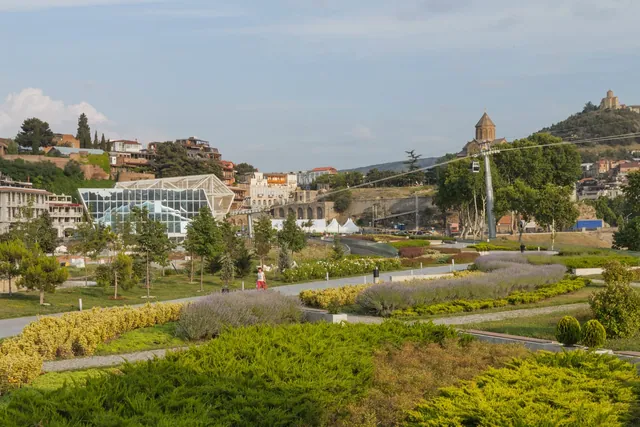
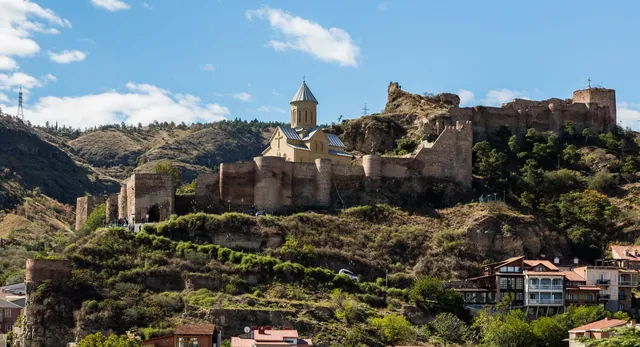
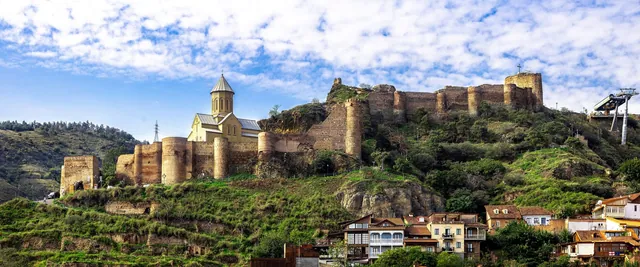
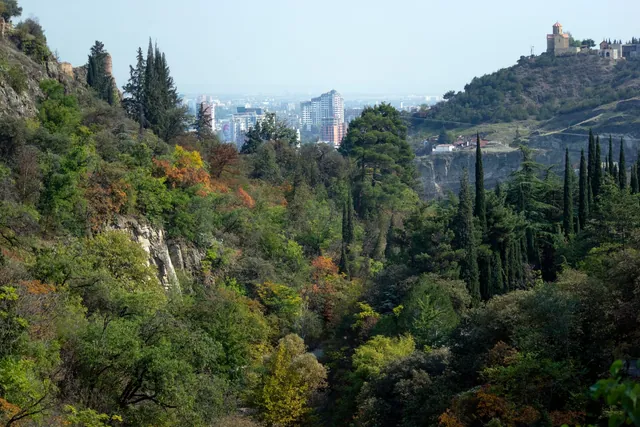
Georgia's National Botanical Garden fills around 130 hectares in the gorge of the Tsavkisistsqali river, immediately behind Narikala fortress. An adult ticket costs 4 GEL and the garden opens daily at 9:00. An hour and a half is enough for a short loop down by the water; for the whole territory with the upper terraces, allow half a day. If you're planning a day around Tbilisi, the garden slots neatly into the one-day route and the roundup of the city's parks.
What to expect from the place
The Tbilisi Botanical Garden bears little resemblance to a European park with clipped lawns and a label by every shrub. It's a wooded gorge with trails, bridges, ponds and the remains of old retaining walls. Some of the terraces were laid out as far back as the reign of the Georgian kings: gardens on this slope are mentioned from the 17th century onwards, long before any botany.
The official founding date is 1845, when the first botanical garden in the South Caucasus appeared here on the orders of Vorontsov, viceroy of the Caucasus. For almost a century it remained the region's leading scientific centre: Caucasian flora was studied here and imported plants acclimatised. In the nineties the funding vanished, part of the collections died off and the greenhouses suffered from constant power cuts.
The garden is unevenly looked after these days. The lower section has been put in order, and the higher you climb the more it resembles ordinary forest with paths through it. Some people count that against it. For me it's the other way round: fifteen minutes from Meidan you can walk for twenty minutes and not meet a single person.
How much admission to the botanical garden costs and when it's open
The prices are token ones and have stayed that way for years:
- Adult ticket: 4 GEL
- Student: 1 GEL
- School child: 0.5 GEL
- Family: 6 GEL
- Preschoolers: free
- The greenhouse with tropical plants: +1 GEL
Bring cash in small notes. There is a card terminal at the ticket window, but it doesn't always work, and at nine in the morning there will be nothing to break a 100 GEL note with.
The garden is open every day, with no days off, from 9:00. In summer the gates close around 19:30; in winter earlier, closer to 18:00. Ticket sales stop roughly an hour before closing, so arriving at the last minute makes no sense.
One October I went in just after five, certain I'd make it up to the top bridge and back. I didn't. It gets dark in the gorge noticeably earlier than in the city above, and I spent the last twenty minutes picking my way down the gravel almost by feel. From October to March it's better to come before three in the afternoon.
Two entrances: from Narikala above or from the sulphur baths below
The lower (main) entrance is on Botanikuri Street, a couple of hundred metres from the sulphur baths. Walk up the street past the Juma mosque and the gates will be on your left. Here you'll find the ticket window, a map of the grounds, a café, a playground and a drinking fountain.
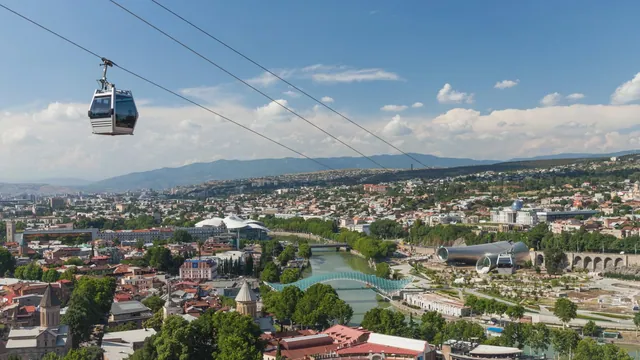
The upper entrance sits by Narikala fortress. The fastest way to it is the cable car from Rike Park up to the top station, then on foot past the fortress following the signs and down the steps. The ride up takes a couple of minutes — easy to combine with a single day around the city.
There's also a gate on the Legvtakhevi side, but it isn't always open and it's not worth counting on.
If you have to pick one option, go in at the top and walk down. The elevation change in the garden is serious, and the difference between "walking down" and "walking up" makes itself felt by the tenth minute. A workable half-day loop looks like this:
- Leave the car by Rike Park.
- Ride the cable car up to Narikala and linger on the viewing platform.
- Enter the garden through the upper gates and descend to the waterfall and the bridges.
- Come out through the lower gates by the sulphur baths and the Legvtakhevi waterfall.
- Walk back to Rike along the embankment, about fifteen minutes.
A zip-line runs from Narikala down into the middle of the garden as well: 270 metres of cable, around 50 GEL. It operates in season and in good weather; in rain and in winter it may be closed.
What to see inside
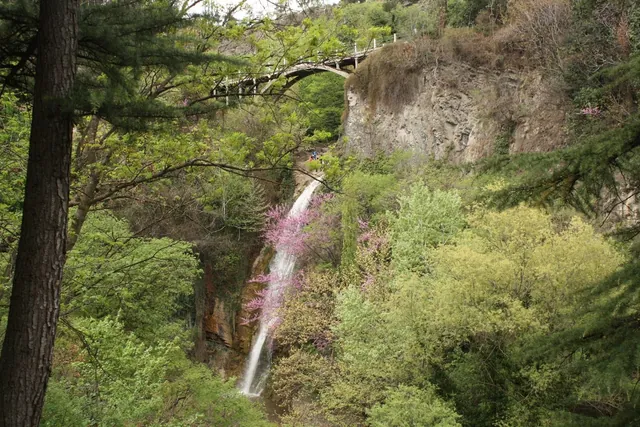
- A waterfall 24 metres high. The garden's main sight and the only place where a queue of people waiting to be photographed forms in summer.
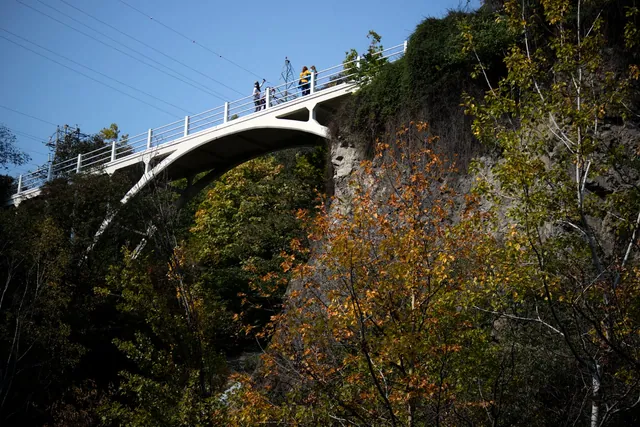
- The arched bridge above the waterfall, built in 1914. From it you can see the lower tier of the garden, the city and the ridge opposite.
- Three bridges over the Tsavkisistsqali. The first right by the entrance, the second above the waterfall, the third further downstream.
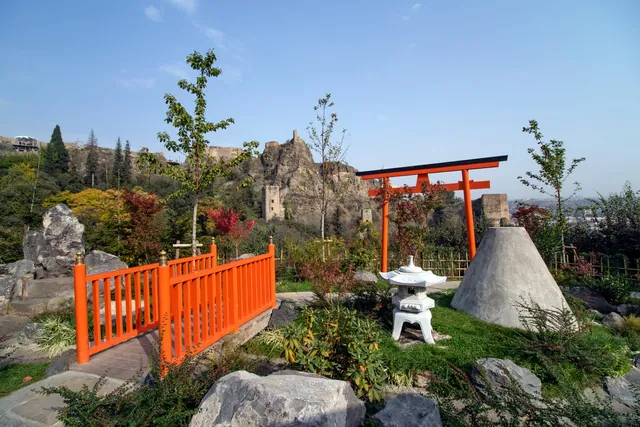
- The Japanese garden. Small and neat, but it isn't Kyoto. Worth a look as you pass; no need to walk out here specially for it.
- The tropical greenhouse. Modest in size, and the collection never recovered from the emergency power cuts. For one lari it's a curiosity; go in with high expectations and you'll be disappointed.
- Bamboo thickets, a cypress avenue, sequoias, cedars, yew. The sequoias here are mature and stand in a tight group.
- The Azerbaijani pantheon and the seed bank building on a side branch off the main trail. The writer Mirza Fatali Akhundov is buried in the pantheon.
- The rock garden, the ponds and the rose garden closer to the historic part.
By the bridge above the waterfall it's always a couple of degrees cooler than up on the terraces, and there's a distinct smell of wet stone. In the July heat I go down there deliberately around midday and sit out the worst of it on a bench by the water. One caveat: there are plenty of midges by the river in summer, so repellent won't go amiss.
Routes and how much time to allow
Short loop: 1,300 metres, 1–1.5 hours. From the lower entrance across the middle bridge, through the historic part of the royal park and back to the lower bridge. It passes the ponds, the Japanese garden and the café. This works if the garden is your third stop after Narikala and the baths.
Middle option: 2.5–3 hours. The short loop plus the climb to the upper bridge and the terraces, coming out through the gates by Narikala.
The whole garden: 4–5 hours. That's a proper walk of some eight kilometres, with side trails, the pantheon and the far sections where the asphalt and the people both run out.
There are few signposts, and that's my main complaint about the garden. The trails branch, some of the branches end in a dead end or in undergrowth, and offline maps show nowhere near all the paths. There's nowhere here to get properly lost: the gorge is narrow, the river is below, and it's always clear which way is down. But adding an extra hour is very easy.
The surface is mixed. Asphalt and paving down below, gravel and packed earth higher up. After rain the earth sections are slippery, especially on the descents.
When it's best to come
- April and May. Blossom, irises, lilac, the densest greenery of the year. The best time if you're coming for the plants rather than the shade.
- June, July, August. Hot, but the gorge and the river save the day. Come before 11 in the morning or after 5 in the afternoon.
- October. Foliage, soft light, almost empty. My favourite month here.
- Winter. The garden stands bare, and the relief and the old walls read clearly. It can be muddy higher up.
There's little difference between days of the week. At weekends Tbilisi families with children gather by the lower entrance, but above the middle bridge there's almost nobody on any day.
How to drive to the botanical garden and where to leave the car
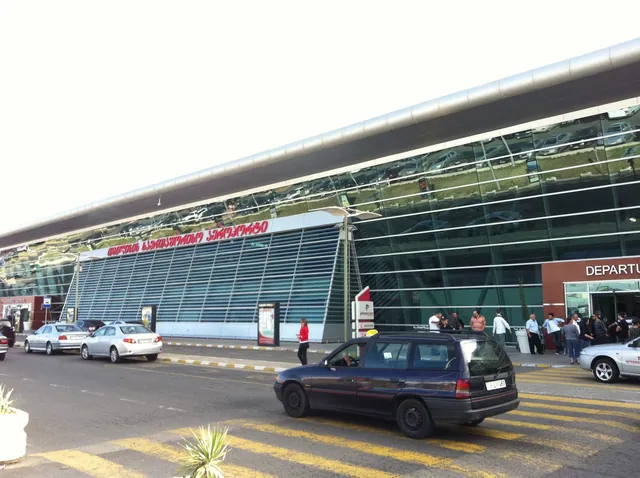
The garden stands in the historic centre, so getting there is easier than parking. It's about 20 km from Tbilisi airport, which means 25–35 minutes without traffic.
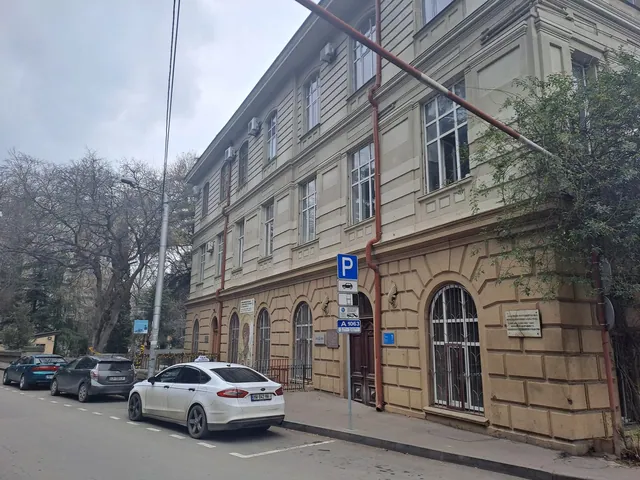
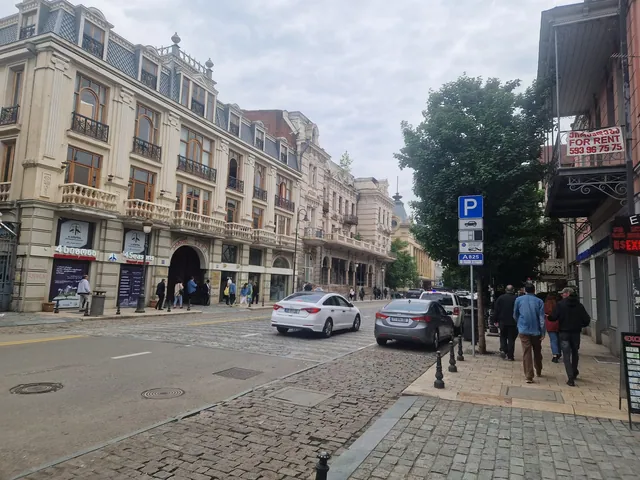
The streets around Abanotubani are narrow, some of them one-way, and free spaces are almost nonexistent in season. The central districts are covered by zoned hourly parking: from 1 to 3 GEL an hour depending on the zone. The zone type and the tariff are given on the plate under the "P" sign, and payment goes through a terminal or an app by number plate. Rental cars usually already have the annual parking permit paid for by the owner, but hourly zones in the centre are charged separately: check this point when you pick the car up — more detail in the guide to parking in Tbilisi and in the rental basics.
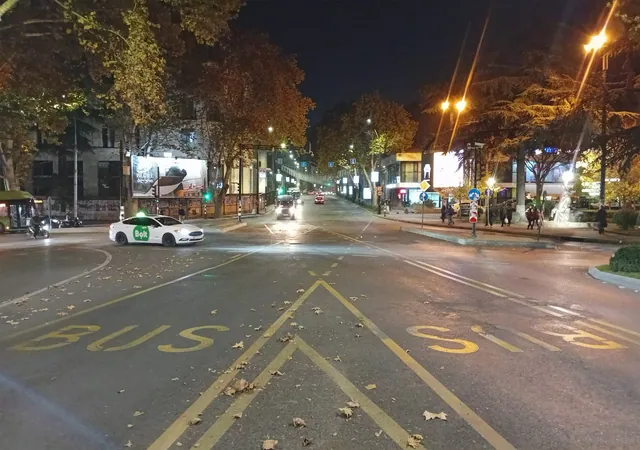
In practice the most convenient thing is to leave the car in the paid car park by Rike Park and carry on on foot or up the cable car. The second option is the area around the Pirosmani monument and Meidan square, if you get lucky with a space.
The botanical garden combines well in one day with a drive out of town: Mtskheta is only 25 km away, and from there it's the climb up to Jvari and back to Tbilisi by evening. A car for a route like that is easier to book in advance, before you even fly in. On MY.DRIVE you can see the final price with all the fees, and you can pick the car up at the airport itself instead of spending the first day on a transfer.
What to bring with you
- Shoes with a grippy sole. Not gym trainers and definitely not beach flip-flops.
- Cash in small notes for the ticket and the greenhouse.
- Water. There are drinking fountains, but not on every trail, and on the upper sections there are none at all.
- A snack. The only café is by the lower entrance. There's no food to buy inside, though nobody bans a picnic by the water.
- A hat and repellent in summer.
- A power bank if you plan to shoot: reception drops in places in the gorge and the phone drains faster than usual.
The first time, I went into the garden straight after the sulphur baths, in flat sandals. A long gravel descent runs down from the upper bridge, and I covered the last two hundred metres sideways, holding on to the railing. Footwear matters more here than the season does.
What's nearby
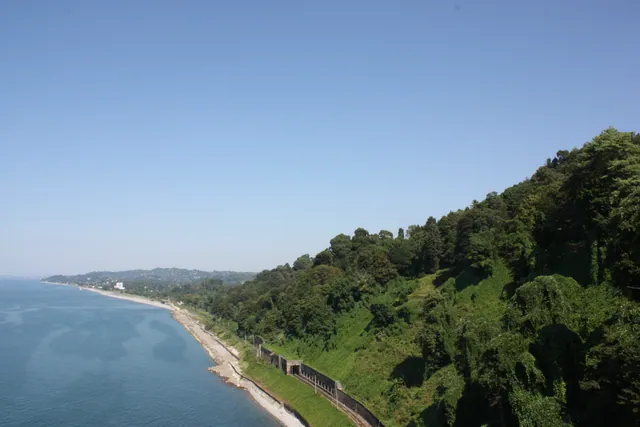
Coming out through the lower gates, you find yourself five minutes from the sulphur baths and the Legvtakhevi gorge with its waterfall right inside the city. The Juma mosque is opposite. Above are Narikala fortress and the Mother Kartli statue, and from there you get the best panorama of the old town. If you've any energy left, climb the Betlemi steps into the quarter above Meidan: quiet courtyards, balconies and almost no tourists. For a comparison of scale and format — the botanical garden in Batumi is something else entirely: subtropics above the sea and a separate half-day in your itinerary.
What matters most
The botanical garden in Tbilisi costs 4 GEL and lies fifteen minutes' walk from Meidan, but it feels less like the city than like a mountain gorge. Go in at the top from Narikala and walk down to the sulphur baths: that way you'll save your legs and get the views in the right order. An hour and a half is enough for the lower loop with the waterfall; the whole territory needs half a day and decent shoes. In summer go in the morning or the evening, and from October to March arrive before three in the afternoon.