
What to see in Batumi: the boulevard, the old town, the surroundings
The main sights of Batumi — the boulevard, the Piazza, the Old Town, the Botanical Garden. How to get there, where to park and what's worth seeing outside the city.
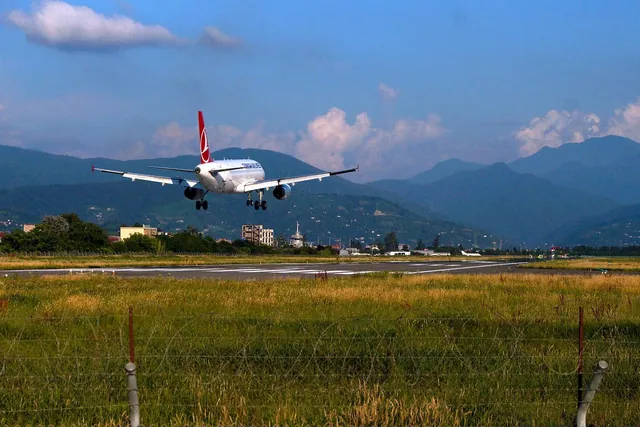
Batumi breaks down neatly into three layers: the seafront and the centre on foot, the surroundings such as the Botanical Garden and Gonio by some form of transport, and the mountain routes — the Machakhela canyon, the Makhuntseti waterfall — realistically only by rental car. With two or three days in hand, that's enough for both walks around town and trips beyond it without rushing. Most people reach the coast from Tbilisi along the E60 or fly straight into Batumi airport.
Batumi Boulevard: where everyone starts
The boulevard runs along the sea for almost 7 kilometres, from the Ali and Nino statue in the south to the airport district in the north. Work on it began back in 1881, and it has been extended several times since, most recently in 2009.
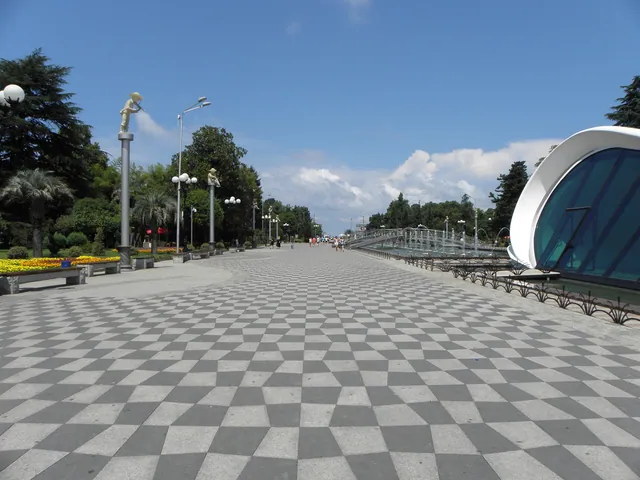
There's no point walking the whole thing: for most people the stretch from Europe Square to Botanical Square is enough — roughly an hour at an easy pace, stops included. Along the way you pass:
- The singing fountains — they run in the evening, usually from April to October;
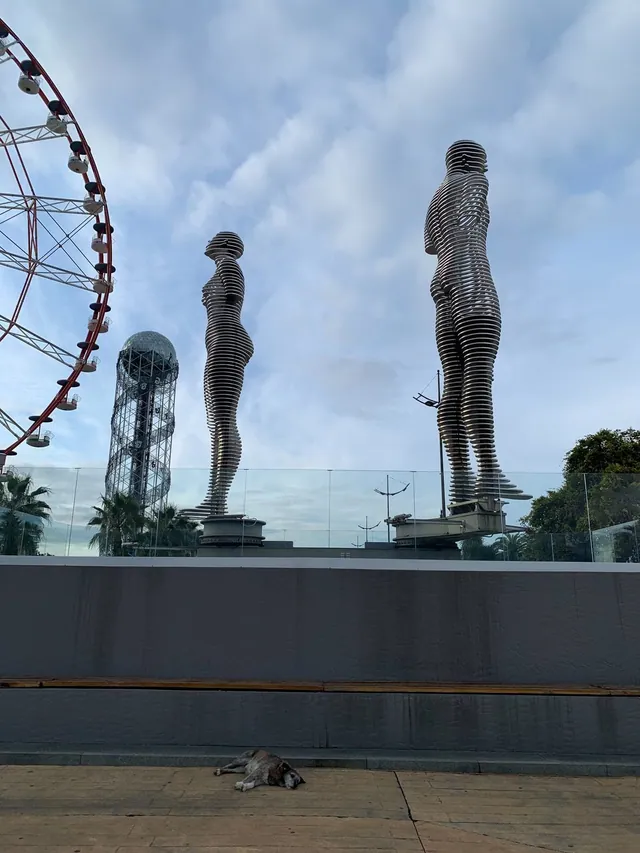
- The Ali and Nino statue — two figures standing for a Georgian-Azerbaijani love story; every ten minutes they slowly move together and pass through one another;
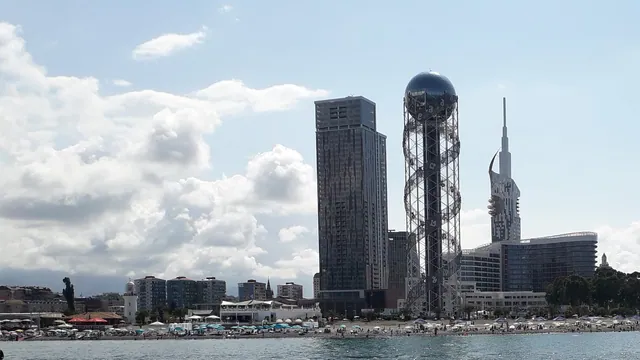
- The Alphabetic Tower — around 130 metres tall, with a viewing platform and a revolving restaurant at the top;
- The Ferris wheel — running day and night, lit up after dark;
- Batumi lighthouse — the oldest on this stretch of the Black Sea, and still in service;
- The Chacha Tower fountain — legend has it that once a week, on a secret schedule, real chacha pours out of it for fifteen minutes; in practice it's switched on for holidays and city events;
- The beach — pebbles, with the sea bed dropping away sharply rather than shelving gently, worth knowing if you're travelling with small children.
Everything on that list except the beach and the Piazza is packed into a compact zone at the start of the boulevard — locals call it Miracle Park, though there's no formal entrance to it: it's simply the stretch of seafront with the highest density of landmarks per square metre.
In summer the boulevard is packed from early evening until midnight. If you want quiet rather than a crowd on scooters, come at eight in the morning — at that hour it's mostly runners and the odd fisherman out on the breakwater.
Europe Square and the Piazza: the architectural centre
Europe Square is a compact space with a fountain, a statue of Medea holding the Golden Fleece and buildings in a European eclectic vein. From here it's a short walk to Memed Abashidze Street, which runs towards the Piazza.
The Piazza is an Italian-styled courtyard with a clock tower, mosaic panels and cafés around the edges. It's more a place to sit with a coffee and watch people than something to study at length — architecturally it's simpler than the photos on social media suggest, but the evening lighting does more for the atmosphere than the buildings themselves.
Both squares are within walking distance of each other and of the Old Town, so it makes sense to string them together into a single route.
The Old Town: a mosque, a cathedral and narrow streets
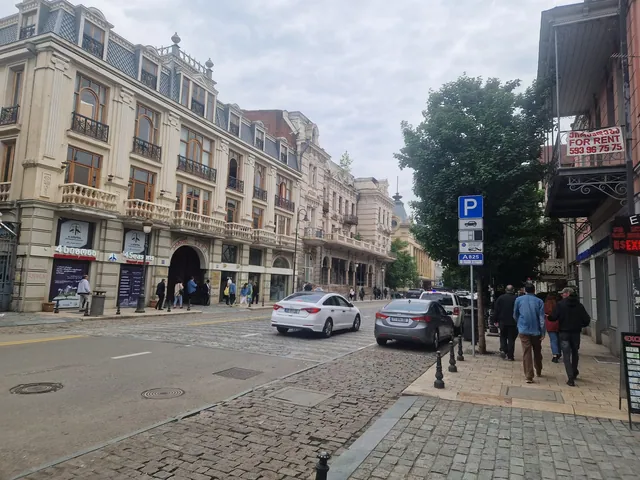
Old Batumi is a network of blocks between the boulevard and the central streets, built up with houses from the late 19th and early 20th centuries: carved balconies, inner courtyards, washing lines strung between floors. This is a place to wander without a map, just turning into side streets.
The specific points worth finding:
- Orta Jame Mosque — built in 1886, still in use, the only surviving mosque in the historic centre;
- The Cathedral of the Nativity of the Virgin (Batumi's cathedral) — neo-Gothic, with a tall bell tower, visible from many points in the city;
- St Nicholas Church — the oldest church in town, its masonry alternating white stone and brick.
In between there are markets, workshops and unmarked khinkali places. One of them, on Chavchavadze Street, is where I usually have lunch when I'm working in this part of town: no English menu, but they fold the khinkali right by the door.
The Argo cable car: the city from above
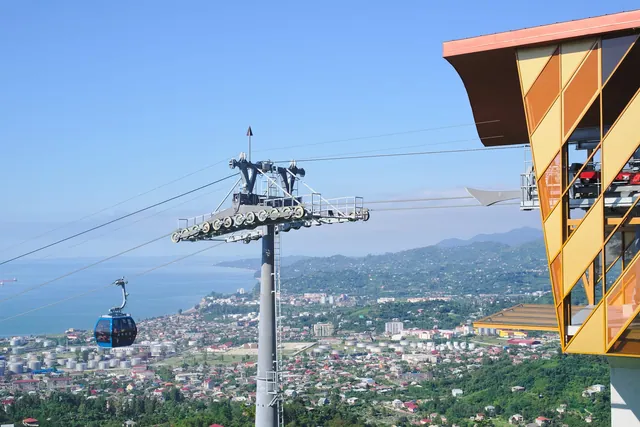
The lower station of the Argo cable car sits next to Botanical Square, not far from the start of the boulevard. The cabins lift you to Anuria hill in a few minutes; at the top there's a viewing platform, a café and a view over the whole bay, the airport and, in clear weather, the Turkish coast.
It's almost always windy up there, even when it's still down below, so a light jacket is worth taking even on a summer evening.
6 May Park: a lake, a dolphinarium and a zoo
6 May Park starts a couple of minutes' walk from the boulevard, towards Rustaveli Avenue — you step out of the noisy resort strip into a shady park with Lake Nurie, a boat station and old plane trees. The register is completely different: quiet, plenty of benches, almost no tourists with cameras.
The park is home to Batumi's dolphinarium — the first in the USSR — with shows up to three times a day in summer and only at weekends out of season. Tickets start at 20 GEL. Next to it there's a small aquarium with twelve tanks, and a zoo.
If you're travelling with children, it's a logical addition to a walk along the boulevard: an hour and a half to two hours, no long transfers and no need to book tickets in advance.
The Botanical Garden: half a day out of town
The Botanical Garden lies about 9 km north of the centre, on the coast between the villages of Green Cape and Chakvi. It covers around 110 hectares and is divided into sections by continent, from the subtropics of Mexico to the slopes of the Himalayas.
The drive from the centre takes 20–30 minutes by car; by marshrutka it's longer and involves changes. The garden has two entrances, the upper (northern) one and the main one, and it makes more sense to go in through the upper gate: that way the whole route runs downhill rather than up. On my first visit I mixed up the entrances and ended up climbing through the entire garden in +30, which is a poor way to spend a holiday.
Seeing all of it takes 2–3 hours, and entry is around 25 GEL per adult. There's free parking next to the garden, and a separate path leads down to the Green Cape beach.
Out of town by car: Gonio and Mtirala National Park
Beyond the city centre public transport works noticeably worse, and this is where the gap between "getting there with changes and waiting" and "getting there in 20–30 minutes" starts to matter.
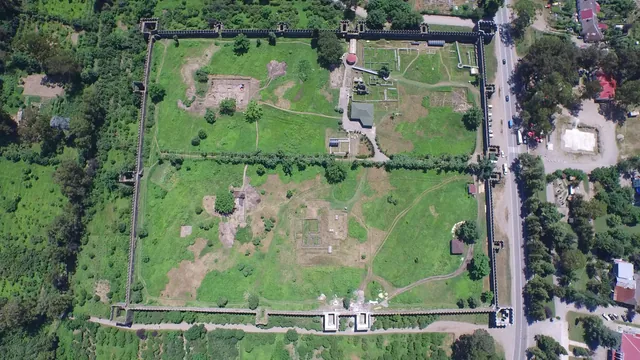
Gonio Fortress is about 12–15 km south of Batumi, on the road towards the Turkish border. A Roman-Byzantine fort from the first century, with 18 of its 22 towers still standing. There's free parking in front of the entrance, and an hour to an hour and a half of unhurried wandering inside. On the way to the fortress it's worth setting aside time for the beach at Gonio itself — it's calmer than Batumi's and good for swimming without the crowds.
Mtirala National Park is about 25 km from the centre; the road goes through the village of Chakvi and then up into the mountains, the last stretch an unpaved switchback. Getting there on public transport is awkward: marshrutkas only run as far as Chakvi, a few times a day, and after that it's either on foot or hitching a lift. By car the whole drive takes 40–50 minutes, which leaves time in the park for the walk to the waterfalls rather than just for the journey there and back.
These two make the usual excuse for a short half-day trip in a rental car: the distances are small, but without your own transport they turn into a logistics quest of their own. If you're flying straight to the coast, it's easiest to pick the car up at Batumi airport and close out the southern leg to Gonio the same day.
Beaches: where to swim in and around Batumi
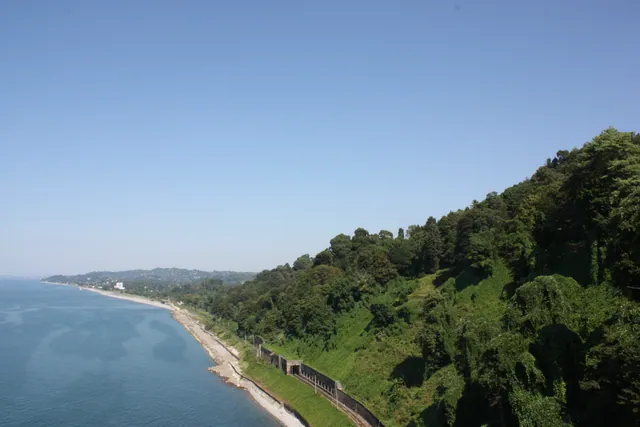
The city beach along the boulevard is pebble, with large stones in places, and the sea bed drops away within a couple of metres. It's convenient for its location, but not the most comfortable for swimming with children or for a long day lying down.
Three alternatives within an hour's drive:
- Green Cape — next to the Botanical Garden, calmer than the city beach, with finer pebbles;
- Gonio — south of the city, a wide beach, fewer people even in August;
- Kvariati — almost on the Turkish border, considered one of the cleanest beaches on the coast, though there's less infrastructure than in Batumi or Gonio.
All three need a car or a taxi — marshrutkas go rarely, and not always on a schedule that fits your plans for the day. If you want more sand and less bustle than Batumi itself, Kobuleti lies north along the same highway, about 20 km away, with no need to leave the coast.
What to try: Adjarian food
Batumi is the capital of Adjara, and the cooking here is its own thing, separate from the rest of Georgia:
- Adjaruli khachapuri — a boat of dough with cheese, an egg and a knob of butter in the middle, the region's signature dish;
- Batumi-style khachapuri turns up in almost every café, but the quality varies a lot — in the tourist places by the boulevard it's usually worse than a couple of blocks inland;
- Chakapuli — meat (usually veal or lamb) stewed with herbs and tkemali, a spring dish, though plenty of cafés cook it all year round;
- Fresh fish and mussels — fried mussels in lemon juice are sold along the seafront; prices vary widely, so ask first;
- Chacha — the local grape spirit, sold in souvenir shops in bottles of every shape, from plain ones to novelty towers.
Away from the centre, towards the Old Town, food prices are usually lower and the portions bigger.
Where to park in Batumi
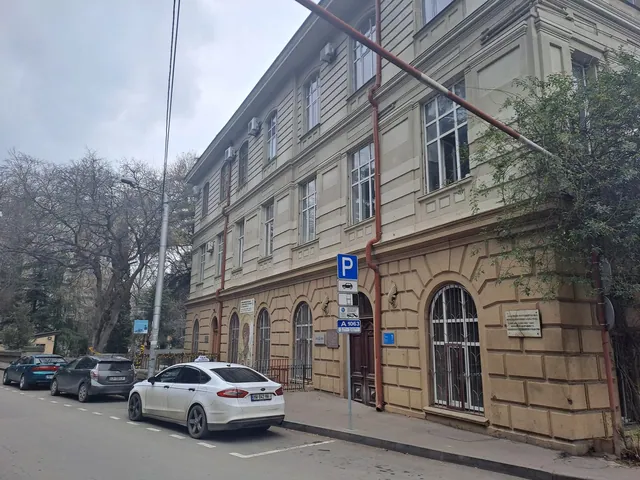
Batumi is one of three cities in Georgia (along with Tbilisi and Kutaisi) where street parking is paid. The zones are marked with blue lines and signs, payment goes through the city parking service's app or website, and there are boards with the zone number at the entrance. The logic is similar to parking in Tbilisi, only the app and the zones are the local, Batumi ones.
A few practical points:
- In the Old Town and around the seafront there are especially many paid zones — assume you'll be paying almost everywhere;
- The fine for unpaid parking is usually 20–50 GEL, and repeat offences can get the car towed;
- The men in hi-vis vests at some car parks have nothing to do with the official payment — a ticket through the app doesn't cancel them out, but there's no point arguing with them either; it's easier to hand over a token sum on the spot;
- At the Botanical Garden, Gonio Fortress and most points outside the city, parking is free;
- Many hotels in central Batumi have no parking at all — worth clarifying when you book rather than when you check in.
If your route stays inside the city, a car isn't essential: the whole centre is compact and walkable. But as soon as the Botanical Garden, Gonio or Mtirala go on the list, the difference in time spent becomes obvious: what takes half a day by car can stretch to a whole one on public transport.
How many days you need for Batumi
The city itself can be covered in one full day or two relaxed ones: the boulevard, the squares, the Old Town and the cable car are all within walking distance of each other. Add the Botanical Garden, Gonio and at least one trip into the mountains such as Mtirala, and the sensible minimum becomes three or four days, one or two of them with a car.
A rough plan for a first day without a car:
- Morning — the Piazza and Europe Square, before the heat and the crowds;
- Then the Old Town: the mosque, the cathedral, the side streets, lunch in a khinkali place away from the tourist streets;
- Afternoon — the Argo cable car and the viewing platform;
- Evening — the boulevard from Miracle Park through to sunset, dinner by the water.
The second day works well given over to the Botanical Garden in the morning and 6 May Park or the beach in the second half.
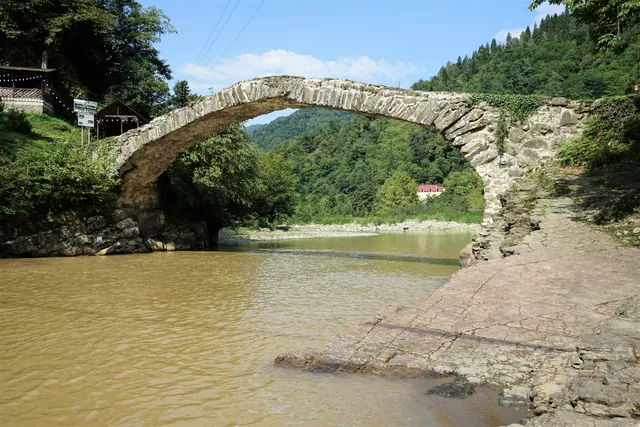
The third and fourth days are for the rental car: Gonio with a stop at the beach, then, if time allows, a turn towards Mtirala or further along the coast. From the mountains of Adjara the same road takes you conveniently to Queen Tamar's bridge and the Makhuntseti waterfall, and in winter to Goderdzi — bearing in mind that rental agreements restrict that pass.
When it's best to come
Batumi is subtropical, and that shapes the seasons more strongly than the sightseeing programme does:
- May and June — comfortable temperatures, the sea already warm, fewer tourists than in July and August;
- July and August — peak season, hot and humid, the boulevard and the restaurants full until midnight;
- September — often called the best month: the sea is warm and the heat has eased;
- November to March — the rainy season, a quieter city, some of the boulevard attractions closed, but noticeably cheaper hotels.
For a trip to the Botanical Garden or Gonio the shoulder season is actually easier than the height of summer — fewer people and less stifling sun.
In short
Batumi's centre — the seafront, the Piazza, the Old Town and the cable car — is easy to cover in one full day on foot. The Botanical Garden deserves a half-day of its own, and Gonio and Mtirala make more sense combined into a single drive than attempted by marshrutka with changes. Parking in the centre is paid almost everywhere and free outside the city, and that's worth factoring in when you plan the timing of your route.