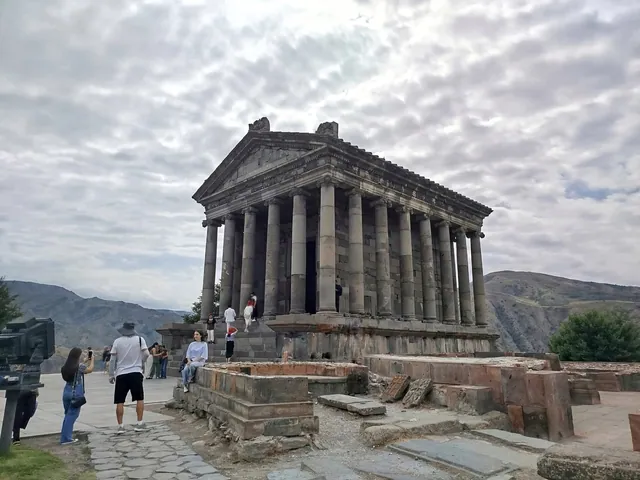

Traffic rules in Armenia for visitors: speed, cameras, fines and parking
Speed limits, cameras, alcohol, seat belts, phones, child seats, documents and paid parking in Yerevan. How rental companies pass on fines and how to drive mountain switchbacks.
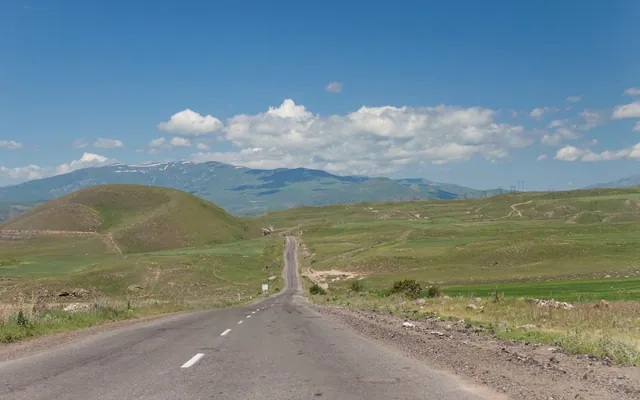
Armenia drives on the right, the signs are familiar and the road markings make sense. Visitors usually struggle with other things: there are more cameras in Yerevan than you expect, fines don't arrive straight away, and outside the city a herd of cows can step onto the road at any moment. Below are the rules that actually matter in a rental car, plus the practical things the highway code doesn't mention.
Fine amounts in Armenia change from time to time through amendments to the Code of Administrative Offences. Where sources agree, I give the figures. Where they differ, I give a rough guide. Before your trip, check the current table on the website of the Armenian Road Police (roadpolice.am).
Speed
Default limits for a passenger car:
- built-up areas: 60 km/h;
- residential zones and courtyards: 20 km/h;
- outside built-up areas: 90 km/h;
- motorways: 110 km/h.
Signs can raise the limit, but to no more than 80 km/h in town and 110 km/h outside. If you're towing a trailer, the limit is 70 km/h outside built-up areas and 90 km/h on motorways.
One detail to watch: a place-name sign on a white background switches on the urban limit, while one on a blue background only tells you the name, and 60 km/h is not required on that stretch. You see these signs all the time on the roads towards Sevan and the Ararat Valley, so look at the colour.
Speeding fines (per the 2026 text of the Code of Administrative Offences):
- 1–10 km/h over: 1,000 drams for each km/h;
- 11–30 km/h over: 20,000 drams;
- 31–50 km/h over: 25,000 drams;
- 51–80 km/h over: 29,000 drams;
- 81 km/h or more over: licence suspended for a year.
Most offences also earn penalty points. For a tourist here for a week they mean little, but the money is very real.
Cameras
Yerevan has a lot of cameras, and they catch more than speed. Typical "tourist" camera fines:
- running a red light (including when the car rolls past the stop line);
- crossing a solid line, especially changing lanes across one right before a junction;
- stopping or parking under a no-stopping sign or double-parking.
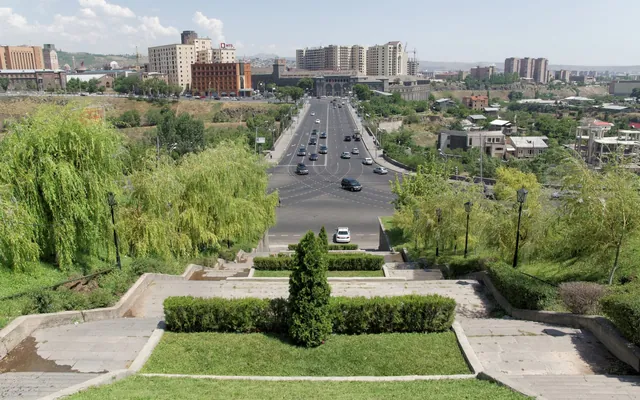
The last one surprises people most. In central Yerevan it's tempting to pull up at the kerb by a café for a minute with the hazards on, but the camera records a stop just as it records parking.
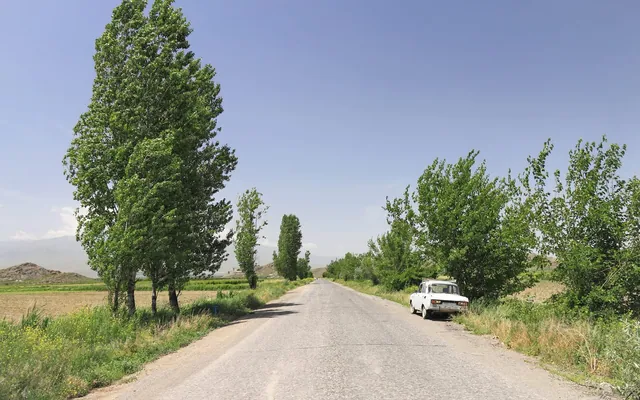
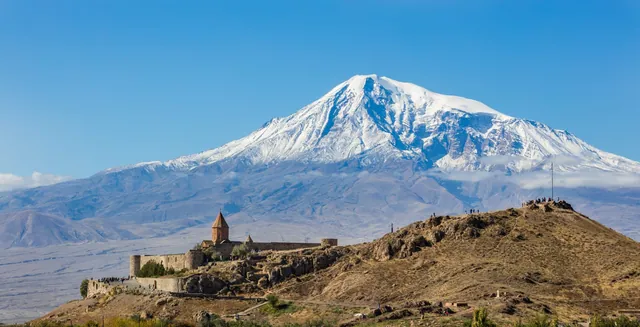
Outside the city there are fixed cameras on the main highways, plus patrols with radar guns. The surest way not to pay is to keep to the posted limit as you enter every village and not to speed up on the long empty straights, of which the road towards Khor Virap and Areni has plenty.
Alcohol
Under the current Code of Administrative Offences (Art. 126), you are considered intoxicated above 0.2 g of alcohol per litre of blood or above 0.1 mg per litre of exhaled air. Some international guides still quote higher figures, but Armenian law is what counts. In practice even one glass can put you over.
The penalty depends on the level. At the lowest level you get a fine and 5 penalty points; check the exact amount on the Armenian police website. Above 1 g/l in the blood (or above 0.5 mg/l in the breath), you lose your licence for a year. Refusing a test costs you your licence for two years. For a visitor in a rental car the difference hardly matters: any of these will ruin the trip.
An Armenian dinner almost always comes with brandy or wine, and in villages people pour you mulberry vodka "just a drop". If the evening involves a feast, leave the car at the hotel and take a taxi back with Yandex Go or GG. In Yerevan it's cheap.
Seat belts, phones, headlights
Seat belts. By law the driver and passengers must be belted in every seat that has a belt. Police mostly watch the front row, but the rule applies to everyone. The fine is 10,000 drams.
Phones. You may only talk while driving via speakerphone or a hands-free headset. A phone in your hand costs 10,000 drams. Set up a windscreen holder or CarPlay while you're still in the rental company's car park: in Yerevan traffic you'll be very tempted to look up the route with the phone in your hand.
Headlights. A passenger car doesn't have to use dipped headlights during the day. At night, in tunnels and in poor visibility you need them. On mountain passes fog and low cloud come down suddenly, and there dipped beams are mainly so that oncoming drivers can see you. The fine for breaking the lighting rules is 5,000 drams.
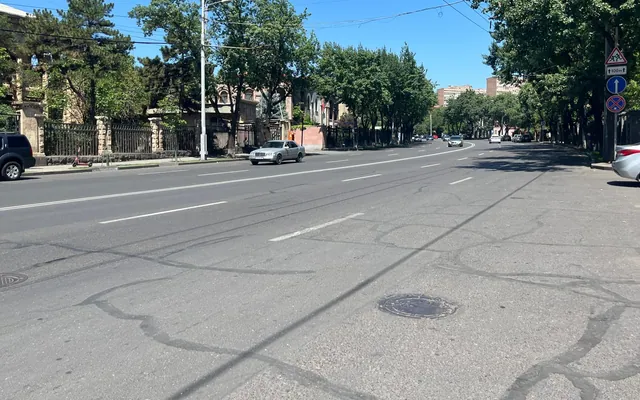
Children in the car
- Under 7: only in a child restraint suited to their height and weight.
- From 7 to 12: in the back seat, in a child seat/booster or simply with a seat belt; in the front seat, only in a child restraint.
Order the child seat together with the car and give the child's age and weight. If there's no seat in the car, finding a suitable one on pick-up day will be hard.
Documents
What to keep in the car:
- driving licence. A national licence is accepted if it complies with the Vienna Convention: details duplicated in Latin script, categories marked with Latin letters, a photo. If not, you need your national licence together with an International Driving Permit. Some rental companies have their own requirements (for example, an IDP for US and Canadian licences), so check when you book;
- vehicle registration certificate and the compulsory third-party (MTPL) insurance policy, both provided by the rental company;
- rental agreement and your passport.
If you have a licence but left it at the hotel, the fine is small, but the conversation with the patrol will take longer. Documents, deposits and rental terms are covered in more detail in the guide what to know about renting a car in Armenia.
Parking in Yerevan
Paid parking in Yerevan runs from 09:00 to 22:00, and it's free on Sundays. There are two zones:
- zone A (inner centre): 300 drams per hour, 2,000 per day;
- zone B (outside the inner centre): 200 drams per hour, 1,000 per day.
The first 15 minutes are free. The easiest way to pay is through the YES Parking Armenia app (car number plus a linked card) or by SMS: the car number in Latin letters without spaces to 1045 for zone A or 5045 for zone B. With an Armenian SIM card SMS works straight away. You can also pay at a terminal or through a banking app.
Breaking the stopping and parking rules costs 5,000 drams, and if it gets as far as a tow truck the fine is 20,000 drams, not counting the time spent finding the impound lot. Pedestrian crossings, bus stops, double-parking on Saryan or Pushkin Street: cameras and inspectors in the centre see all of this very well.
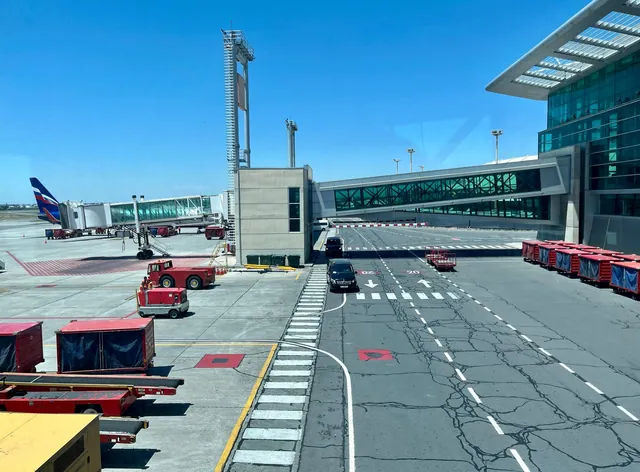
If you're picking up the car at Zvartnots Airport, keep in mind that on the first day it's easier to drive to a hotel with its own parking and explore the centre on foot. How arrivals work and where the rental desks are is covered in the Yerevan airport guide.
How rental companies pass on fines
A camera fine goes to the registered owner of the car, which is the rental company. It isn't issued immediately: usually one to three weeks after the offence, sometimes later. So the email from the rental company may arrive when you're already home.
The usual process: the rental company receives the notice, matches the date and time against your agreement and either deducts the amount from your deposit or sends you an invoice. Many companies add an administrative fee to the fine. What to do:
- At pick-up and return, ask for the exact date and time to be written in the agreement.
- Ask in advance how the company passes on fines and whether there's a processing fee.
- Before returning the car, ask the rental company whether any fines have already come in for it (they can see them in their account on roadpolice.am or in the Telegram bot @RoadpoliceArmeniaBot), and if there is one, pay it yourself.
Paying straight away pays off: if you pay within 15 days of the notice, there's a 30% discount. If the car owner receives notices by email, a further 20% is added, and the discounts stack. Payment is made at e-payments.am/roadpolice using the 12-digit PIN from the notice. Foreigners choose the "Foreign Citizen" option and enter their passport details. Photos and video of the offence can be viewed with the same PIN at offense.roadpolice.am.
Mountain roads and switchbacks
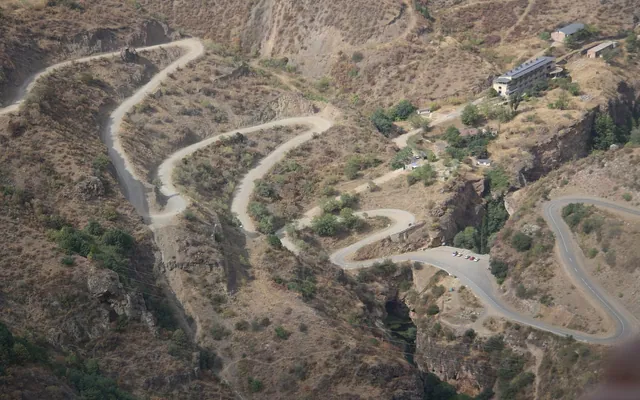
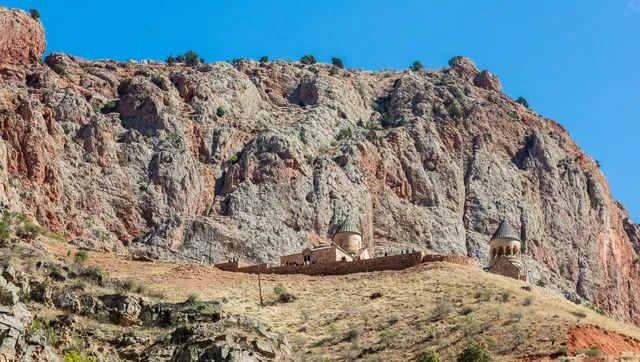
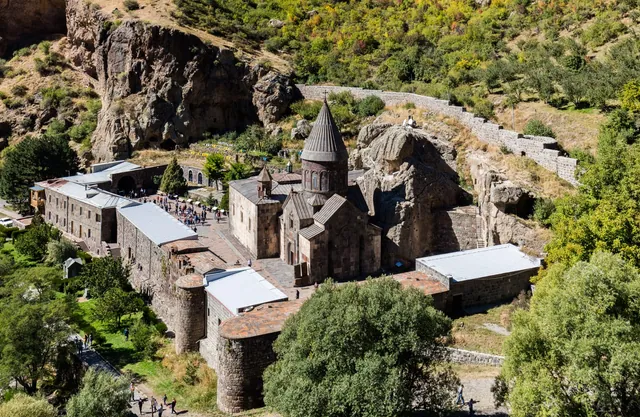
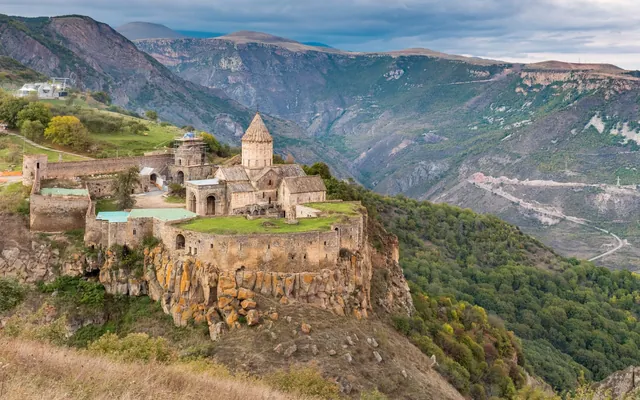
Most of the interesting routes from Yerevan go through the mountains: to Geghard, to Noravank through the Arpa gorge, over the passes to Dilijan and Sevan. A few rules locals follow here:
- The horn is allowed outside built-up areas to warn that you're overtaking or to avoid an accident. A short beep before a blind bend on a narrow switchback won't offend anyone. In town, sounding the horn without need is not allowed.
- When driving uphill, you usually have to give way to traffic coming down, especially where only one car fits through a narrow spot. Don't argue with a truck: it's harder for it to turn or reverse.
- On the way down, brake with the engine rather than riding the pedal all the way. In an automatic, pick a low gear (L, 2 or manual mode).
- Overtaking on switchbacks almost always looks unnecessary. A slow lorry will pull into a lay-by or a petrol station within a couple of kilometres.
- Rocks on the road are common in gorges after rain. Keep enough margin in your speed to steer around them.
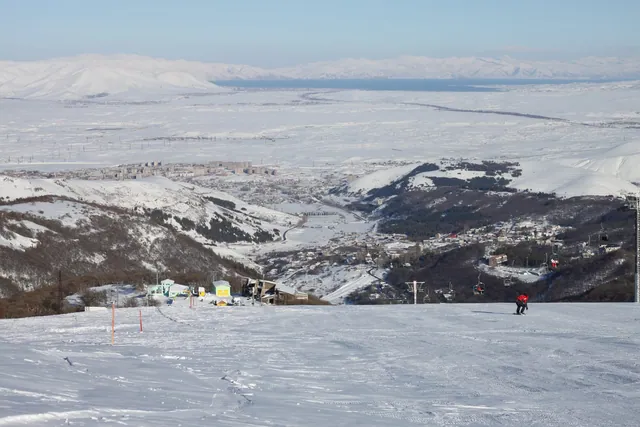
In winter mountain roads are noticeably harder, and some passes close. From 15 November to 31 March winter tyres on all wheels are mandatory for passenger cars, and the rule is tied to the dates, not the weather: it applies in dry Yerevan just as it does on a pass. Check which tyres the car has at pick-up. Seasons and weather are covered in when to visit Armenia and Armenia in winter. If you're not sure which class of car to take for the mountains, look at the guide to choosing a car for Armenia.
Livestock on the road
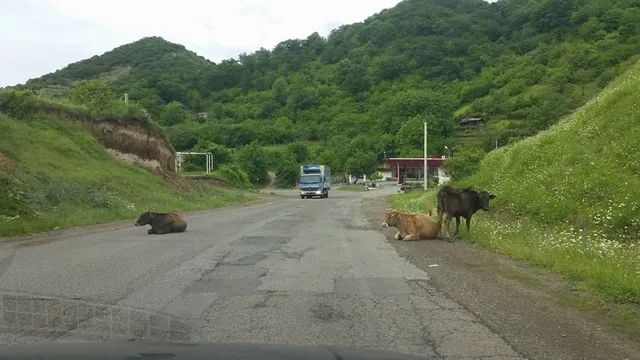
Outside Yerevan, cows, sheep and horses on the road are a constant, especially in the morning and towards evening, when herds are driven out to pasture and back. In Aragatsotn, Gegharkunik and on the way to Syunik this is the rule rather than the exception.
What to do: slow down early, as soon as you see animals at the roadside, and pass them slowly. A cow can turn without warning. A short beep is fine, but a long blast frightens the herd and it scatters in all directions. If you wait half a minute, the herder will usually move the animals himself. After dark outside town, keep below the limit: on an unlit road you see a dark cow late.
If the police stop you
Pull over, switch on the hazards, don't get out of the car unless asked and keep your documents to hand. Officers usually speak Armenian and Russian, and many understand English. Don't offer money: trying to bribe an officer in Armenia can lead to a criminal case. The fine is issued as a formal notice, and you can pay it online with the PIN.
In short
60 in town, 90 outside and 110 on motorways. In Yerevan cameras catch red lights, solid lines and stopping where you shouldn't. Better to skip alcohol altogether, keep the phone in a holder, make sure everyone is belted and pay for parking through the app or by SMS. Fines reach the rental company one to three weeks later, so before returning the car ask whether anything has already come in. The rest of the difficulty on Armenian roads has more to do with mountains and cows than with rules. Ideas for one-day routes are collected in day trips from Yerevan by car.