
Borjomi: Mineral Water, the Gorge and the National Park — A Road Trip Guide
Borjomi is 160 km from Tbilisi: how to drive the Borjomi Gorge, what to try in Central Park, how to enter the national park, and what to combine the trip with.
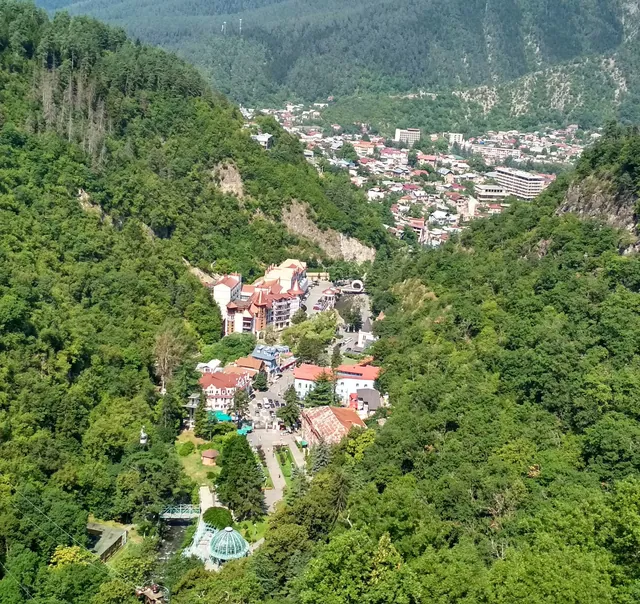
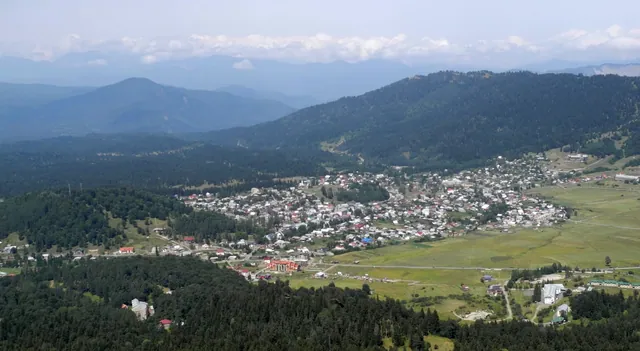
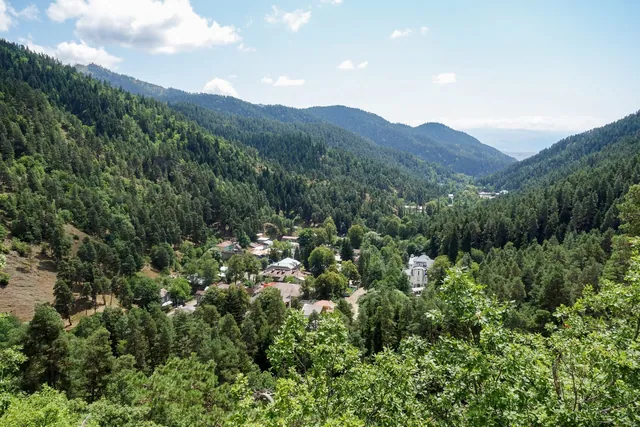
Most people know exactly one thing about Borjomi: the green bottle and a taste you either love or don't. We came for the water and left convinced that the water is the least interesting item on the list. The town sits 160 km west of Tbilisi at an altitude of about 850 metres, in a gorge so narrow that the slopes close in and the sun reaches the centre late and leaves early. In summer you feel it in your body: Tbilisi is melting asphalt, while here it's cool under the pines and the air smells of conifers with a faint trace of sulphur.
What sets Borjomi apart from an ordinary water resort is that it's three different places at once. There's the 19th-century spa park with its drinking pavilions and peeling sanatoriums — practically an open-air museum. There's the village of Likani with its imperial residence. And there's Borjomi-Kharagauli National Park: 85,000 hectares of forest, with a trail leading in from town and enough terrain to keep you out there for five days. With a car all three layers fold into a single route; without one you have to pick.
The drive from Tbilisi: 160 km, and the last thirty are the good ones
The distance is about 160 km, or 2–2.5 hours without traffic. First the fast E60 heading west, past Mtskheta and Gori, then the turn at Khashuri — and from there you follow the Kura upstream through the Borjomi Gorge.
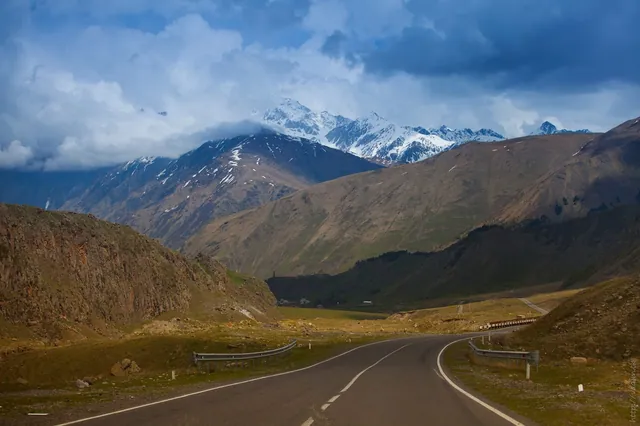
The first two thirds are a plain highway: two or three lanes, a 110 km/h limit, speed cameras at regular intervals, and in Georgia they do work. Dull, but quick. The stretch from Khashuri to Borjomi, though, is the prettiest part of the whole drive: the road narrows and winds along the edge of the gorge, a wall of forest on your left, green water far below on your right. You'll want to stop every five minutes, and that's fine — there are plenty of pull-offs, just choose one with visibility both ways, because it's two lanes and locals drive briskly.
Worth knowing before you set off:
- Fuel. Fill up in Tbilisi, Gori or Khashuri. There are almost no stations inside the gorge itself, and Borjomi offers fewer brands than the highway. If Georgian fuel grades are new to you, we have a separate breakdown of filling stations in Georgia.
- Traffic. Volumes are moderate, but on Friday evening the westbound exit out of Tbilisi crawls, and you can lose an hour or more for nothing. We leave either before 9 a.m. or after lunch.
- Winter. The Kvishkheti–Vale section that this road runs along is on the list of routes where winter tyres are mandatory. There are no passes here, so the requirement is largely formal — but driving the gorge in snow on summer rubber genuinely isn't pleasant.
- Car class. It's asphalt the whole way to Borjomi and Likani, and an ordinary passenger car is fine year-round. You'll only want ground clearance if you plan to reach the far entrances of the national park on gravel.
If you're starting from Tbilisi, Borjomi works both as a day trip and as the first overnight stop on a bigger loop around the country.
From Kutaisi and from Batumi
From Kutaisi it's closest: 120–130 km, 1.5–2 hours. The road passes through Surami, where you can detour to Surami Fortress — not an essential stop, but a pleasant place to stretch your legs. Light traffic, decent surface.
From Batumi it's around 215 km and 3.5–4.5 hours, and here you have a choice:
- Via Kutaisi — faster and simpler: the E60 east, through Zestaponi to Surami, then the turn for Borjomi.
- Via Akhaltsikhe — longer and far more twisting, over the Adjara mountains, narrow in places. People drive it for the scenery, not the clock; in rain and fog the appeal drops sharply.
Coming from Batumi it makes more sense not to do a there-and-back trip but to fit Borjomi into an eastbound run: Batumi → Kutaisi → Borjomi → Tbilisi. That transfer sits comfortably in 2–3 days, with Borjomi as the cool break after the sea.
Central Park: drinking pavilions, the taste of the water, and the bottle cable car
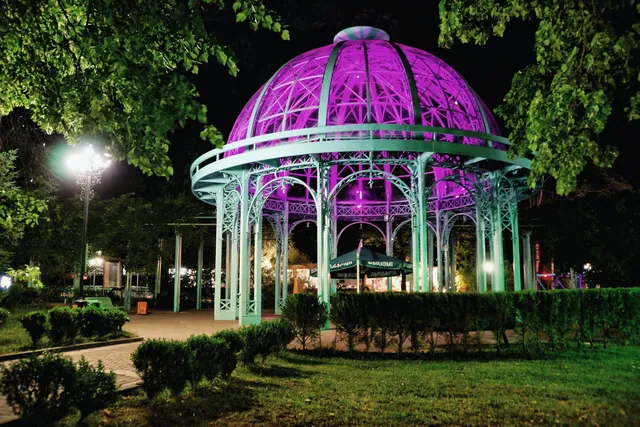
The park starts a couple of minutes from the centre, with a ticket booth at the entrance charging a token fee, and the drinking pavilion right behind the gates. This is the spring itself: the water comes straight out of the ground and you can pour as much as you like.
Be ready for something quite unlike the bottled version. The water is warm, with a distinct whiff of hydrogen sulphide and a metallic iron aftertaste — from the pavilion it's medicinal mineral water, while the bottles on sale are the table version. Most people's first sip ends in a face, the second goes down fine, and by the third it's "actually, I like this." Bring your own container: plastic bottles are sold right at the entrance, but your own is easier. Stocking up is pointless — this water keeps for about a day, then goes flat and the taste turns completely dull.
Beyond the pavilion the park is a long shaded avenue along the river: fairground rides, vendors selling churchkhela and jam, old pavilions. A leisurely walk one way takes an hour to an hour and a half. The path doesn't end at the last kiosk — it climbs on into the forest, and at the far end there's an open-air pool of warm sulphurous water. If you want to get in, bring swimwear and flip-flops; there's nowhere much to change.
The park also has a cable car with cabins styled as Borjomi bottles. Children love it, adults photograph it. A one-way ticket is 15 GEL, free for children under 6, though it's worth checking the price on site. At the top, around 1,000 metres up, there's a viewing platform overlooking the gorge and a waterfall. The ride is short, but the view explains the town's geography better than any map: you can finally see how narrow this slot between the ridges really is.
Likani: the palace that won't let you in
Two kilometres from the centre, in the village of Likani, stands the former Romanov summer residence — a late 19th-century palace set in parkland. Today it's a state residence, there's no getting inside, and no point hoping: guards, fence, all quite serious. Likani is still worth the detour, though, for the village itself, the quiet avenues and the view of the palace from a distance. And because the national park visitor centre is nearby, which you'll need to visit anyway if you're planning to hike.
Borjomi-Kharagauli National Park: the real reason to stay overnight
85,000 hectares of forest, mountains and alpine meadow — one of the largest protected areas in Europe. The park was founded in 1995 and has belonged to the European PAN Parks network since 2007. Inside there are 11 marked routes of wildly different calibre, from a few hours' walk to multi-day treks.
Rough guidelines for planning:
- Half a day to a day. The shortest of the "real" routes is No. 6 from Likani: 13 km, one day. If you have less time or energy, simply walking a couple of kilometres into the forest and turning back works perfectly well — the pine forest is just as good at kilometre one as at kilometre five.
- Multi-day treks. The longest routes run 5–8 days, crossing passes and using huts along the way; in clear weather you can see Elbrus from the ridges. That's proper hiking with gear, not an afternoon stroll.
- Registration. Entry is paid and registration is mandatory, handled at the visitor centre near Likani. They'll also brief you on trail conditions and the weather up top, which is more useful than any app.
- When to go. June to September is the sweet spot: dry trails, huts open, nights up high that aren't cold. In May and October the higher ground can be wet and muddy, and in winter the upper routes are closed.
Mobile signal disappears fast and for a long time inside the park. Offline maps and a track on your phone aren't paranoia, they're standard practice — and it's better to be back at the car before dark, because the gorge gets dark earlier than sunset suggests.
Soviet architecture, mosaics and Mirza Riza Khan
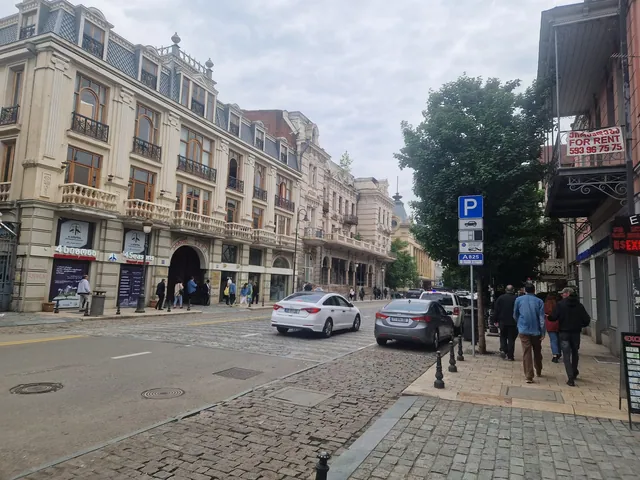
Borjomi is a resort with two historical layers, and both are visible right there on the street. The pre-revolutionary one: carved wooden balconies, pavilions, summer villas. The Soviet one: sanatoriums, wall mosaics, distinctive signage and staircases leading up to buildings, some long since empty. If you have a taste for that aesthetic, the town is a ready-made route — you wander without a plan and find a mosaic on the side wall of some former health centre.
In Central Park, make a point of finding the House of Mirza Riza Khan, a pseudo-Persian mansion from 1892 and the town's most recognisable building.
What to combine it with: Bakuriani, Akhaltsikhe, Vardzia
The good thing about Borjomi is that it sits at the gateway to a whole region rather than at a dead end.
- Bakuriani — 30 km of switchbacks, about 40 minutes each way. A ski village at 1,700 metres that stays cool in summer, with some lifts running for walking routes. On the way you can turn off to Timotesubani Monastery. The famous Borjomi–Bakuriani narrow-gauge railway, the "Kukushka", whose bridge was designed by Eiffel's bureau, has been closed since 2020 for reconstruction — don't count on it for now.
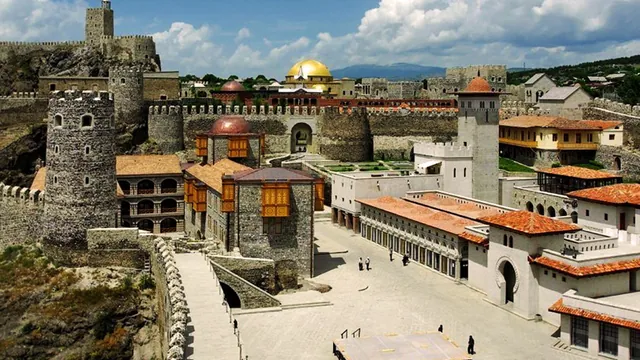
- Akhaltsikhe — the road from Borjomi continues south along the same gorge and emerges onto a high plateau. Rabati Fortress is there, and it's also the gateway to Abastumani with its observatory (28 km from Akhaltsikhe).
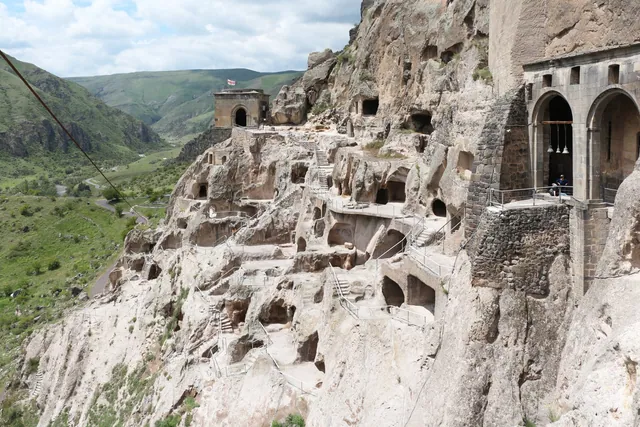
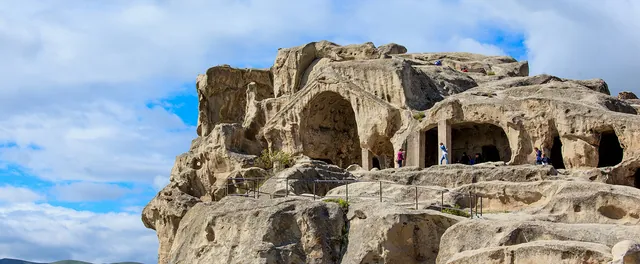
- Vardzia — a cave city roughly 100 km from Borjomi. Doing it in one day with Borjomi is possible, but the day will be packed: early start, no long stops.
If you're planning a full summer itinerary, these points fit the overall logic well — we've collected the options in our guide to summer road trip destinations.
How much time to allow
Half a day is enough if the goal is to escape Tbilisi, drink water from the spring, ride the cable car and head back. Honestly, though, 1–2 days.
- Day one: arrive around lunchtime, Central Park with the drinking pavilion and cable car, a walk deeper along the trail, then dinner in town and an overnight stay.
- Day two: Likani and the visitor centre in the morning, then either a trail in the national park or a quick run up to Bakuriani and back.
For serious trekking with nights in the mountains, allow 3–5 days and read the route description in advance.
Practical details
- Navigation. Google Maps gets you to Borjomi, Likani and Bakuriani without trouble. For the national park, download offline maps: there's no signal.
- Roads. The highway and the town are asphalt; the outskirts and approaches to trailheads are gravel in places, or old asphalt with potholes. A regular car copes, just don't rush.
- Parking. Paid in the centre, and cramped at the Central Park entrance on weekends. In Likani and at the park entrances it's free and easy.
- Food. Along the main street and by the park entrance you'll find ordinary family cafés serving khinkali, ostri and soups — dinner without frills, but filling and cheap. Vendors at the park gates sell churchkhela, jam and spices, which is more the souvenir side of things.
- Season. June to September for trekking and cool air. October for autumn colour in the gorge. Winter if you're going skiing in Bakuriani and using Borjomi as a stopover.
- What to bring. Your own bottle for the water, a windbreaker (the gorge and the top of the cable car are noticeably fresher than the town), comfortable shoes and cash in lari — small cafés and car parks don't always take cards.
The bottom line
Borjomi is a place that loses almost nothing without a car inside the town itself, but gains a great deal with one around it: pulling over in the gorge after Khashuri, dropping into Likani, climbing up to Bakuriani and returning a different way. From Tbilisi it's 2.5 hours each way. And the main thing we took away from the trip: the water is the excuse to come, but what keeps you here is the forest, the gorge and a quiet you never get in Georgian towns.