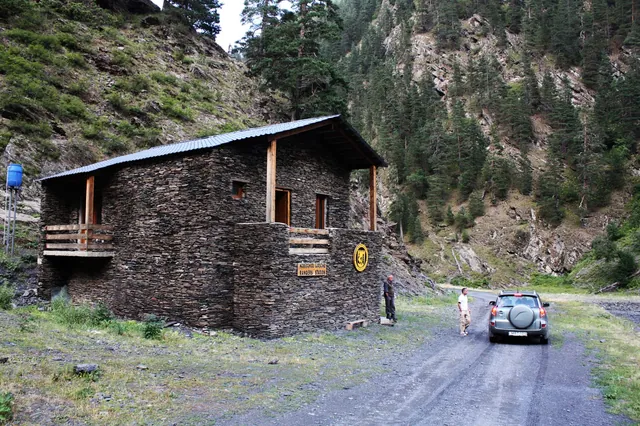

Abastumani, Georgia: Observatory, Sulfur Baths & Clean Air
Abastumani is a mountain resort with an observatory, mineral springs, and healing climate. How to get there, what to see, and why renting a car makes it easier.
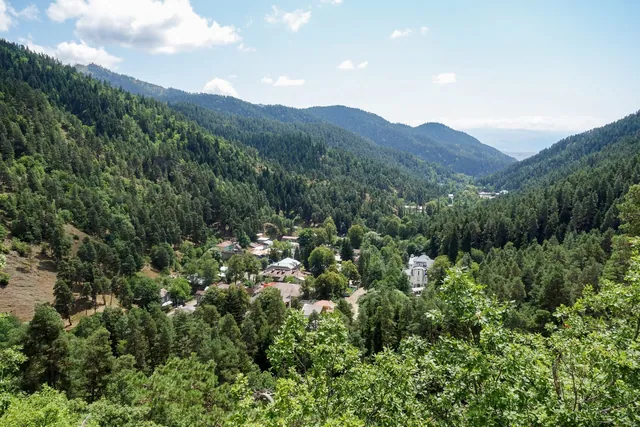
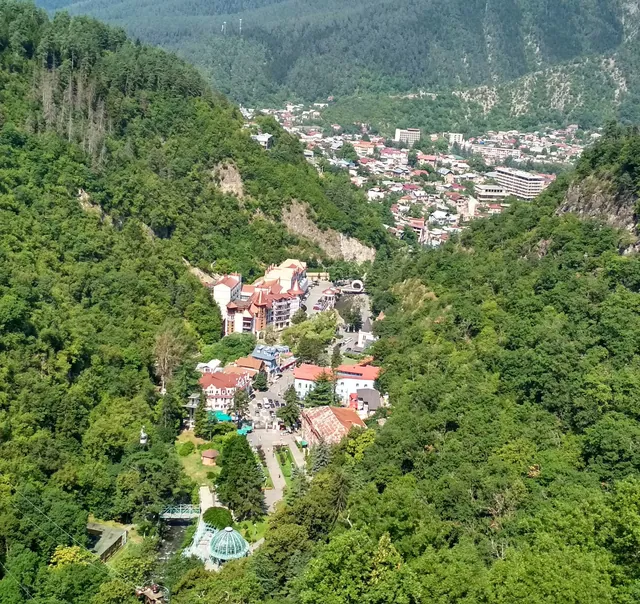
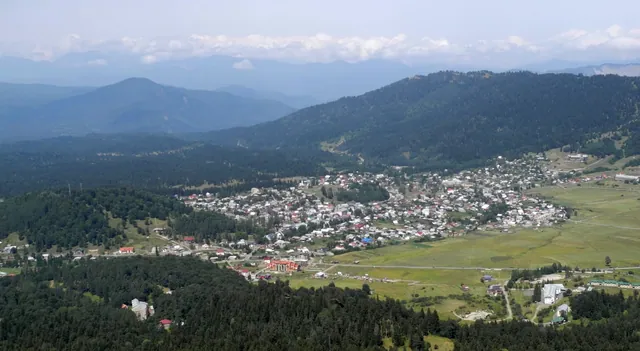
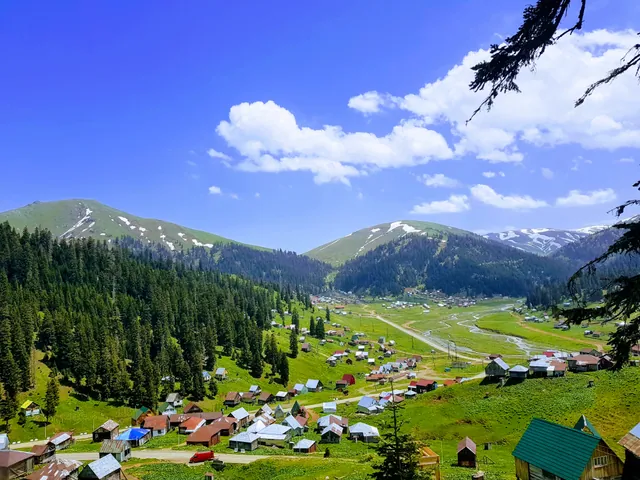
Abastumani sits on the southern slope of the Meskheti Range, at 1,300–1,450 meters (4,265–4,760 ft), 28 km (17 miles) from Akhaltsikhe. People come here for the mountain air, sulfur springs, and one of the oldest high-altitude observatories from the Soviet era — plus a stretch of wooden architecture built for the Romanov family in the 19th century.
How to Get to Abastumani
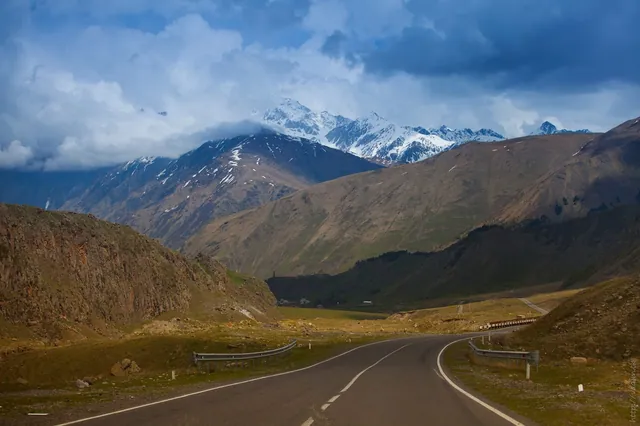
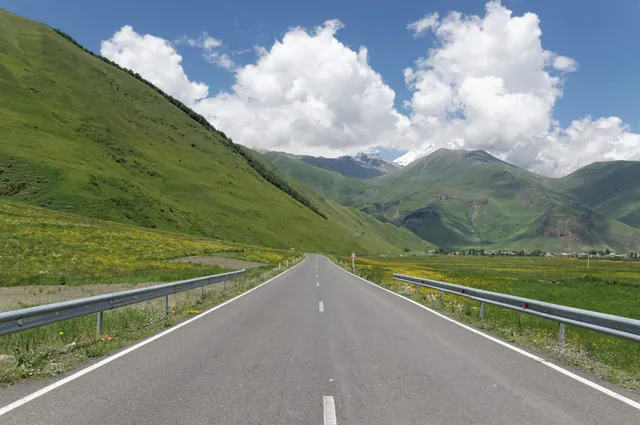
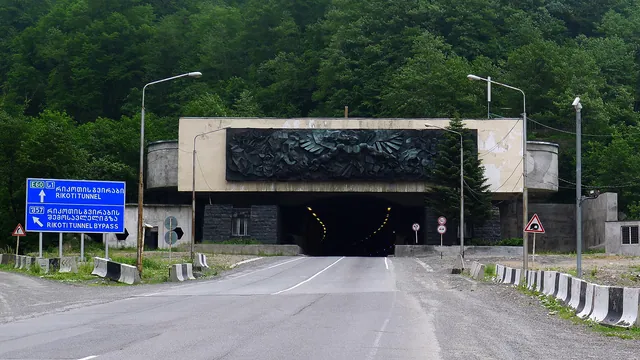
Abastumani is about 230 km (143 miles) from Tbilisi, and the drive through Khashuri, Borjomi, and Akhaltsikhe takes roughly 4 hours. The road is paved the whole way, with no serpentine or rough sections on the approach from Akhaltsikhe.
A few ways to make the trip:
- Marshrutka (shared minivan). From Tbilisi's Didube station, minivans run to Akhaltsikhe (about 3.5–4 hours), then you switch to a local minivan to Abastumani (another 40 minutes or so). The connection can add a couple of hours of waiting to the trip.
- Taxi or private transfer. A direct ride from Tbilisi runs around 250–270 GEL (roughly $95–100) per car — fast, but fixed: no flexibility to stop or change plans along the way.
- Rental car. Driving yourself from Tbilisi makes the trip easier to break up with a stop in Borjomi or Akhaltsikhe, and it solves the bigger issue once you're in Abastumani itself: the observatory, the sulfur baths, and the viewpoints sit at different ends of the gorge, and there's no public transport between them. Walking from the lower village to some of these sites takes an hour or more each way.
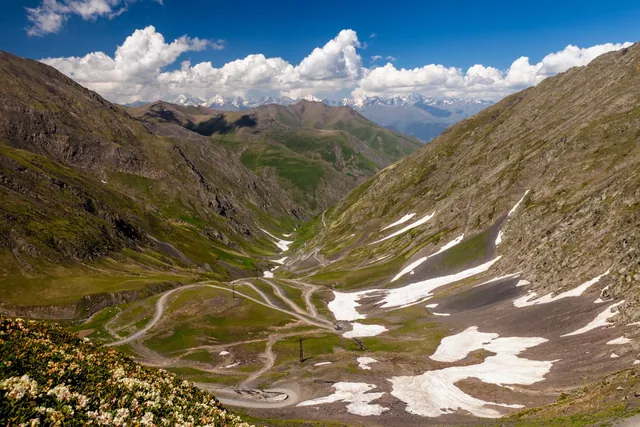
Coming from Kutaisi via Bagdati and the Zekari Pass (2,182 m / 7,160 ft) is shorter on paper, but the road needs a high-clearance SUV and some driving experience — the pass is unpaved and can become impassable in bad weather. For a first visit, the Akhaltsikhe approach is the simpler call.
The Healing Air — Why the Resort Exists at All
The Otskhe river gorge, where Abastumani sits, is shielded from strong winds by the surrounding mountains, and the slopes are covered in pine, spruce, and fir. That combination of moderate dryness and stable temperature is the actual reason the resort exists: starting in 1864, a military hospital for over 200 patients opened here every summer, and by the late 19th century Abastumani was established as a climate resort for treating lung disease.
The resort was founded by military physician A. A. Remmert — on his recommendation, Tsesarevich Georgy Alexandrovich, younger brother of Nicholas II, came here for tuberculosis treatment in 1891 and lived here until his death. In the 1930s, the same property of the air — high transparency and almost no fog — caught the attention of astronomers rather than doctors, and became the reason the observatory was built here. On a clear day, Venus is sometimes visible to the naked eye from certain spots in Abastumani — a rare case where the resort's original appeal and its scientific one turn out to be the same thing.
Little of the Soviet-era sanatorium infrastructure has survived, though — most of it sits abandoned today, so it's worth confirming any treatment program in advance rather than expecting one on arrival.
The Observatory — the Resort's Signature Landmark
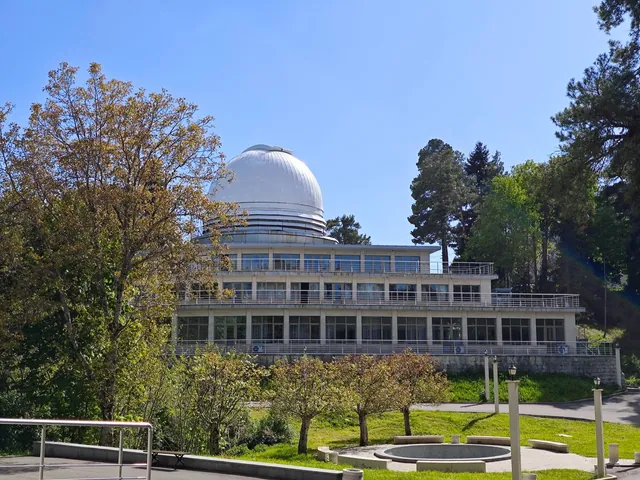
The Abastumani Astrophysical Observatory was founded in 1932 and was the first high-altitude observatory in the Soviet Union. The historic building stands in the village itself, while the working facility with the telescopes sits higher up, on Mount Kanobili, at around 1,650 meters (5,410 ft), 5 km (3 miles) up a switchback road through the forest.
The cable car up to it was originally built for staff and runs on their shift schedule, not as a tourist ride. Driving or taking a taxi up is the more reliable option — the road is unpaved but passable, just winding. The site has a museum and runs day and evening tours with telescope viewing, though the schedule shifts with weather and maintenance work — it's worth confirming ahead rather than showing up and hoping.
Romanov Heritage and Wooden Architecture
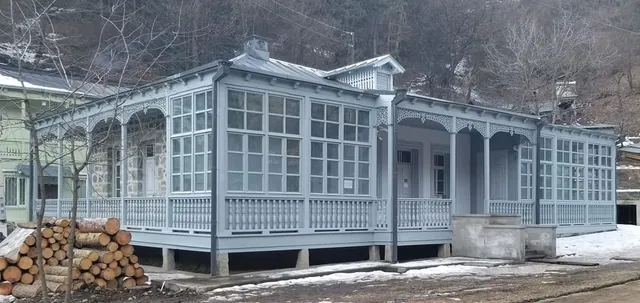
Following the tsesarevich, Russian aristocrats began building summer houses here, many with carved wooden verandas — some have survived, though a fair number need restoration. The architecture is unusual for Georgia: wood-paneled facades and glassed-in terraces look more like a dacha village outside St. Petersburg than a mountain settlement in Samtskhe-Javakheti.
The centerpiece is St. Alexander Nevsky Church, built between 1896 and 1899 and modeled on the medieval Zarzma monastery. Inside are frescoes by Mikhail Nesterov — one of the few surviving examples of his church interior work outside Russia. The palace where the tsesarevich lived now belongs to a women's monastery and is closed to visitors; only the facade is visible from outside.
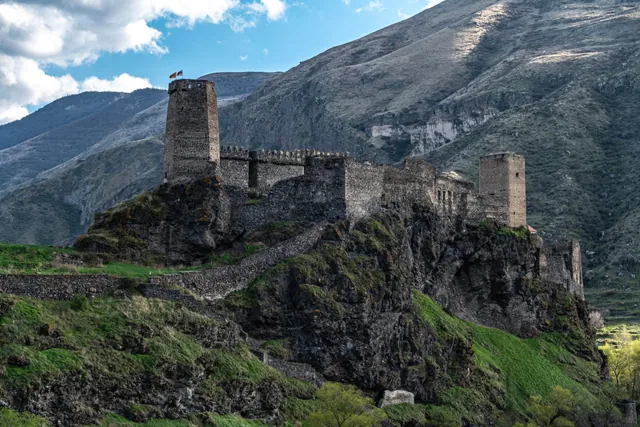
On a hill at the edge of the village stand the ruins locals call Tamar's Castle, reachable by a walking trail.
Sulfur Baths and Mineral Springs
The thermal water in Abastumani is lightly mineralized, with spring temperatures between 39 and 48°C (102–118°F). Unlike Tbilisi, there's no large bathhouse district here — the bathing facilities are attached to the handful of still-operating sanatoriums, plus a couple of smaller standalone pools. The setup leans treatment-oriented rather than tourist-oriented, built around a multi-day stay rather than a quick stop.
Forest Trails and the National Park
Abastumani borders Borjomi-Kharagauli National Park. Around 30 km (18 miles) of marked walking trails start from the village — everything from short loops to full-day treks up to the observatory through the hills, or out to the ruins at the edge of town.
The best window for a visit runs from late spring through early autumn: pines bloom in May, which intensifies the resinous forest smell the resort is known for, while some trails and unpaved roads close in winter due to snow.
Worth Knowing
Abastumani isn't a single-stop destination — the observatory, the church, and the thermal springs are spread across different parts of the gorge, with no public transport connecting them. The 4-hour drive from Tbilisi pairs better with a stop in Borjomi or Akhaltsikhe than with a same-day round trip. The healing climate isn't a marketing line — it's the historical reason the village became a resort nearly 150 years ago. A rental car solves the part of the trip that trips most visitors up: getting around inside Abastumani itself, where the distances between sights are longer than they look on a map.