
Lake Paravani: Driving Route from Tbilisi
How to reach Lake Paravani by rental car: distance from Tbilisi, the road via Tsalka and Dashbashi Canyon, weather, and Poka village.
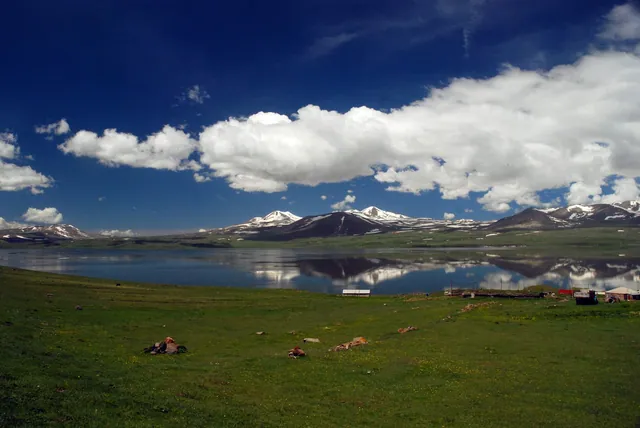
Lake Paravani, Georgia's largest lake by surface area, sits 110–120 km south of Tbilisi at 2,073 meters. The drive takes 2.5–3 hours and runs through Tsalka. There's barely any infrastructure at the lake itself, so a rental car works better here than a taxi or the marshrutka.
Why It's Georgia's Largest Lake
Paravani lies in the Samtskhe-Javakheti region, in the Ninotsminda municipality, between the Javakheti and Samsari mountain ranges. Its surface area is 37.5 km², the largest of any lake in the country. Depth runs the other way: the maximum is 3.3–3.5 meters, averaging around 2.2 meters. Total volume is estimated at 91 million cubic meters.
The lake sits on a volcanic-tectonic plateau surrounded by dormant volcanoes and feeds the Paravani River, a right tributary of the Kura, the same river that runs through central Tbilisi.
The Road from Tbilisi to Paravani
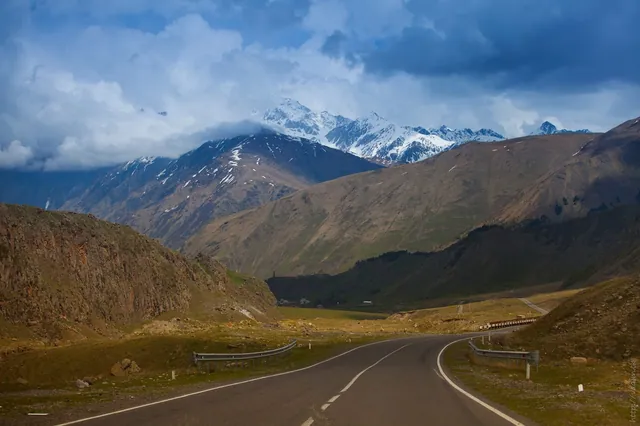
The main route runs through Tskneti, Manglisi, and Tsalka. The asphalt holds up the whole way. Past Tskneti, infrastructure thins out fast: gas stations and cafes become rare, so fill up in Tbilisi or Tsalka.
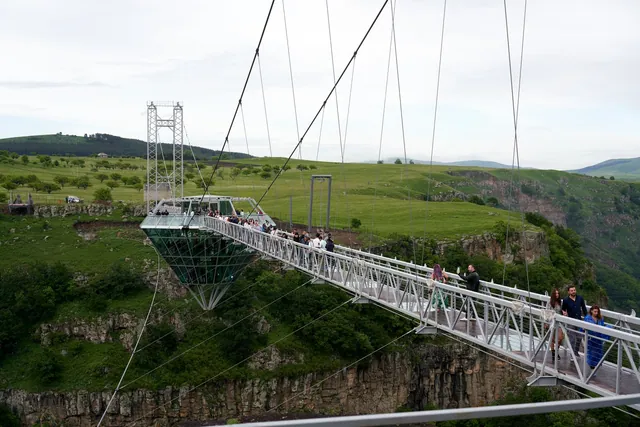
Along the way, it's worth stopping at Dashbashi Canyon, home to a glass observation bridge over the Khrami River. Entry is paid, roughly 50 GEL for foreign visitors, though the price has shifted a few times in recent years, so check on-site rates. From the canyon, it's another 30 minutes or so to the lake.
Marshrutkas to Ninotsminda run from Samgori bus station a couple of times a day on a fixed schedule, and from Ninotsminda you'd still need a local taxi to reach the lake. Picking up a rental car in Tbilisi means you set your own time at Dashbashi and choose your own stops on the plateau. A round-trip taxi typically costs about the same as a full day of car rental.
Weather and When to Go
The altitude makes itself known right away: even in summer it's windy and cool, and conditions on the plateau shift fast. Late May through September is the best window, when the alpine meadows around the lake turn green. From mid-autumn to mid-spring, frost sets in, the lake freezes to a depth of 60–70 cm, and the road toward Ninotsminda occasionally closes after heavy snow.
Pack accordingly:
- A warm jacket, even in July
- Water and snacks, since there's almost nothing to buy along the route
- Cash in GEL for the Dashbashi entry fee, in case cards aren't accepted in the area
Poka Village and the Shoreline
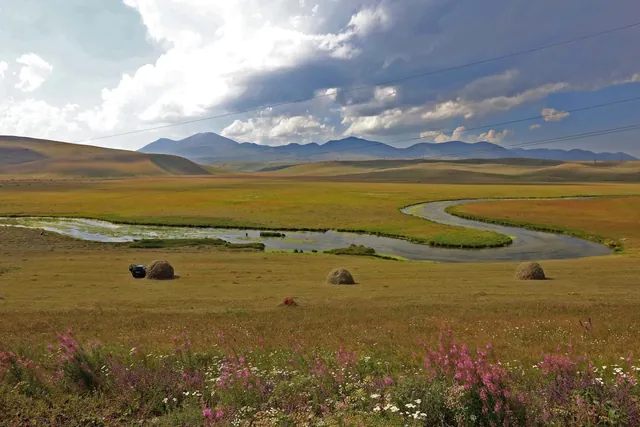
Poka village sits right by the water and is home to a women's and a men's monastery, but there are no hotels or guesthouses here, so this is a day trip rather than an overnight stop. The shoreline works well for a picnic and some birdwatching. There are no marked trails, but walking along the water is easy enough.
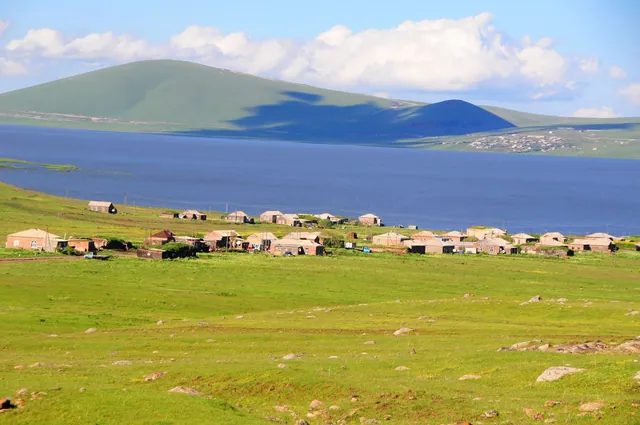
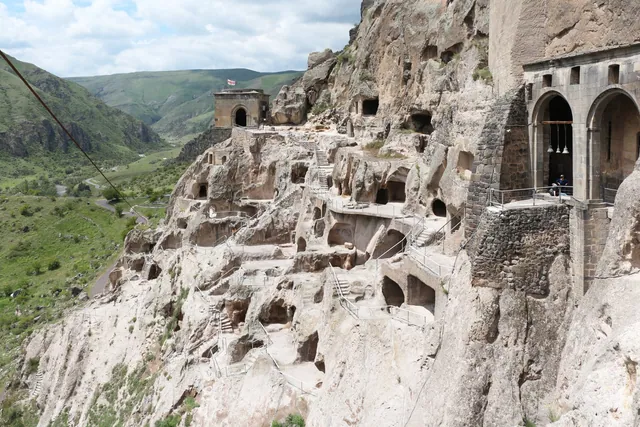
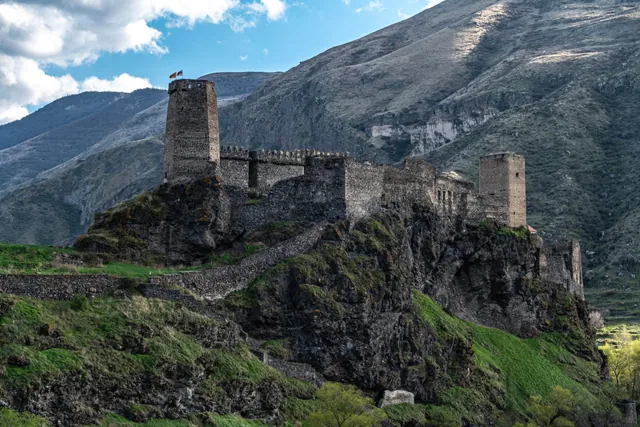
The lake holds a healthy fish population, including khramuli, trout, and carp, and fishing is a common local pastime. If there's time left after Paravani, the road continues toward Akhaltsikhe and Khertvisi Fortress, while Vardzia's cave city is worth planning as its own day.
Before You Go
Tbilisi to Lake Paravani runs about 110–120 km, roughly 2.5–3 hours by car with a stop at Dashbashi Canyon. Late spring through early autumn is the better season, and a full tank before leaving Tsalka saves you from hunting for gas stations that mostly don't exist past that point.