
Truso Valley: How to Get There and Where to Walk
Where to park before Truso Valley, why rental cars can't drive in, and the walking route to the mineral springs and Zakagori fortress ruins.
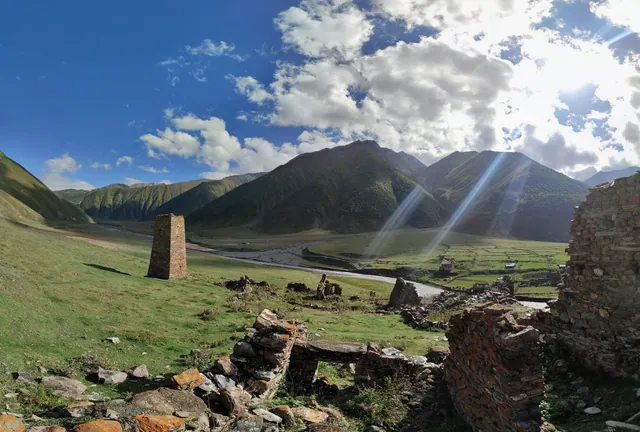
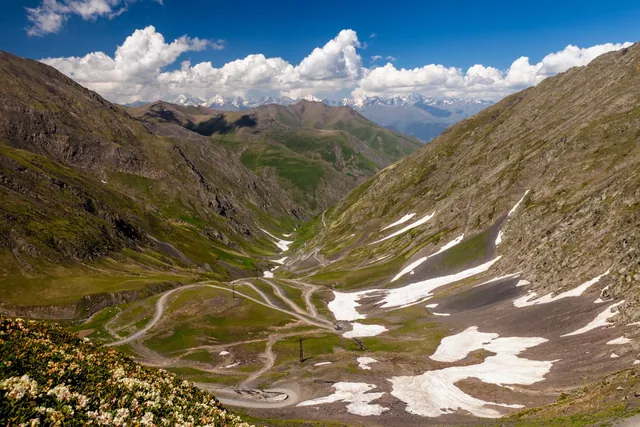
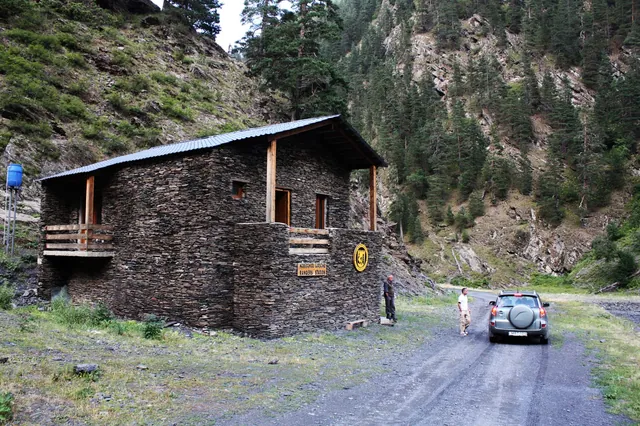
Truso Valley starts about 17 km (10.5 miles) south of Kazbegi, at a turnoff near Kobi village on the Georgian Military Highway, where a dirt side road leads into the gorge. The paved road ends there. On this dirt road, you can drive as far as the bridge over the river, but the surface is already rough on that stretch. Past the bridge, it turns into a genuinely bad road, running along the edge of a drop in places, and it's not worth attempting in your own car, let alone a rental.
Why People Come Here
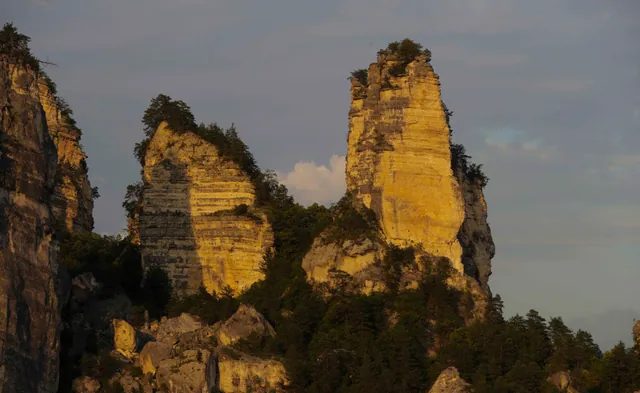
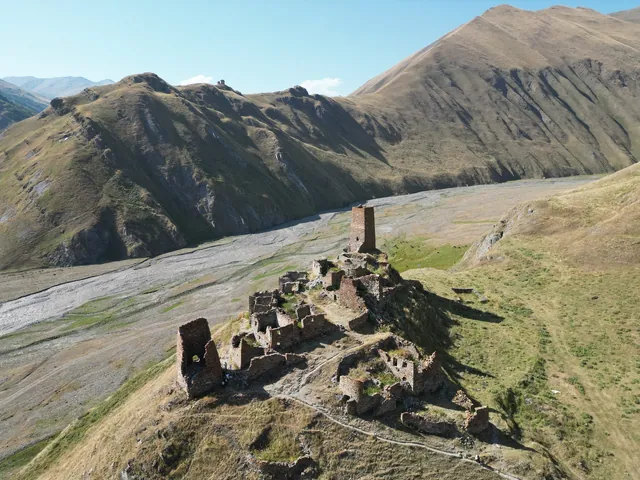
Unlike the busier valleys around Kazbegi, Truso is nearly empty: abandoned Ossetian villages, mineral springs with bright orange and white travertine deposits, the bubbling mineral lake Abano, and the ruins of Zakagori Fortress on a hilltop at the far end of the valley, with the remains of a defensive tower giving a panoramic view of the gorge. The valley is walkable to the west for about 22 km (13.7 miles), where the border with South Ossetia begins. That's also where the accessible part of the trail ends, at Zakagori.
Getting There: By Car Only as Far as the Bridge
Tbilisi to Kazbegi is about 150 km (93 miles) on the Georgian Military Highway, and the pavement is in good condition the whole way. A standard car handles Kazbegi itself and the road up to Gergeti Trinity Church without any issue. Truso and the neighboring Juta valley are a different story: you need a 4x4 there, while trips toward Kakheti or Kazbegi don't require one.
With a rental car, the situation is simpler: you can't go in at all, regardless of how far the road physically allows. Truso, Juta, Tusheti, and a few other mountain regions are explicitly listed in rental agreements as no-go zones, and insurance doesn't cover unpaved roads there, so any damage or accident becomes the renter's responsibility. This isn't a formality: past the bridge, the narrow dirt track runs right along the river cliff in places, and even experienced drivers in crossovers have torn tires and scraped underbodies there, leaving some tourists with damaged bumpers and repair bills.
The reference point where you can drive up to, and shouldn't go past: this spot on the map, right by the bridge. The logic for a rental car trip is straightforward: drive the paved road to the Kobi turnoff, follow the dirt road to this point, park, and continue on foot from there. There's almost no elevation gain on the trail, so walking is easy.
If you want to go deeper without risking a rental car, villages at the entrance to the valley offer local 4x4 transfers to the travertines or closer to the fortress. This works well if you're short on time or not up for a long day of walking.
The Walking Route: What to See, in Order
From the parking spot, the trail follows the river with almost no elevation change, it's mostly a flat dirt track. The full round trip to Zakagori Fortress and back takes 6–7 hours and covers about 22 km (13.7 miles). If you want to shorten it, you can walk as far as the mineral springs and Lake Abano and turn back, which takes noticeably less time.
Points along the route, in order:
- Mineral springs and travertines — the first formations appear early in the valley, with water surfacing and a distinct sulphur smell.
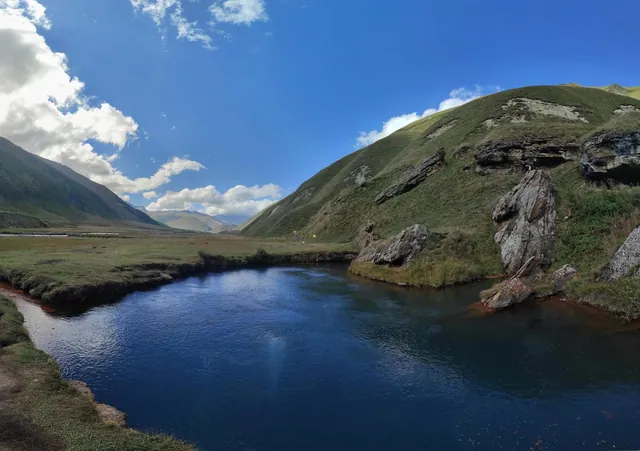
- Lake Abano — a small mineral pool with carbon dioxide bubbles rising from the bottom, cold and clear.
- Ketrisi village — a half-ruined Ossetian village with a surviving watchtower, and a monastery nearby where you can rest.
- Zakagori Fortress — ruins on a hilltop at the end of the accessible part of the valley, with a border post at its base.
What to Bring and When to Go
The season for visiting the valley runs from May to October; in winter and shoulder season, the road and trail can be closed by snow, and the entrance usually doesn't open until May or June. Before heading out, it's worth checking road conditions with the Kazbegi National Park Visitor Center in Stepantsminda or on the georoad.ge page.
Bring your passport: border patrols operate near Zakagori Fortress, and you may be asked to identify yourself. No permit is needed for the walk to Abano, Ketrisi, and the fortress itself; a permit is only required if you're planning to continue toward Lake Kelitsadi. As for gear, comfortable closed shoes, water, and sun protection are enough, there are no technically difficult stretches on the trail, and there's almost no shade anywhere in the valley.
Worth Knowing
By car, Truso Valley is reachable only as far as the bridge over the river (see the map point above); the road there is rough, and past it, it's barely passable for a standard car. Rental cars are barred from this dirt road entirely, regardless of road conditions, so park at the start of the trail and continue on foot. Bring your passport, and plan on half a day to reach Zakagori Fortress, or less if you're stopping at Lake Abano and the springs.