
Georgia in Winter: Weather, Skiing, Mountain Roads and Where to Go From December to March
Georgia from December to March: weather in Tbilisi, on the coast and in the mountains, the season in Gudauri, Bakuriani, Goderdzi and Mestia, Jvari Pass closures, what stays open in winter and which car to rent.
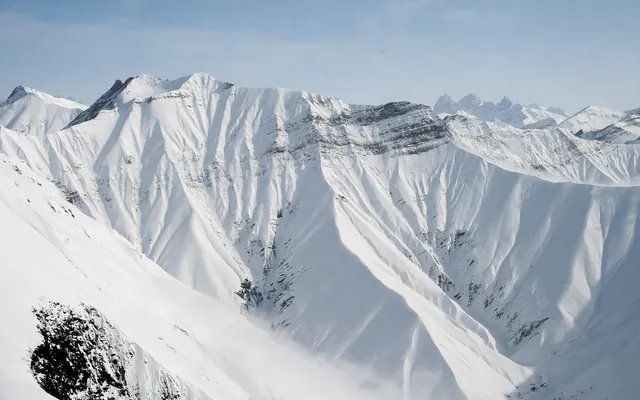
Winter in Georgia runs roughly from December to March, and what it looks like depends on the altitude. In Tbilisi the daytime temperature is usually above zero, snow falls on a couple of days a season and melts quickly. A hundred and twenty kilometres to the north, in Gudauri, there is a metre of snow at the same time and the lifts are running. On the coast it rains. So a winter trip is easier to plan as two separate ideas: the mountains, with skiing and passes, and the lowlands, where nearly everything works as usual, only without the crowds.
If you have read the autumn guide, the logic here runs the other way. In autumn the routes gradually come down from the high country. In winter the high country is open only where there is a resort and a cleared road to it, and everything else waits until May or June.
What the weather is like in Georgia in winter
Tbilisi and the east
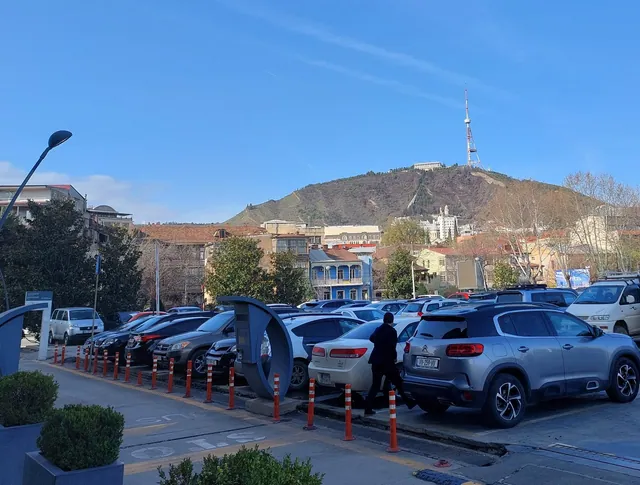
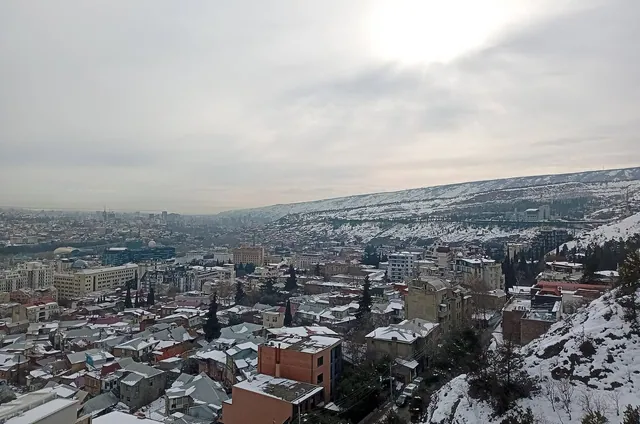
Tbilisi sits in a basin at around 400–500 metres, and the winter here is mild. In December and February it is usually +5 to +10 in the daytime, in January +3 to +7, with nights around zero and down to −3 to −5 in the cold weeks. Snow falls a few times a winter and rarely lasts more than a day or two, but when it does, the hilly city grinds to a halt: without de-icing salt the steep streets of Sololaki and Mtatsminda turn into ice rinks, and taxis refuse to drive uphill.
Kakheti is a little colder and drier. In Telavi and Sighnaghi daytime temperatures sit around +3 to +8, there is frost on the vineyards in the mornings, and the Caucasus range above the Alazani valley stands white and visible on almost every clear day. In summer haze hides it; in winter it doesn't.
The coast
Batumi is warm in winter but wet. Daytime temperatures are +8 to +12, frost comes once or twice a season, and rain can go on for several days in a row. The sea is around +10 to +12, so nobody swims, but you get storms at the breakwaters and an empty promenade. Snow in the city is rare, yet the mountains above Adjara get buried deeper than anywhere else in the country: it is the same moisture that falls as rain down below.
The mountains
Above 1,500 metres winter is the real thing. In Gudauri (2,196 m) it is usually −3 to −8 in the daytime, and on a clear frosty night −15 or lower. Stepantsminda, at 1,740 m, is slightly warmer but exposed to the wind off Kazbek. Bakuriani (about 1,700 m) lies in a forested basin, and it is cold there but calm: the wind is weaker than on Gudauri's open slopes. In Mestia snow lies from December to the end of March, and in the narrow Enguri gorge the winter sun reaches the road for only a couple of hours.
Daylight is short everywhere. At the end of December it is light from about half past eight to half past five, and any winter driving route has to fit around that.
Winter month by month
December. The resorts open in the middle of the month, with the exact date depending on snow. In some years Gudauri has started its lifts at the end of November, but it is not something to build a plan on. The first half of December is quiet and inexpensive; in the second half prices start climbing ahead of New Year. Tbilisi has its lights and Christmas markets.
January. The official holidays are 1–2 and 7 January, but many people take the whole week from 31 December to Christmas off, and the resorts are full. After mid-month it gets calmer, and the snow on the slopes is at its most reliable of the year.
February. The peak of the ski season and, at the same time, the quietest month in the cities. The best month for freeriding in Gudauri and for deep snow in Goderdzi, if the avalanche situation allows.
March. Tbilisi is already +12 to +15 in the daytime, and by the end of the month the cherry plums are in blossom. People are still skiing on the slopes, in Gudauri and Goderdzi usually until early April, but the snow is wet by lunchtime and the avalanche risk on steep slopes grows. The winter tyre requirement formally applies until 1 March, but snow stays on the passes longer.
For a comparison of winter with the other seasons, see the guide to when to go to Georgia.
Ski resorts
The country has four ski destinations, and people usually choose between them by the road rather than by the pistes. There is a more detailed comparison in the overview of Georgia's ski resorts.
Gudauri
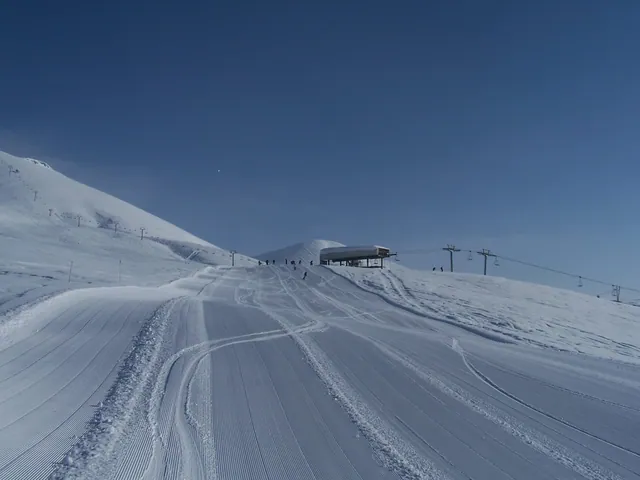
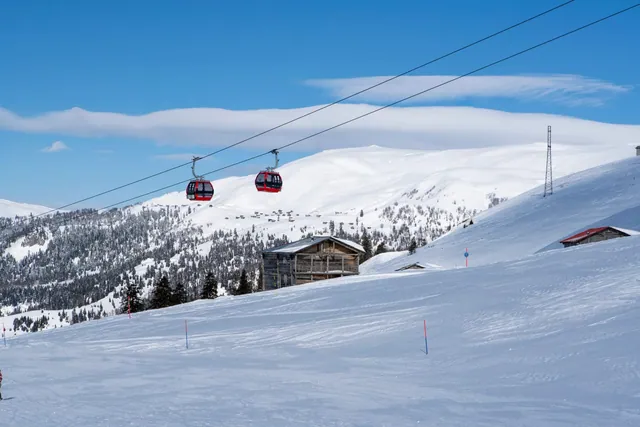
120 km from Tbilisi, 2–2.5 hours along the Georgian Military Highway in good weather. The resort sits at 2,196 metres, the top of the lift system is around 3,000 metres, and there are about 80 km of pistes, mostly red and black. This is the best freeriding in the country, heli-skiing operates here, and beginners have a practice area by the lower stations. A day pass in the 2025/26 season cost from 70 GEL; current prices are published by the lift operator, MTA.
The resort stretches along the highway as Upper, Lower and New Gudauri, and where you stay decides whether you walk to the lift or drive. If you are starting from Tbilisi and want a car right at the resort, there is a separate Gudauri rental page.
In high season the car parks by the lifts often fill up by nine in the morning. Arriving for opening time pays off both for a parking space and for untouched pistes.
Bakuriani
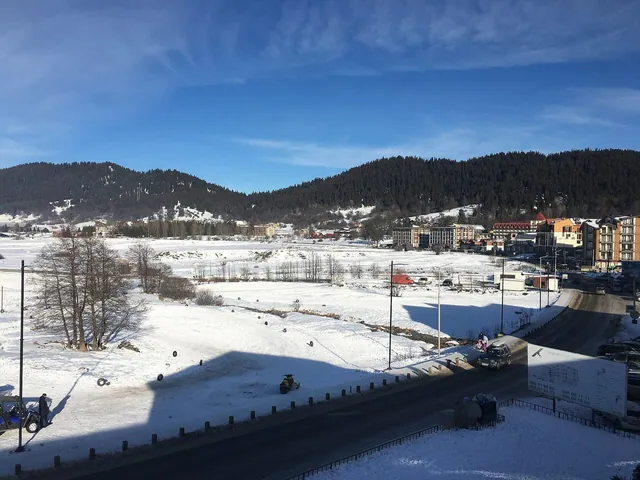
180 km from Tbilisi, 2.5–3 hours via Khashuri and Borjomi. The resort is at 1,700 metres, in pine forest, with gentle blue runs and nursery slopes. This is where most families with children go skiing in Georgia. A day pass in the 2025/26 season cost around 55 GEL, and a child's pass roughly half that.
Bakuriani's slopes are split into three areas: Didveli, the highest, with a gondola and harder runs, and the easier Kokhta and Mitarbi. There is no piste linking them, although the lift pass covers all three, and where you stay decides whether you need the car every morning.
The last stretch from Borjomi up to Bakuriani is a climbing switchback road. The asphalt is kept in good shape all year, but in a snowfall it is packed snow. The narrow-gauge Kukushka train from Borjomi has been closed for reconstruction since 2020. A relaunch is promised for 2027, with no firm date, so for now you cannot count on it.
Goderdzi
A resort in the mountains of Adjara at around 2,000–2,350 metres, and it gets more snow than any other resort in Georgia. There are few pistes, about 8 km, and few people too, so this is where you come for powder and quiet.
In winter you can only get there from the Batumi side, via Khulo: about 100 km, 2.5–3 hours. The road from Akhaltsikhe is practically never cleared after snow. On top of that, most rental companies put Goderdzi, along with Khulo and mountainous Adjara, on the list of destinations banned by contract, and insurance does not apply there. More on those bans in the piece on where not to drive a rental car. How to get there by marshrutka, taxi or snowcat is covered in the article on the road to Goderdzi.
Mestia: Hatsvali and Tetnuldi
Briefly, because this is a trip in its own right, not a weekend. Mestia is about 460 km and 7–8 hours away via Kutaisi and Zugdidi. Hatsvali is a few minutes from town, with one main intermediate run. Tetnuldi, 17 km from Mestia, rises to about 3,165 metres and has more pistes and almost no queues, but without a car or an arrangement with your hotel it is hard to reach. The road from Zugdidi is cleared in winter, but in the narrow part of the gorge ice lies even on a clear day, and after heavy snowfall it is closed because of avalanches. Planning fewer than three or four days for Svaneti in winter makes no sense.
New Year and Christmas
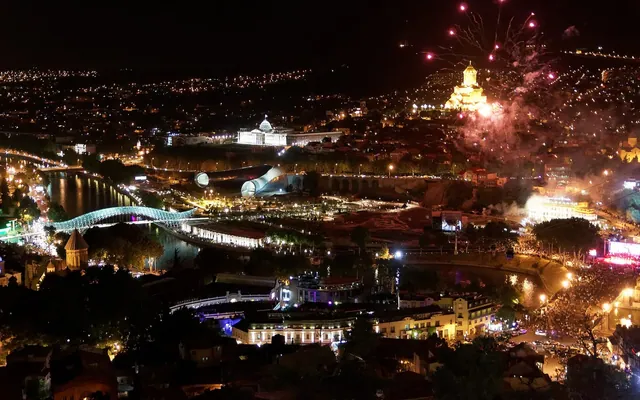
The holidays have their own article, New Year in Tbilisi; here is just what affects a trip. At midnight on New Year's Eve Tbilisi explodes with fireworks from every balcony, 1 and 2 January are days off, and Christmas is celebrated on 7 January, when the Alilo procession walks through the centre. From late December to 8 January prices for accommodation in Gudauri and Bakuriani and for car rental can almost double, and SUVs and cars with a ski rack get booked up early. On the Georgian Military Highway on these days there can be traffic jams starting as early as Mtskheta. If the goal is skiing rather than celebrating, move the trip to mid-January.
Tbilisi in winter
In winter there are few tourists in Tbilisi. The sulphur baths in Abanotubani take you without a long wait, and after a walk at +4 they are the best place in the city. The museums are empty, the wine bars in Sololaki have free tables, and you can ride the funicular up Mtatsminda and look at the city without the summer haze.
A couple of practical details. Old buildings are heated however their owners manage, and budget flats on rental sites can be cold in winter: check the listing for central heating or at least a gas boiler. After a snowfall the main danger on the streets is ice on the cobbles and steep descents, and shoes with a decent sole matter more here than in the mountains.
Mtskheta, Jvari and Uplistsikhe are open all year, the roads there are clear, and they are the easiest half-day trips in winter.
What is open outside the city in winter
Most of the country below 1,500 metres is reachable in winter in an ordinary car. The routes are the same, but there is less daylight, so leave a margin for the drive.
Kakheti
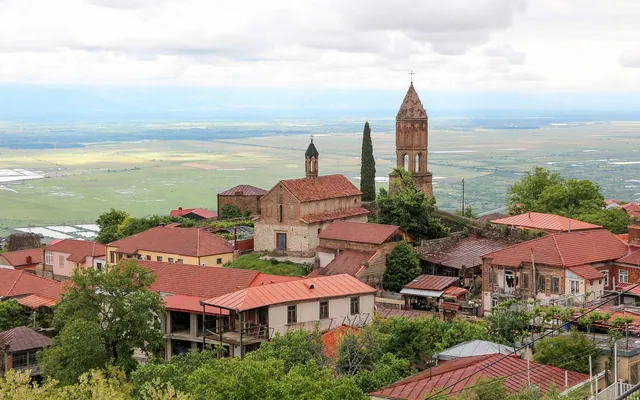
The wineries work in winter too, and many are even happier to host guests without the seasonal rush. Sighnaghi is almost deserted, while the fortress wall and the view of the range are the same as ever. Alaverdi, Telavi and Tsinandali are open.
There is one catch with the road. The short way to Telavi, about 95 km, goes over the Gombori Pass at around 1,600 metres, which in winter gets snowed over and regularly shrouded in fog, and in heavy snow it is sometimes closed. The second road, through Sagarejo and Gurjaani, is about 50–55 km longer but stays in the valley. Both roads are covered in detail in the Tbilisi to Kakheti route. From December to February I usually take the lower road both ways, and go over Gombori only on a clear, dry day and in daylight.
In small towns opening hours in winter are a loose notion. A restaurant or wine cellar listed as "open" may be shut on a Tuesday in January, so it is easier to call ahead.
Borjomi and Vardzia
Borjomi: 160 km, 2–2.5 hours from Tbilisi. The central park with its mineral springs is open, and in the upper part of the park there is an open-air pool with warm sulphur water; bathing in it with snow along the edges is a pleasure of its own. The cable car up usually runs in winter too, but it is stopped in wind. The upper trails of the Borjomi-Kharagauli National Park are closed in winter, while the short forest walks from Likani are passable if the snow is not deep. Borjomi and Bakuriani combine easily into one trip.
Vardzia: about 100 km from Borjomi via Akhaltsikhe and Aspindza, on a paved road. The cave monastery is open all year, and there are almost no tourists in winter. Up top it is windy and cold, and the stone steps and passages in the shade ice over, so it is easier here in the afternoon than in the morning. The Borjomi, Rabati in Akhaltsikhe and Vardzia combination works over two days in winter just as it does in autumn.
Kazbegi
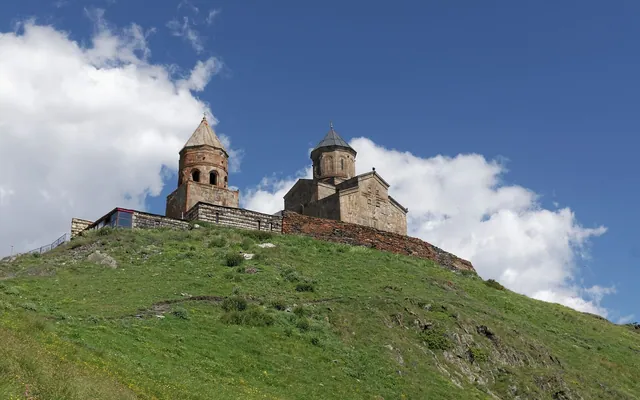
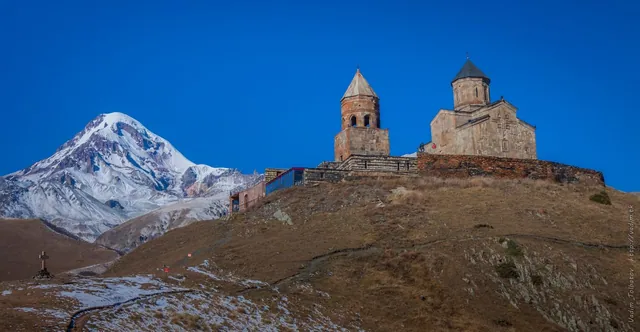
Stepantsminda is reachable in winter if the Jvari (Cross) Pass is open (more on it below). About 150 km from Tbilisi, 2.5–3 hours without stops on a good day; in winter allow more. The village itself is alive, and guesthouses and cafés are open. Don't try the climb to Gergeti Trinity in the snow in a rental saloon: local drivers take people up in 4x4s, or you can walk the trail in an hour to an hour and a half. If Kazbegi comes at the start of a 7-day Georgia itinerary, keep a backup plan with Kakheti in case the pass is closed.
The west and the coast
Kutaisi is an ordinary city in winter, Gelati is open, and Prometheus Cave works all year (it is about +14 inside). Boat trips in Martvili Canyon can be suspended after heavy rain. People go to Batumi in winter for the city, not the beach. Sea-view hotels are empty and cheap, the Batumi Botanical Garden is nearly deserted, and there is no queue for Adjarian khachapuri. You will always need an umbrella. The Tbilisi to Batumi road, about 380 km, is usually fine in winter: the Rikoti Pass is now crossed on a new highway with tunnels and viaducts, although wet snow and fog do happen there.
Mountain roads in winter
The Georgian Military Highway and the Jvari Pass
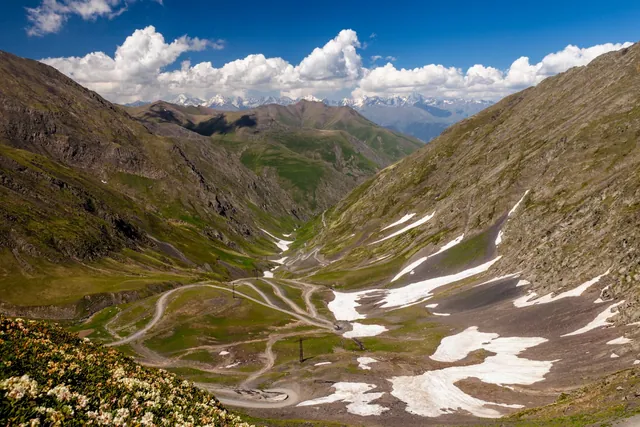
The main road north and the most common winter obstacle. The Gudauri – Kobi section over the Jvari Pass (about 2,379 m) is closed during heavy snowfall and avalanche danger. Sometimes for a few hours, sometimes for a day or longer. When there is a blizzard up top, the police stop the traffic lower down, at Pasanauri, and the queue can stand for an hour or more. When the pass is closed, lorries heading for Upper Lars line up on the verges for kilometres.
Gudauri itself is usually reachable from the Tbilisi side even when the pass is closed, since the section beyond the resort is the first to be shut. But if you are staying in Stepantsminda and the pass closes, you will be on the wrong side of it, and your return flight from Tbilisi may not wait.
The Kvesheti – Kobi bypass with its long tunnel has been under construction for several years, and full opening is promised no earlier than 2027. Until then, check the pass status on the morning of departure, not the night before: restrictions appear promptly in the updates from the Roads Department of Georgia and the Patrol Police.
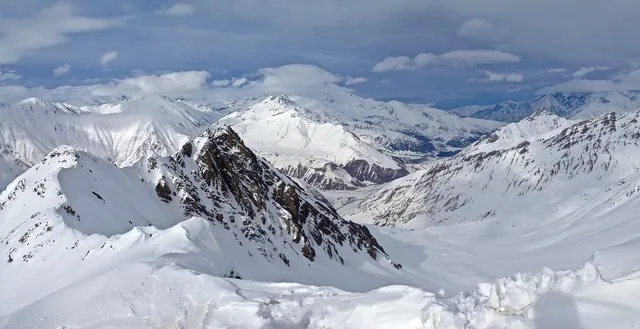
After Pasanauri the road gains height fast, and in half an hour of climbing the temperature drops by about ten degrees. The most dangerous thing is black ice in the shadow of the rocks on bends, especially before noon, until the sun has warmed the asphalt. On some sections before the pass the police may require chains even if the car has winter tyres.
Other winter routes
- Khashuri – Borjomi – Bakuriani. No passes, but part of the road to Borjomi (the Kvishkheti – Vale section) is on the list of roads where winter tyres are mandatory. The last switchbacks up to Bakuriani are packed snow during a snowfall.
- Zugdidi – Mestia. Paved, but the gorge is narrow, ice in the shade lasts all day, and closures after avalanches are possible.
- Batumi – Khulo – Goderdzi. Cleared only from the Batumi side; the upper part can be buried so deep that people continue by snowcat. For rental cars most companies rule it out by contract anyway.
- Gombori Pass. Passable for most of the winter, but snow and fog make the lower road through Sagarejo the more sensible choice.
- Rikoti Pass (Tbilisi – Kutaisi). The new highway with tunnels is easy going in winter, but the open sections get black ice, wet snow and fog.
If you are heading into the mountains, run through the mountain trip checklist: it is short, and forgotten chains or an empty tank on a pass cost a lot.
Where you can't get to in winter
- Tusheti. The road over the Abano Pass is open roughly from June to September, sometimes until early October, and rental contracts don't allow it even in summer.
- Khevsureti and Shatili. The Datvisjvari Pass opens only towards summer.
- Ushguli. The road from Mestia is periodically closed in winter because of avalanches, and most rental companies keep Ushguli on their banned list all year.
- Juta and Truso. Under snow until spring, and the dirt roads there are banned by most rental companies even in season.
- Goderdzi from the Akhaltsikhe side. Not cleared in winter.
- High mountain tracks and most of Racha above the district towns. Shovi has not been rebuilt since the 2023 mudslide.
The car in winter: tyres, drive, what to check
Winter tyres. From 1 December to 1 March winter tyres are mandatory on a number of mountain sections: the Georgian Military Highway, the road to Svaneti, and part of the Khashuri – Akhaltsikhe road on the way to Bakuriani; the list also includes approaches to other resorts and the Rikoti Pass. This is a government decree, not a recommendation, and the list of sections is revised from time to time, so check it before the trip. The fine is 100 GEL, and the police can also refuse to let the car go any further. When booking, say plainly that you are going to the mountains, and ask whether the car has winter tyres and chains. In March the rule formally stops applying, but if Gudauri or Kazbegi is on the route you need the same tyres as in February.
Car class. For Tbilisi, Kakheti via the lower road, Borjomi, Vardzia and Batumi an ordinary saloon on winter tyres is enough in winter. For Gudauri, Kazbegi, Bakuriani and Mestia above all, a crossover or 4x4 SUV is the sensible choice: ground clearance helps in ruts of packed snow, and all-wheel drive on an icy climb. A route-by-route breakdown is in the article on which car to rent in Georgia. Over the New Year dates these cars are the first to go.
What to check at pickup:
- the tyres are genuinely winter tyres, not all-seasons described as winter ones, and the tread is still good;
- the chains are in the boot and you know how to fit them; better to try once in the car park than on a pass in a blizzard;
- a brush and an ice scraper for the windows;
- antifreeze washer fluid in the reservoir, since summer water will freeze on the first climb;
- the window and mirror heating works.
Journey time. Navigation apps calculate mountain roads at summer speeds. In winter the real time on switchbacks comes out about one and a half times longer. Plan so that the mountain part of the route ends before dark, which means by five in the afternoon.
Fuel and signal. Fill up completely before a mountain section: in a queue at a closed pass the engine runs for hours to keep the heater going. Download offline maps in advance, as the signal drops out in the gorges of Svaneti and on the approach to Goderdzi.
Contract restrictions. Goderdzi with Khulo and mountainous Adjara, Tusheti, Ushguli, Juta and Truso are excluded from most rental contracts all year. If the pass is closed, there is no point looking for a dirt-road detour: it is better to wait it out.
In short
In winter Georgia divides by altitude. Below 1,500 metres almost everything works: Tbilisi, Mtskheta, Kakheti, Borjomi, Vardzia, Kutaisi and wet but empty Batumi. Higher up, the resorts and the cleared roads to them are open: Gudauri, Bakuriani, Mestia, and Goderdzi only from the Batumi side and not in a rental car. Skiing is most reliable from mid-January through February; the New Year holidays are pricier and busier. From 1 December to 1 March winter tyres are mandatory on mountain roads, and for Gudauri and Kazbegi a crossover is the better choice. Check the Jvari Pass status on the morning of departure, and try to come down from the mountains in daylight.