
Georgia in 7 days by car: an itinerary for your first trip
A realistic 7-day Georgia road trip: Tbilisi, Mtskheta, Kazbegi, Kutaisi, the canyons, Prometheus Cave, Borjomi, Uplistsikhe and Gori. Distances and driving hours for each day, where to sleep, which car you need and what changes in winter.
A week in Georgia by car means making choices. The country is small, but mountain roads are slow, and trying to see everything at once turns a holiday into eight hours behind the wheel every day. Below is the route I recommend for a first trip: the capital, the mountains in the north, the green west with its canyons and caves, the spa town of Borjomi and an ancient cave city on the way back to Tbilisi.
The loop comes to roughly 1,050–1,150 km on the odometer. One day is long; the rest are relaxed, with time left over for lunch, photos and the inevitable cow standing in the middle of the highway. You sleep in four places: Tbilisi, Stepantsminda, Kutaisi and Borjomi.
The route at a glance
| Day | Route | Distance | Driving | Overnight |
|---|---|---|---|---|
| 1 | Tbilisi on foot | 0 km | 0 | Tbilisi |
| 2 | Tbilisi → Mtskheta → Ananuri → Gudauri → Stepantsminda | ~170 km | 3–3.5 h | Stepantsminda |
| 3 | Stepantsminda → Kutaisi | ~340 km | 5–5.5 h | Kutaisi |
| 4 | Kutaisi, Gelati, Prometheus Cave, Tskaltubo | ~70 km | 1.5 h | Kutaisi |
| 5 | Canyons and Kinchkha (or Racha) | 120–250 km | 2.5–5 h | Kutaisi |
| 6 | Kutaisi → Borjomi | ~130 km | 2 h | Borjomi |
| 7 | Borjomi → Gori → Uplistsikhe → Tbilisi | ~180 km | 2.5–3 h | Tbilisi |
The distances are approximate: your navigation app will show slightly different numbers depending on your hotel and how many times you pull off for a viewpoint. Driving times are pure time on the road, without stops.
A word on which way round to drive the loop. I put the mountains first for a simple reason: the Jvari Pass depends on the weather, and if it closes on day two you still have a whole week to rearrange your plans. Leave Kazbegi until the end, and a closed pass means you never see the trip's signature view at all.
When to go and which day to start
The best months for this route are May–June and September–October. The pass is open, the west isn't muggy and the canyons are full of water. July and August work too, but Kutaisi can hit 35 °C and the car park at Gergeti fills up at weekends. There's a month-by-month breakdown in our piece on when to visit Georgia.
Check the closing days: the Martvili and Okatse canyons, as well as the Stalin Museum in Gori, are closed on Mondays. Saturday is the most convenient day to start. Monday then falls on day three, the transfer from north to west, when all you need anyway is fuel stations and lunch.
Day 1. Tbilisi without a car
I'd spend the first day without a steering wheel. The Old Town has narrow streets, one-way loops and tricky parking, and all the main sights are walkable: Metekhi, the sulphur baths in Abanotubani, the cable car up to Narikala, Rustaveli Avenue and an evening on Mtatsminda. There's a ready-made walking plan in Tbilisi in one day.
It makes sense to pick up the car on the morning of day two, right before you head out. That's one day less of rental and no headaches about parking at the hotel. If you land at night, arrange a morning handover at your hotel or at the airport. You'll find cars with city delivery on the car rental in Tbilisi page.
Day 2. The Georgian Military Highway: Mtskheta, Ananuri, Gudauri, Kazbegi
~170 km, 3–3.5 hours of driving, a full day in practice. Overnight in Stepantsminda.
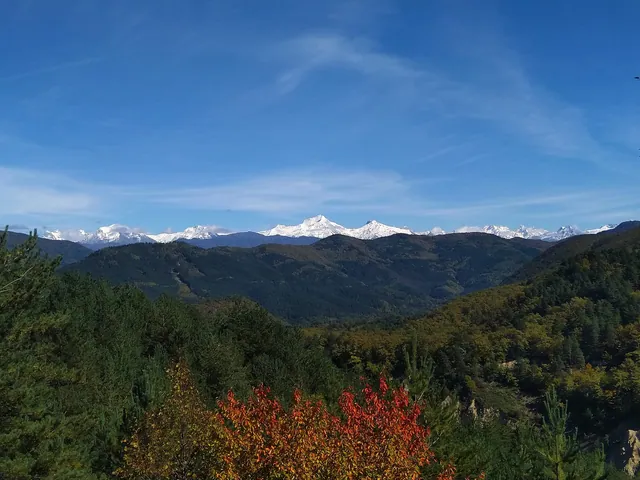
Leave before nine. In the morning there are fewer trucks on the road, and a better chance that Mount Kazbek won't be wrapped in cloud.
The first stop is twenty minutes out of the city. Mtskheta, the ancient capital, has Svetitskhoveli Cathedral and Jvari Monastery on its rock above the confluence of two rivers. An hour and a half covers it all, and if you only want the view, drive up to Jvari and head straight back down to the highway.
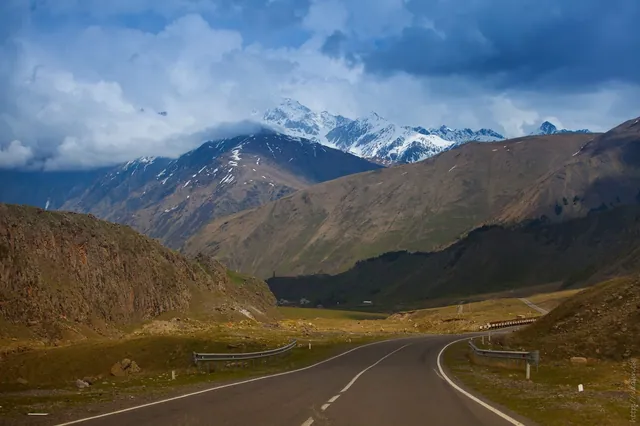
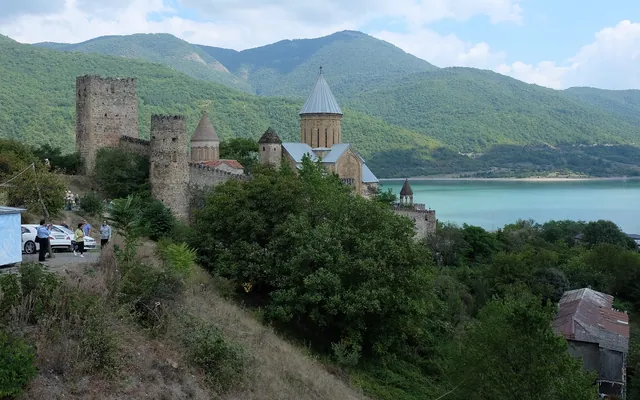
From there the Aragvi valley brings you to the Zhinvali Reservoir and Ananuri Fortress, its towers rising right above the water. Allow forty minutes to look around and another ten for honey and churchkhela from the roadside stalls. Then come khinkali in Pasanauri, Gudauri, the Friendship Monument arch above the drop, and the day's high point, the Jvari Pass (~2,379 m).
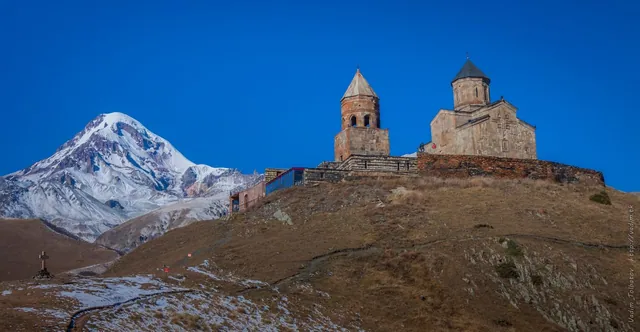
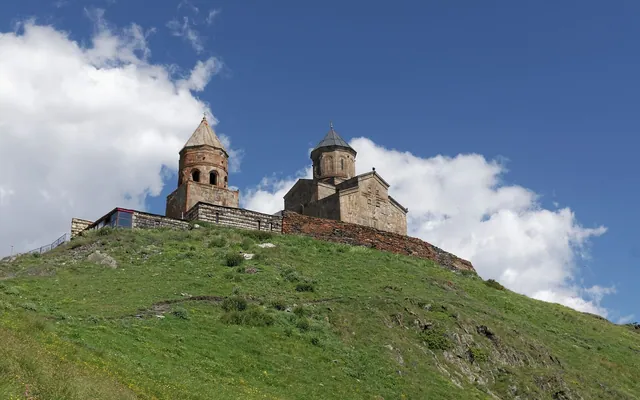
You usually reach Stepantsminda by three or four in the afternoon. Check in and drive up to Gergeti Church: since 2018 a paved switchback road has led up there, which in summer takes 15–20 minutes in an ordinary car, and parking by the church walls is free. On foot, the trail takes an hour to an hour and a half each way. Bring a headscarf for women and long trousers for men, although wraps are usually left out at the entrance.
Why stay the night rather than doing a day trip back to Tbilisi? Kazbek is temperamental and often clouds over in the afternoon. Mornings are more often clear, so you'll see the mountain from your guesthouse window even if it was hiding the day before. In high season, book accommodation in Stepantsminda in advance.
What to take up there, even in July: a jacket, proper shoes and cash. The full list for mountain days is in our mountain trip checklist.
Day 3. The long drive west
~340 km, 5–5.5 hours of driving, 7–8 hours with lunch and stops. Overnight in Kutaisi.
This is the toughest day on the route. There's only one way to go: back down the Georgian Military Highway to Mtskheta (about 135 km and 2.5 hours, the same switchbacks in reverse), then onto the E60 highway and another 210 km or so west to Kutaisi.
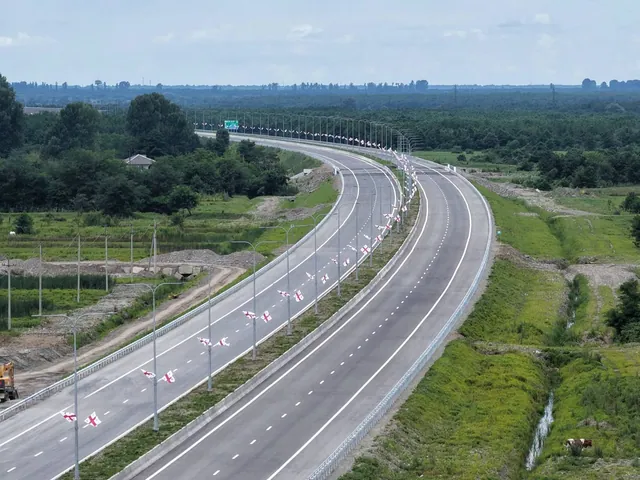
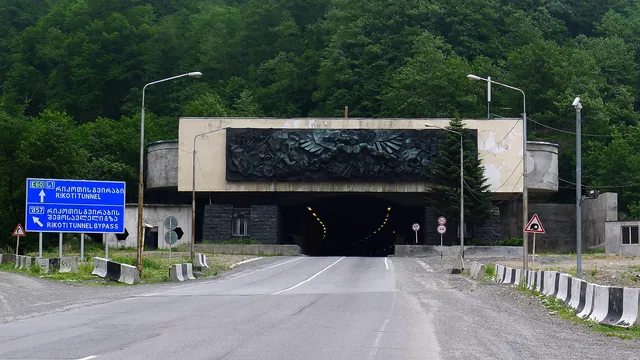
The western half of the drive, on the other hand, has become much quicker. Since late 2025 the whole new expressway over the Rikoti Pass has been open, with dozens of tunnels and bridges, so you no longer have to crawl behind a convoy of trucks on the old serpentine. After Mtskheta it's about three hours of easy driving on good asphalt to Kutaisi.
How to make the day bearable:
- Sunrise, then leave around 9–10 am. Take one more look at Kazbek in the morning, have breakfast and set off without dawdling. The descent to Gudauri with the sun behind you is far nicer than doing it at dusk.
- Don't repeat Ananuri and Mtskheta. You've already seen them, so drive on through.
- Have lunch somewhere around Gori or Khashuri, halfway along. The highway is lined with roadside restaurants serving khachapuri and mtsvadi.
- Don't try to squeeze Uplistsikhe in today. It's on day seven, on the way home, when you'll still have energy for it.
If Monday falls on this day, as I suggested above, you lose nothing: you don't need any of the museums or canyons that are closed today.
Day 4. Kutaisi, Gelati and Prometheus Cave
~70 km, about 1.5 hours of driving. Overnight in Kutaisi.
Kutaisi, the country's second city, makes a handy base for three nights: everything worth seeing in the west lies within an hour's drive, and in the evening you come back to the same room without repacking your suitcase. In town itself, it's worth walking up to Bagrati Cathedral on its hill and through the Green Bazaar. You can also return or pick up a car here if someone is flying into the local airport: see the options on the car rental in Kutaisi page.
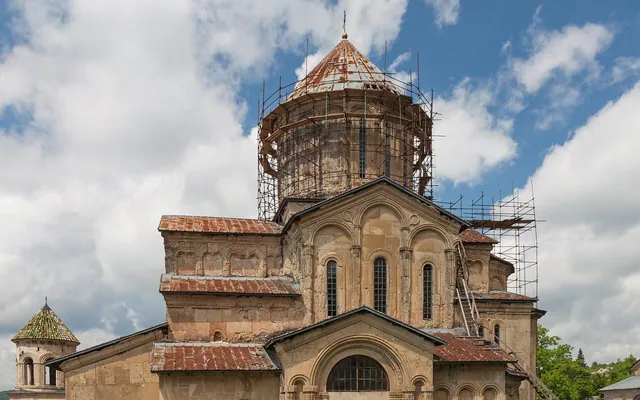
Give the morning to Gelati Monastery, about 11 km from the centre. It dates from the 12th century and is a UNESCO site, with a mosaic in the apse and the grave of David the Builder by the gate. An hour to an hour and a half is enough, and mornings are the quietest time.
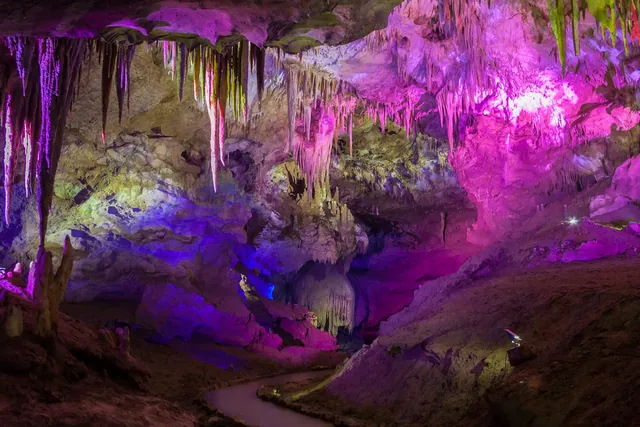
After lunch, drive to Prometheus Cave, about 20 km away. Inside it's around 14 °C all year, the route is 1.4 km long, and there's an optional boat ride along an underground river. It's open every day with no closing day, and on a hot afternoon the cool air underground is worth both the ticket and the queue.
You can spend the evening in neighbouring Tskaltubo: a spa park, radon baths and huge abandoned Stalin-era sanatoriums that are now used for film shoots and photo sessions. It's ten minutes from the cave.
Day 5. Canyons and a waterfall, or Racha
120–150 km and 2.5–3 hours of driving for the canyons, about 240 km and 5 hours for Racha. Overnight in Kutaisi.
This is where the route forks, and it's worth choosing according to your group's mood.
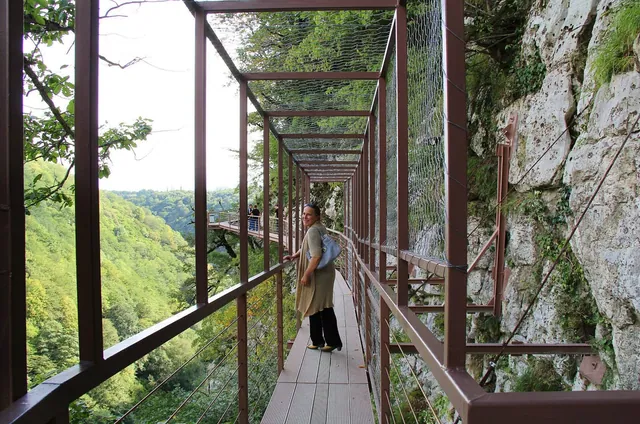
Option A: the canyons. Classic western Georgia. Okatse Canyon has a hanging walkway above a 140-metre drop and lies about 50 km from Kutaisi via Khoni. The walk there and back takes about three hours, and the ticket office closes before the end of opening hours, so arrive when it opens. Five to eight kilometres away is Kinchkha Waterfall, a three-tier cascade with a trail and viewing platforms; a little over an hour is enough for it.
If you'd rather be on the water than on a trail, there's Martvili Canyon: a boat ride along a turquoise river between the cliffs, about 45 km from Kutaisi. You can combine Martvili and Okatse in one day if you leave at 8:30, but then Kinchkha becomes doubtful. I'd pick two out of the three and not chase the third: the west will give you a reason to come back anyway.
One more reminder: Okatse and Martvili are closed on Mondays.
Option B: Racha for a day. For those who didn't get enough of the mountains on day two. From Kutaisi, drive via Tkibuli and the Nakerala Pass to the Shaori Reservoir, the 11th-century Nikortsminda Cathedral and Ambrolauri, home of Khvanchkara wine. It's about 110–120 km and 2.5 hours each way, asphalt the whole way, and an ordinary car copes without trouble. This is a quick taste of the region; Racha properly needs two or three days. Option B is best from May to mid-October: the Racha switchbacks are narrow and unlit, which is uncomfortable on a short day.
Day 6. Kutaisi → Borjomi
~130 km, about 2 hours of driving. Overnight in Borjomi.
A short transfer that leaves you half a day for the resort itself. From Kutaisi, head east via Zestaponi and Surami, then turn into the Borjomi Gorge at Khashuri. The last thirty kilometres along the Mtkvari (Kura) River, with forest on the slopes, are the prettiest of the day.
Borjomi doesn't call for much of a programme: the Central Park with its spring, where you can fill a bottle straight from the tap in the pavilion, the cable car up to the plateau above town, a walk along the river and the warm sulphur pools at the top of the park. The town sits at around 850 metres, so in summer it's cooler than Kutaisi, and you feel it in the evening. After two packed days in the west, that pace comes in handy.
If you still have energy and daylight, Bakuriani is about forty minutes further up the serpentine, and the Borjomi-Kharagauli National Park begins on the plateau beyond the town. But that's optional.
Day 7. Gori, Uplistsikhe and back to Tbilisi
~180 km, 2.5–3 hours of driving. Overnight in Tbilisi or fly home.
Head back to Khashuri and east along the highway. In a little over an hour you reach Gori: a fortress on a rock overlooking the town (free entry) and the Stalin Museum with his childhood house and armoured railway carriage. The museum is closed on Mondays, so if you started on a Saturday, you'll get there on Friday with no problem.
About 15 km from Gori, following the signs east of town, stands Uplistsikhe, a town carved into the rock above the Mtkvari three thousand years ago. Allow an hour and a half to two hours; entry is 15 lari, and the stone steps are polished to a shine in places, so shoes with decent soles come in handy here. To me it's a good finale for the week: after the monasteries and canyons, you're standing in a hall cut out of the rock long before any of them.
From Uplistsikhe to Tbilisi is about 80 km, a little over an hour. If you're flying out in the evening, it's easier to drop the car off straight at the airport so you don't have to drive into the centre again at rush hour.
Which car to take
For this loop, an ordinary sedan or compact hatchback is fine from May to October. The whole route is paved, including the climb to Gergeti, the roads to the canyons and Racha via Tkibuli. There's no need to pay extra for a big SUV for this week.
I would still consider a crossover if there are three or four of you with suitcases, or if you'd like a higher seating position on the switchbacks. The ground clearance helps in the gravel car parks at the canyons and on village lanes leading to guesthouses. You'll find a selection of these cars on the crossovers and SUVs page, and a comparison of car classes for different scenarios in which car to choose in Georgia.
What to keep in mind when booking:
- A week and 1,100 km. Check the mileage limit in your rental agreement, if there is one. This loop averages 150–200 km a day.
- No-go zones. The Truso Valley, Tusheti, Ushguli and some high passes are banned in most rental agreements, even for SUVs. They're not part of our route, but the temptation to turn off into Truso at Kobi is real.
- Fuel. Fill up before the mountain stretches: in Tbilisi or Mtskheta before Kazbegi, in Kutaisi before Racha.
- Returning in another city. If it suits you better to finish the week in the west and fly out of Kutaisi, check the drop-off terms in advance. The loop then runs the other way: Tbilisi, Uplistsikhe, Borjomi, Kutaisi, and Kazbegi has to be done at the start as a separate day.
In winter this route works differently
From December to March it's better not to plan the loop in this form, or at least to have a backup. Here's why:
- The Jvari Pass is regularly closed because of avalanche risk, sometimes for a few hours, sometimes for a day or two. Check its status the evening before and again in the morning before you set off.
- From 1 December to 1 March winter tyres are mandatory on roads to the ski resorts: that means the whole Georgian Military Highway up to Gudauri and Kazbegi, plus Borjomi–Bakuriani. The new Rikoti expressway isn't on that list, but black ice does form on its exposed sections. For Kazbegi you need all-wheel drive, or at least a crossover with good winter tyres, and it's worth mentioning this when you book.
- Okatse closes in rain and snow, when the trail becomes unsafe. Cross off Racha (option B) in winter.
- Daylight is short: in December it gets dark around five in the evening. On a long day three, darkness and snow turn the drive into an ordeal.
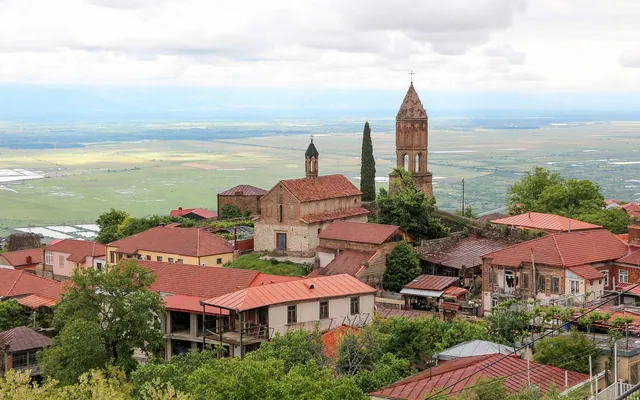
If the pass is closed or the weather is against you, swap days two and three for Kakheti: Sighnaghi, Bodbe, Telavi and the wineries. Sighnaghi is about two hours from Tbilisi on a valley road with no passes; the route is covered in Tbilisi to Kakheti by car. You then head west from Tbilisi: Kutaisi is about 230 km and three hours away, instead of 340 km from Stepantsminda, and the rest of the loop stays the same. Everything about winter roads, tyres and snow is in our guide to Georgia in winter.
What this week leaves out
What I deliberately left out:
- Svaneti. Tbilisi to Mestia is 450–470 km and 8–9 hours, and it needs at least three or four days of its own. The only way to squeeze it into this week is to sacrifice Kazbegi and the whole west. If mountains matter most to you, build the trip around Svaneti.
- The sea. You can add Batumi from Kutaisi, but that's another 150 km each way. A day on the coast means losing either the canyons or Borjomi, and you still won't get a proper beach holiday out of it.
- Tusheti. The Abano Pass is open only in summer, the road is rough, and rental cars aren't allowed there.
- Kakheti. A region for two days on its own. On this route it's the fallback for a closed pass, not a core part of the plan.
- Vardzia. A cave monastery 100 km from Borjomi. If you're up for a long day, you can add it on day six instead of resting in Borjomi, but day seven will then be packed.
Each of these fits nicely into a second trip. Plenty of people who came to Georgia "for a week" come back a year later precisely for Svaneti or the sea.
If you can stretch the week
With eight or nine days, the route gains some slack. I'd add a second night in Stepantsminda (Gveleti Waterfall, walks around Gergeti, or just the quiet), split the canyons and Racha into two separate days and keep one free day in Tbilisi at the end for markets and wine. Over nine days this loop no longer feels like a race.
The bottom line
With seven days and a car, a first trip to Georgia comes together as a clear loop: Tbilisi, the Georgian Military Highway with a night below Kazbek, three nights in Kutaisi for Gelati, the cave and the canyons, then Borjomi and Uplistsikhe on the way home. There's only one hard day, the third, and it's worth accepting that in advance. Start on a Saturday so you don't run into the canyons' Monday closure, set off early for the mountains and keep the Kakheti plan in mind in case the Jvari Pass closes.